A Comprehensive Guide to Car Leasing in Canada
25 June 2025For many Canadians, the dream of a new car often comes with a significant financial decision: to lease or to buy? While auto financing leads to direct ownership, car leasing offers an attractive alternative, providing access to newer vehicles with potentially lower monthly payments.
This in-depth guide will explain everything you need to know about car leasing in Canada, covering everything from its core definition to understanding the use of a car lease calculator, ultimately empowering you to make an informed decision about your next vehicle.
What Exactly is Car Leasing?
In simple terms, vehicle car leasing is a long-term rental agreement. Instead of purchasing the vehicle outright or taking an auto loan to own it, you pay for the right to use the car for a fixed period, typically 2 to 5 years. Your monthly payments don't go towards the full purchase price of the car; instead, they cover the vehicle's depreciation during your lease term, plus a finance charge (often called the "money factor") and taxes.
What is Depreciation of Car?
You might have heard people say, ‘A car loses some of its value the moment it leaves the showroom and arrives at your home.’ This reduction in a vehicle's value over time is known as depreciation.
When you lease a car, you pay for the estimated depreciation of the vehicle during your lease term. For more clarity, let us understand the key components of a Car Lease Agreement in Canada:
Key Components of a Car Lease
Capitalized Cost (Cap Cost)
This is essentially the selling price of the vehicle you are leasing. You can negotiate this price with the dealership, which can significantly impact your monthly payments.
Residual Value
This is a crucial element and represents the estimated value of the vehicle at the end of the lease term. It's set by the leasing company, not the dealer, and is based on factors like the vehicle's make, model, anticipated mileage, and its historical resale performance. A higher residual value means less depreciation to cover, resulting in lower monthly payments for you.
Money Factor (Lease Factor)
This is the interest rate equivalent in a lease, expressed as a small decimal (e.g., 0.00250). A lower money factor means lower finance charges.
Lease Term
This is the duration of your lease agreement, typically ranging from 24 to 60 months.
Mileage Allowance
A car lease comes with an annual kilometre limit (e.g., 16,000 km, 20,000 km, 24,000 km). Exceeding this limit results in per-kilometre overage charges at the end of the lease, which can range from $0.10 to $0.30 per kilometre.
Types of Car Lease Agreements in Canada
While the fundamental concept of leasing remains the same, there are primarily two types of lease agreements you'll encounter in Canada:
Closed-End Lease
Also referred to as ‘walk-away lease’ - this is the most prevalent type of consumer lease in Canada, especially for new vehicles from manufacturer dealerships. In a closed-end lease, the leasing company assumes the risk of the vehicle's actual depreciation.
How it Works: Your monthly payments are fixed based on the estimated depreciation (capitalized cost minus residual value) and the money factor. At the end of the lease term, you have three primary options:
a) Return the Vehicle: You simply return the car with lease to the dealership, pay any disposition fees, and are responsible for any charges for excess mileage or wear and tear beyond what's defined as "normal." You then "walk away" from the vehicle.
b) Purchase the Vehicle: You have the option to buy the vehicle for its predetermined residual value (plus any applicable taxes and fees). This is often referred to as a "lease buyout."
c) Lease a New Vehicle: You can trade in your old leased vehicle and enter into a new lease agreement for a different car.
Key Advantage: Predictability. Your monthly payments are fixed, and you're not on the hook for unexpected drops in the car's market value at lease end. The depreciation risk lies with the leasing company.
Key Disadvantage: Mileage limits and wear and tear charges can apply. Early termination is very costly.
Open-End Lease
In an open-end lease, the lessee (you, the customer) assumes the risk of the vehicle's actual depreciation. This type of lease is less common for individual consumers and more frequently used for commercial or fleet vehicles. A common form of open-end lease is a Terminal Rent Adjustment Clause (TRAC) lease.
How it Works: The monthly payments are calculated similarly to a closed-end lease, but at the end of the term, there's a "settlement" based on the vehicle's actual market value.
If the vehicle's actual market value at lease end is less than the predetermined residual value - You, the lessee, are responsible for paying the difference to the leasing company. This means you could owe a significant sum if the car depreciates more than expected.
If the vehicle's actual market value at lease end is more than the predetermined residual value - You, the lessee, might receive a credit or the surplus amount from the leasing company.
Key Advantage: More flexibility in terms, potentially no mileage limits (or highly customizable ones), and no wear and tear penalties (as you bear the risk of its value).
Key Disadvantage: High financial risk. You are solely responsible for the vehicle's depreciation performance. If the market value drops unexpectedly (e.g., due to economic downturns, oversupply of that model, or extensive damage), you could face a large payment at lease end.
Single Payment Lease
This is a variation of a closed-end lease where you make all your lease payments in one lump sum upfront.
Key Advantage: Often results in a lower effective money factor, meaning you pay less in total finance charges over the term. It also frees you from monthly payment obligations.
Key Disadvantage: Requires a significant upfront cash outlay, and if the vehicle is totaled or stolen, you may not recover the full upfront payment.
Lease Takeover (Third-Party Arrangement)
While not a type of lease agreement in itself, lease takeovers allow one individual to assume the remaining term of an existing lease from another person.
Key Advantage for the New Lessee: You can get into a short-term lease, potentially with better terms (lower payments, lower money factor) than current market rates if the original lease was signed during a more favourable period. It might also involve incentives from the original lessee.
Key Advantage for the Original Lessee: This allows them to exit a lease early without incurring expensive termination penalties, making it a win-win situation for both parties.
Comparison between Leasing or Financing a Car in Canada
The decision to lease vs. finance a car is one of the most significant choices you'll make when acquiring a vehicle in Canada. Both options cater to different financial situations, lifestyle preferences, and long-term goals. To make an informed choice, consider the pros and cons of each option.
Leasing a Car (Long-Term Rental)
When you lease, you pay for the use of the vehicle over a set period. You never own the car unless you decide to purchase it at the end of the lease term.
Pros of Leasing A Car
- Lower Monthly Payments: As you only pay for the vehicle's depreciation during the lease term, not its full purchase price, monthly lease payments are significantly lower than finance payments for a comparable new car. This helps you free up your cash flow.
- Drive Newer Vehicles More Often: Leasing allows you to regularly upgrade to the latest models (typically every 2-5 years). This means consistently having access to the newest technology, safety features, improved fuel efficiency, and manufacturer warranties.
- Consistent Warranty Coverage: Most lease terms align with the manufacturer's bumper-to-bumper warranty. This means major repairs are typically covered, reducing unexpected maintenance costs throughout your lease period.
- No Resale Hassle: At the end of the lease, you simply return the vehicle to the dealership (provided it meets mileage and wear-and-tear conditions). You avoid the time, effort, and uncertainty of selling a used car privately or negotiating a trade-in value.
- Potential Tax Advantages for Businesses: For business owners or those using their vehicle primarily for business, a portion of lease payments may be tax-deductible in Canada, offering a notable financial benefit.
Cons of Leasing A Car
- No Ownership or Equity: You don't build equity in the vehicle. All your payments are for the privilege of using the car. At the end of the lease, you have no asset unless you choose to buy it.
- Mileage Restrictions: Leases come with strict annual mileage limits (e.g., 16,000 to 24,000 km). Exceeding this limit incurs significant per-kilometre overage charges, which can quickly erase any savings. If you have a long commute or frequently take road trips, leasing might not be economical.
- Wear and Tear Penalties: While normal wear is permitted, any damage beyond what's considered "normal" (dents, major scratches, excessive tire wear, interior damage) will result in additional charges at lease end.
- Costly Early Termination: Breaking a lease agreement before its term ends is generally very expensive. You could be liable for the remaining lease payments, early termination fees, and potentially the difference between the vehicle's market value and its residual value.
- Potentially Higher Overall Cost in Long Term: While monthly payments are lower, if you continuously lease new vehicles over many years, the total cost can exceed what you would pay by financing a car and keeping it for an extended period after it's paid off.
Financing a Car (Ownership Through Auto Loan)
When you finance, you take out a loan to purchase the entire value of the car. You become the owner once the loan is fully repaid.
Pros of Auto Financing
- You Own the Vehicle: The biggest advantage is ownership. Once your loan is paid off, the car is yours, free and clear. This means you build equity over time, and the car becomes an asset.
- No Mileage Restrictions: You can drive as much as you want! There are no penalties for high mileage, giving you complete freedom.
- Freedom to Customize: You can modify your vehicle as you see fit since you own it.
- Potential for No Future Payments: Once the loan is paid off, you have no further car payments. This can lead to significant savings in the long run if you keep the vehicle for many years after it's paid off.
- Sell or Trade Anytime: You have the flexibility to sell or trade in your vehicle at any point, though you'll need to pay off any remaining loan balance.
Cons of Financing
- Higher Monthly Payments: Since you're paying off the entire cost of the vehicle (plus interest), monthly finance payments are typically higher than lease payments for a similar new car.
- Depreciation Risk: You bear the full burden of depreciation. New cars lose a significant portion of their value in the first few years, which can impact your resale or trade-in value.
- Maintenance Costs as Vehicle Ages: Once the manufacturer's warranty expires, you are fully responsible for all maintenance and repair costs, which can become substantial as the vehicle ages.
- Resale Hassle: When you're ready for a new vehicle, you'll need to sell your current one privately or negotiate a trade-in with a dealership, which can be time-consuming and sometimes frustrating.
Lease vs. Financing A Car: At A Glance
| Feature | Car Leasing | Car Financing |
| Ownership | You do not own the car; you rent it | You own the car once the loan is paid off |
| Monthly Payments | Generally lower (pay for depreciation) | Generally higher (pay for full vehicle value) |
| Equity | None (unless you buy out the lease) | Builds equity over time |
| Mileage Limits | Yes, with penalties for overage | No limits |
| Vehicle Condition | Subject to wear & tear guidelines; penalties for excessive damage | No penalties for condition |
| Early Termination | Very costly penalties | Can sell or trade, but must pay off the loan |
| Warranty Coverage | Often covered for the entire lease term | Covered for manufacturer's warranty period only |
| Long-Term Cost | Potentially higher if continuously leasing | Potentially lower if kept long-term |
| Customization | Not allowed | Full freedom to customize |
Who Should Lease a Car in Canada?
- Individuals who want to drive a new car every few years with the latest features.
- People with moderate or infrequent driving habits.
- People who prefer lower monthly payments and want to avoid depreciation risk.
- Business owners seeking potential tax write-offs.
- Anyone who dislikes the hassle of selling a used car.
Who Should Finance a Car in Canada?
- Individuals who plan to keep their vehicle for many years (5+ years).
- People who drive frequently.
- People who want to own an asset and build equity.
- Anyone who prefers to customize their vehicle.
- Drivers seeking eventual freedom from car payments.
Do Canadians Prefer to Lease or Finance a Car in 2025?
According to AutoTrader.ca's 2025 Canadian Car Shopper Purchase Intentions report, 49% of vehicle intenders plan to finance, while 16% prefer to lease.
Financing is highest among new vehicle shoppers (57%), suggesting a continued preference for ownership. Average car loan interest rates in Canada, as of April 2025, hover around 7.10% for new cars, with rates for used cars significantly higher at around 10.25%. This difference can sometimes make new car leases more appealing, especially with promotional money factors from manufacturers.
Using a Car Lease Calculator to Estimate Your Payments
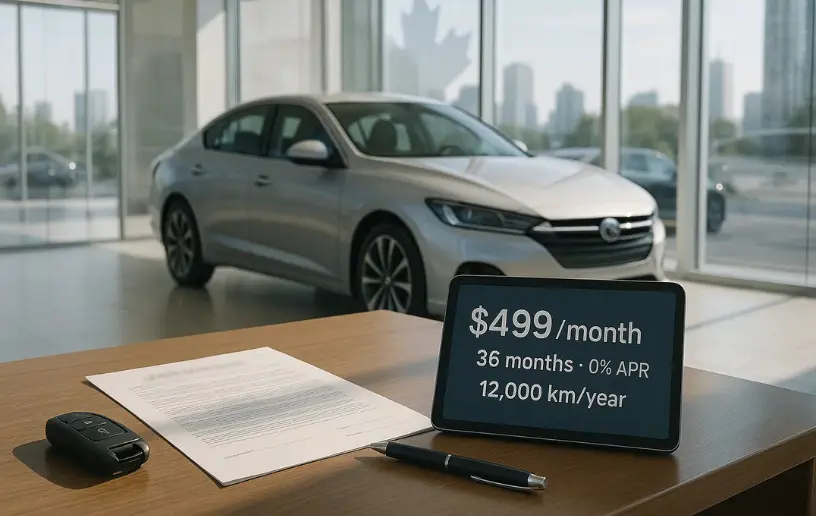
Understanding how your monthly payments are derived is crucial when considering options for car leasing in Canada. Using an online car lease calculator can give you a fair estimation of your costs and help you compare different lease scenarios.
How to Get the Best Deals on Leasing a Car in Canada?
- Manufacturer Incentives: Automakers frequently offer special lease rates, cash credits, or reduced money factors to move specific models. Keep an eye on manufacturer websites and dealership promotions.
- End-of-Month/Quarter/Year: Dealerships often have sales targets to meet, making them more motivated to offer attractive deals as these periods approach.
- Less Popular Models/Trims: Vehicles that aren't selling as quickly might have better lease terms to encourage movement off the lot.
- Demonstrator Vehicles: Dealerships sometimes lease out their demo models at reduced rates. These cars have some mileage but are generally well-maintained and offer substantial savings.
- Lease Takeovers: Some platforms facilitate lease takeovers. This allows someone to assume an existing lease, often benefiting from the original lessee's favourable terms from a past market environment. It's a great way to find shorter lease terms and potentially good monthly payments.
Is it possible to get a Used Car on Lease in Canada?
While less common than new car leasing, used car leasing is an option gaining traction in Canada. The process is similar to new car leasing, but there are some key differences:
- Availability: Not all dealerships or lenders offer used car leasing. It's typically available for certified pre-owned (CPO) vehicles from franchise dealerships, or through specialized leasing companies.
- Residual Value: The residual value for a used car will be lower than a new car, as the vehicle has already depreciated. However, the capitalized cost will also be significantly lower.
- Warranty: While CPO vehicles come with extended warranties, the coverage might not be as comprehensive or as long as a new car's warranty.
- Maintenance: A used leased car might require more maintenance than a new one, and while CPO warranties cover certain repairs, routine maintenance costs will still be your responsibility.
- Can you lease a used car?: Yes, absolutely! It's a viable option, especially if you're looking for even lower monthly payments than a new car lease or want to drive a specific luxury model that would be out of budget as a new lease.
Consumer Protection and Rights in Car Leasing (Canada)
It's important for Canadian consumers to be aware of their rights when entering a lease agreement. Provincial and territorial consumer protection laws apply to car leases. Most provinces require dealers to provide a clear disclosure statement outlining the total cost of leasing and your obligations before you sign the agreement.
- Cooling-Off Period: Some provinces, like British Columbia, have a "one clear day" cooling-off period where you can cancel a lease agreement without penalty. Be aware of your provincial regulations and whether you are waiving this right.
- Clear Disclosure: The leasing company or dealer must clearly disclose all terms, fees, and costs associated with the lease.
- Vehicle Condition: Dealers are typically required to ensure a leased vehicle meets safety requirements before it's handed over.
Always read your lease agreement thoroughly, ask questions, and don't hesitate to seek independent advice if anything is unclear.
Is Car Leasing or Car Financing in Canada Right for You?
The decision of car lease versus purchase is a pivotal one, deeply influenced by individual financial circumstances, driving habits, and future aspirations. Vehicle car leasing offers a flexible and often more affordable way to drive a new vehicle every few years, benefit from consistent warranty coverage, and avoid the complexities of reselling. It's particularly appealing for individuals or businesses with predictable driving habits, who enjoy staying current with automotive technology, or who value lower monthly outlays.
However, if you put a lot of kilometres on your vehicle, prefer to build equity, enjoy customizing your ride, or plan to keep your car for many years, then auto financing might be a more cost-effective choice in the long run.
If you choose to pursue the path of auto financing, Auto Lending Canada can help simplify the process. By filling out a straightforward application, you can get pre-approved car loan offers in under 3 minutes! This pre-approval gives you a stronger negotiating power at the dealership. Take the first step towards owning your next vehicle – get approved today.