How to Lease a Car in Canada: All About Costs, Terms, Tips & FAQs
10 October 2025Leasing a car has become one of the most convenient ways to enjoy a new vehicle in Canada without paying the full purchase price up front. If you’re an individual who likes upgrading every few years or one who needs reliable transportation with manageable payments, understanding how to lease a car can help you make confident financial decisions.
In this guide, you’ll learn everything about car leasing, how car leases work, what to expect, the hidden details behind lease payments, and how to get the best deal possible. You’ll also discover the key differences between car leasing in Canada, along with practical tips that can save you money in the long run.
Understanding the Car Leasing Concept in Canada
Instead of buying a vehicle outright, you’re essentially renting it for a set period, usually between two and five years, or entering a short-term car lease deal. The cost you pay reflects how much of the vehicle’s life you use during that time — the wear, distance, and time behind the wheel.
What makes auto leasing appealing in Canada is that you can keep more cash on hand while enjoying a new vehicle. You’re paying for convenience, performance, and the experience of driving something new. Once your lease ends, you can return the vehicle, upgrade to another, or buy it out if it feels like the right fit.
Some people look for a lease takeover or a lease transfer to assume someone else’s lease of car commitment. Or one can proceed with a zero-down car lease to avoid large upfront costs.
Want a detailed breakdown of the different lease formats? Explore A Comprehensive Guide to Car Leasing in Canada for insights into open-end, closed-end, and lease takeover structures.
Why Leasing Is Becoming the Smarter Choice for Canadians

As car prices rise and technology evolves faster than ever, leasing a car has become the preferred route for thousands of Canadians who value flexibility and affordability.
According to the AutoTrader Price Index Q2 2025, used vehicle prices in Canada climbed 3.6 % year-over-year, reaching an average of $37,664, even while new car prices dipped slightly. Earlier data from the AutoTrader Price Index Q1 2025 also highlighted that high interest rates and inventory shortages continued to push buyers toward leasing options instead of long-term financing.
Here’s why many Canadians are making that shift:
Lower Monthly Payments
Because you only pay for the car’s depreciation during your lease term, monthly payments are typically 30–40 % lower than a comparable finance loan. That means you can often drive a higher-trim model for the same monthly budget.
Access to the Latest Models
Leasing for a car allows you to refresh your car every few years, so you’re always behind the wheel of a modern, fuel-efficient, and safer vehicle. It’s ideal for drivers who value up-to-date technology without long-term commitment.
Warranty Coverage
Most leased cars remain under full manufacturer warranty for the entire term, protecting you from unexpected repair bills.
Business Benefits
For professionals and entrepreneurs, a leased vehicle may qualify as a business expense. Always check with your accountant for deduction eligibility based on your province and usage.
Easy Transitions
When your lease ends, there’s no need to negotiate a resale. Simply return the car, pay any small end-of-lease fees if applicable, and choose your next one.
Fleet leasing programs in Canada
They help businesses by offering volume discounts and better terms on commercial vehicle leasing in Canada.
When Car Leasing May Not Be Right Option for You
Although auto leasing in Canada offers convenience and flexibility, it may not suit everyone.
If you drive long distances every year or plan to keep your car for many years, purchasing might be better. Leasing comes with mileage restrictions (typically 16,000 to 24,000 km per year), and exceeding that limit will result in fees.
Additionally, lease contracts may charge for “excess wear and tear,” which includes anything beyond normal usage, like deep scratches, dents, or damaged interiors. If you prefer full ownership or want to customize your vehicle, buying through financing will offer more freedom.
How Car Leasing Actually Works in Canada
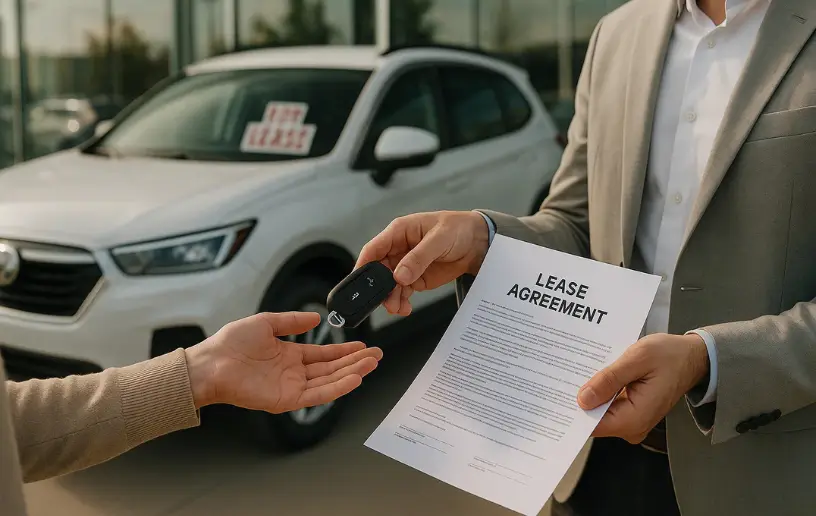
Leasing a car isn’t as complicated as it might seem, it’s simply a structured contract between you and a leasing company. You select the vehicle you want, decide how long you’d like to drive it, and agree to a set mileage limit. From there, your monthly lease payments are calculated based on three main factors: the vehicle’s negotiated selling price, its predicted value at the end of the lease (residual value), and the finance rate (also called the money factor).
Here’s what happens behind the scenes:
- The capitalized cost is what you agree to pay for the car, similar to a sale price.
- The residual value is the car’s expected worth after your lease ends.
- The money factor is like your interest rate, affecting how much you pay for the financing portion.
If you want to compare leasing with financing, review an official lease worksheet from the dealer and use the Government of Canada car financing guide to see the numbers side by side.
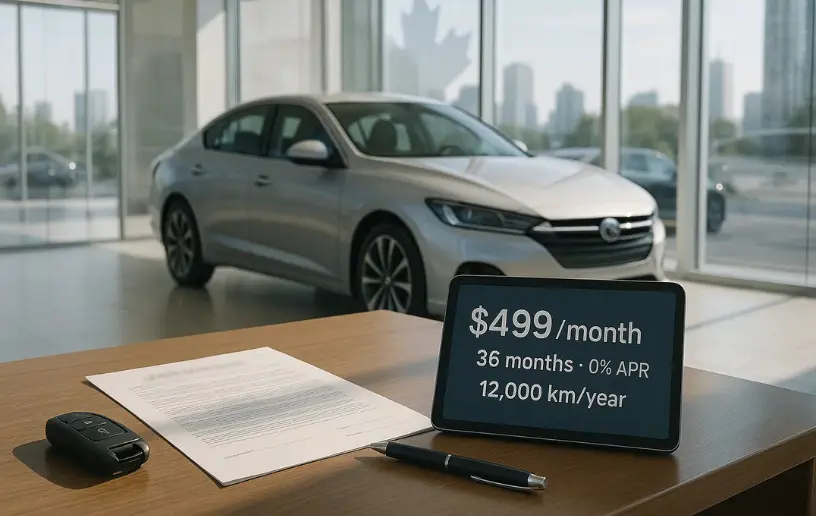
If you’ve been wondering ‘how does a car lease work in Canada?’, the core is simple: cap cost + residual + money factor, plus mileage and fees, determine the payment.
Breaking Down the Real Cost of Leasing a Vehicle
Every car lease contract’s payment is a mix of depreciation, financing, and flexibility. But to make an informed choice, it helps to understand what actually shapes that monthly figure.
1. Vehicle Depreciation
This is the portion you’re truly paying for, how much value the car loses over your lease term. If you lease a $45,000 SUV that’s expected to be worth $28,000 after three years, your payments cover that $17,000 drop. Vehicles known for reliability and strong resale value (like Honda, Toyota, and Mazda) generally cost less to lease because they hold their value longer.
2. Financing Cost
Think of this as the “price of borrowing.” Dealers apply a small rate, called the money factor, to your lease balance. Even a minor reduction in this number can shave hundreds off your total cost, so it’s worth negotiating.
3. Taxes and Fees
In provinces such as Ontario or British Columbia, taxes apply to each monthly payment, not the full vehicle price. That means less cash upfront and easier budgeting over time.
4. Insurance and Add-ons
Since you don’t technically own the car, comprehensive insurance is mandatory. You might also see optional extras like gap coverage or maintenance packages, which can be useful but should be compared against standalone plans.
5. Early termination in car leases
What happens & what fees do you pay if you end the leased car agreement early.
When you combine all of this, you’re essentially paying for the portion of the car’s life you use, and the freedom to switch again when the time is right. That’s the heart of car leasing in Canada.
Car Lease Agreement in Canada: Key Terms to Review
The auto lease contract outlines every important term, vehicle price, mileage limits, wear and tear conditions, fees, taxes, and early termination penalties.
Each province regulates leasing differently. In all cases, you should ensure the contract clearly shows:
- The total cost over the lease term
- The vehicle’s residual value
- All hidden fees and taxes
- Buyout options at the end
End-of-Lease Guide: Inspections, Charges, and Buyout Options
Treat your leased vehicle as if it were your own. Follow the maintenance schedule, keep service receipts, and avoid unnecessary modifications. A well-maintained car helps you avoid penalties at the end of the lease.
When your lease term ends, a few things happen. The dealership will perform a lease-end inspection, checking for wear, mileage, and any damage. If the car has scratches, dents, or worn tires beyond normal use, you may need to pay for repairs.
You’ll then have three main choices:
- Return the vehicle – Pay any excess charges and hand back the keys.
- Purchase (buyout) – Pay the residual value to own the car using end-of-lease buyout options
- Start a new lease – Upgrade to another vehicle with new terms.
Buying out your lease can make sense if the car’s market value is higher than its residual value. You essentially get a good deal on a used car you already know and trust.
Provincial Differences in Leasing a Car
While the basics of leasing are the same across Canada, some provinces have their own unique tax structures and rules. Rules vary by province. If you live in Ontario, leasing a car in Ontario means paying HST/PST/GST, specific disclosure laws, etc.
You might find one‑year car lease deals in Canada more available in some regions, or a short-term car lease could be a practical option if you don’t want a multi‑year commitment.
Ontario
In Ontario, lease contracts fall under the Motor Vehicle Dealers Act (MVDA). Dealers must disclose all fees, taxes, residual values, and interest rates clearly. Ontario drivers also pay sales tax on monthly lease payments rather than the car’s total price.
British Columbia
BC requires leases to be written in plain language and for dealers to disclose the total cost of the lease upfront. PST and GST apply to lease payments, but only for the usage portion — not the car’s full value.
Alberta
In Alberta, the AMVIC (Alberta Motor Vehicle Industry Council) regulates leasing practices. Alberta’s lease taxes and fees tend to be lower than those in Ontario, which is why many Albertans find leasing cars cost-effective.
Quebec
Quebec has strict disclosure laws under its Consumer Protection Act. Lessees have detailed rights regarding early termination and cost transparency, and contracts must clearly explain every fee.
These provincial differences may seem minor, but they can impact your total lease cost and end-of-term responsibilities. Always review your contract based on your province.
Electric Vehicle and Hybrid Leasing in Canada
Leasing is becoming an increasingly popular choice for electric and hybrid vehicles. Canadians are drawn to EV leasing for several reasons:
- Lower upfront costs: EVs are typically more expensive to buy, but leasing spreads that cost over time.
- Access to new technology: Battery and charging systems evolve quickly, and leasing lets you upgrade easily.
- Government incentives: Some provinces, such as British Columbia and Quebec, offer rebates for leased electric vehicles.
- Tax and environmental benefits: Driving a leased EV can reduce both emissions and energy costs.
As EV adoption grows, leasing options are expanding across brands like Tesla, Hyundai, Kia, and Toyota. This trend means you can enjoy sustainable driving without a long-term financial commitment.
Real-World Example: How Lease Payments Are Calculated
Let’s use a practical scenario to see how leasing a vehicle in Canada works.
- Car MSRP: $45,000
- Negotiated price (cap cost): $42,000
- Residual value after 36 months: $25,000
- Money factor: 0.0024 (approx. 5.8% APR)
- Lease term: 36 months
Step 1 – Depreciation
($42,000 – $25,000) ÷ 36 months = $472/month
Step 2 – Interest
($42,000 + $25,000) × 0.0024 = $161/month
Step 3 – Total Base Payment
$472 + $161 = $633/month (before taxes)
Add GST/HST, registration, and small admin fees, and your total comes to about $710 per month.
This example shows that leasing a vehicle in Canada is primarily about paying for what you use, not for full ownership.
Leasing or Financing - Which Option Fits You Best?
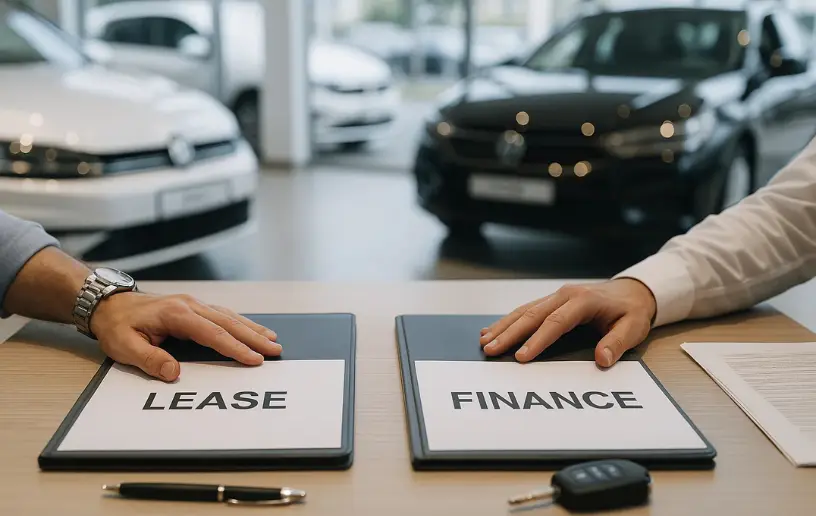
Leasing and financing are two very different roads to the same destination: getting the car you want. Leasing vs financing a car in Canada is a comparison many Canadians consider. Leasing gives flexibility, newer models, and less maintenance. Financing offers ownership equity over time.
If you lease, you’re embracing flexibility, treating driving as an experience, not a long-term commitment. Your payments go toward using the car during its prime years, often while it’s under full warranty. Once the term ends, you can return the vehicle, trade up, or occasionally buy it for its residual value.
Financing, meanwhile, is a long game. You’re building ownership. Every payment increases your equity, and once the loan is cleared, the car is yours to keep, customize, or sell. The trade-off is higher monthly costs and eventual maintenance responsibilities.
The right choice depends on your priorities. If you love variety, lower monthly payments, and new technology, leasing fits perfectly. If long-term stability and ownership matter more, financing may be your best route.
For an in-depth perspective, visit the RBC Royal Bank car financing guide for side-by-side comparisons tailored to Canadian drivers.
Hidden Costs and Fees to Watch Out For
Leasing is often advertised as a low-cost option, but it’s important to know where hidden costs might appear.
- Disposition Fee: Charged at the end of a lease if you return the vehicle.
- Acquisition Fee: An upfront administrative charge added by the lessor.
- Excess Wear Charges: For damage or poor maintenance.
- Mileage Penalties: For exceeding the kilometre limit.
- Early Termination Fees: If you end the lease early or default on payments.
- Hidden Fees: Check if your contract includes any hidden fees.
These costs can add up if you’re not careful, so always read your lease contract closely before signing.
Smart Ways to Save on Your Next Lease
Securing a great lease deal isn’t about luck. It’s about timing, information, and knowing what to ask for.
Start With Research
Check manufacturer websites for promotional lease rates or loyalty bonuses. These limited-time offers can reduce payments by hundreds over the term.
Negotiate the Price, Not Just the Payment
Many people only focus on the monthly amount. Instead, ask about the vehicle’s selling price (capitalized cost). Lowering that number has a direct impact on what you pay.
Pick Cars That Hold Value
Models known for strong resale, like the Honda CR-V, Toyota Corolla, or Subaru Outback, often have lower lease costs due to higher residual values.
Time It Right
End-of-quarter and year-end periods are prime times for dealerships looking to hit targets. That’s when flexibility peaks.
Mind Your Mileage
Choose a kilometre allowance that matches your driving habits. Paying for unused kilometres is as wasteful as paying penalties for going over.
Keep Records
Document all maintenance and service visits. A clean record helps avoid end-of-lease penalties and improves your credibility for future approvals.
Getting the best lease deal in Canada is about understanding both the math and the mindset. Treat it like a partnership between you, the lender, and your lifestyle needs.
Future of Auto Leasing in Canada

The car leasing landscape is evolving rapidly. With the growth of electric mobility, flexible ownership models, and digital approval systems, leasing is becoming more customer-friendly.
As manufacturers innovate, leasing is no longer limited to traditional gas-powered sedans or SUVs. Automakers are offering flexible lease plans for electric and hybrid vehicles, along with shorter commitment periods to suit modern lifestyles.
For instance, brands like Tesla, Hyundai, and BMW now provide adaptable lease packages that include maintenance, battery warranties, and flexible mileage options. This approach reflects a broader shift toward “subscription-style” ownership, where customers can choose the duration, mileage, and even swap vehicles mid-term.
Digitalization is also transforming the leasing process. Many Canadians can now complete the entire auto lease process online — from applying for credit to e-signing the contract — without ever stepping into a dealership. This trend is particularly appealing to younger drivers who value transparency, speed, and convenience.
Summing up, the future of auto leasing in Canada is all about customization — shorter terms, better technology, greener vehicles, and digital tools that make leasing more transparent and accessible than ever before.
Final Thoughts
Leasing a car in Canada has evolved from a luxury convenience to a practical financial choice for individuals and businesses alike. Whether you’re exploring your first car lease in Canada or considering an upgrade to a hybrid or electric vehicle, the key is to understand how leasing truly works.
Before signing any contract, always consider:
- What’s the total cost of the lease compared to ownership?
- Are the mileage limits realistic for your driving needs?
- Does the lease offer flexibility for buyout or early termination?
- How strong is the residual value of the vehicle you’re leasing?
Knowledge is power, and knowing how car leasing works in Canada ensures you won’t be caught off guard by hidden fees or confusing terms.
At the end of the day, car leasing allows you to drive the latest models, stay covered by warranty, and switch to something new whenever your lifestyle changes. It’s driving on your own terms, without being tied down.
If you’re shopping for a new car, get pre-approved with Auto Lending Canada in about 3 minutes to see your best offers and rates. It’s quick, online, and helps you walk into the dealership with a clear budget and real leverage.