7 Mistakes Canadians Make When Applying for Car Financing
16 May 2026Buying a new car in Canada is exciting but can also be financially overwhelming if you are not prepared.
Many Canadians assume that a steady income is enough to secure approval. In reality, lenders assess several factors, including your credit history, debt levels, employment stability, and affordability before approving financing.
A few common mistakes during the application process can result in loan rejection, higher borrowing costs, or unfavorable terms.
The good news is that these mistakes are often easy to avoid.
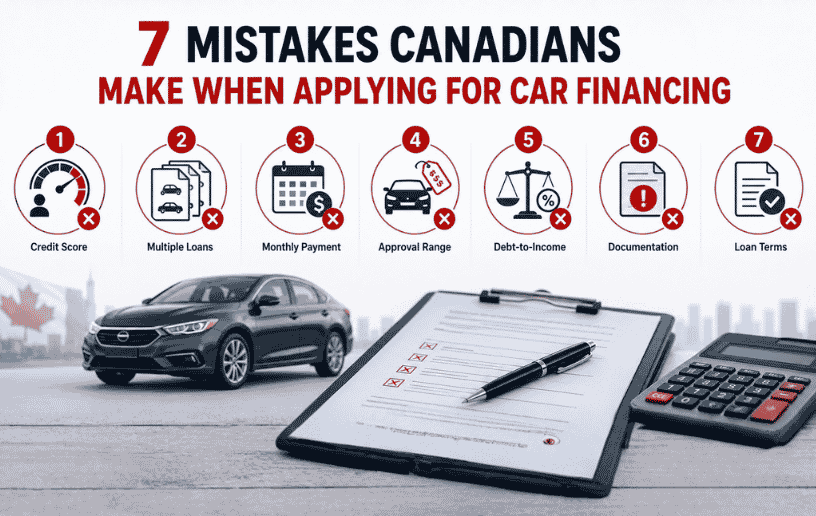
Here are the 7 biggest mistakes Canadians make when applying for car financing and how to avoid them.
Mistake #1 – Applying Without Checking Your Credit Score First
One of the biggest mistakes Canadians make is applying for vehicle financing without first understanding their credit situation.
Many borrowers assume their credit is “probably fine,” only to discover unexpected issues once the lender reviews their application.
This can create serious problems — especially if you are hoping to qualify for competitive interest rates.
Why Your Credit Score Matters
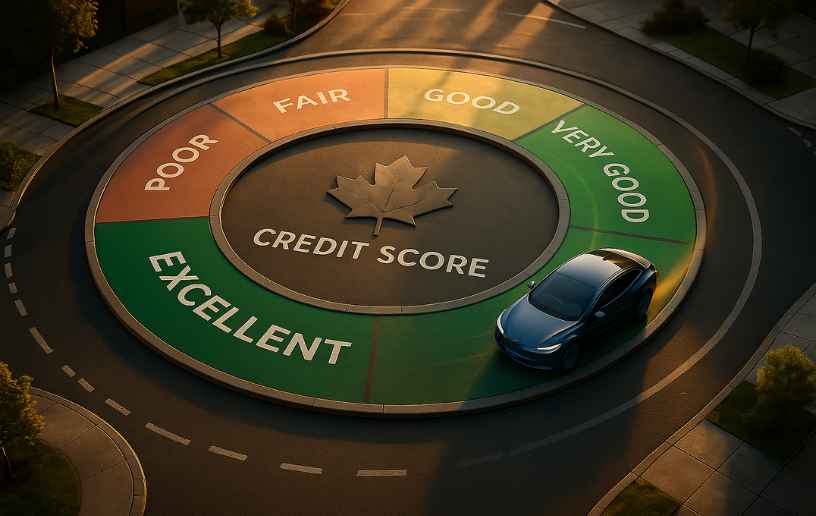
Your credit score plays an important role in car financing approval because it helps lenders understand how responsibly you have managed debt in the past. In Canada, borrowers are often categorized into risk tiers ranging from excellent to subprime credit, which can directly affect approval chances, interest rates, and financing options. While a lower score does not always mean rejection, it may result in higher borrowing costs over time.
Know Where Your Credit Stands
Before applying, review your credit score and report to understand your financial position. Many Canadians are unaware of issues such as missed payments, old collections, unpaid bills, or reporting errors that may affect approval. Even minor inaccuracies can negatively impact financing opportunities. Reviewing your report through providers like Equifax Canada or TransUnion Canada can help identify problems early.
Improve Your Credit Profile Before Applying
Small improvements can make a meaningful difference. Paying down credit card balances, reducing debt, and avoiding missed payments may improve lender confidence and potentially help secure better financing terms. Even a slight improvement in your credit profile could reduce interest costs significantly over the life of your loan.
Mistake #2 – Applying for Multiple Car Loans Without a Strategy
When Canadians get declined for financing — or worry they might be — many rush to apply through multiple dealerships, banks, and online lenders at once. While this may seem like a smart way to improve approval chances, it can sometimes create unnecessary financing complications.
Multiple Applications Can Affect Your Financing Profile
Every financing application may trigger a hard credit inquiry. Too many inquiries within a short period can sometimes signal higher risk to lenders and may temporarily affect your credit profile. From a lender’s perspective, multiple applications may suggest financial stress or difficulty securing approval elsewhere.
Rate Shopping Has Limits
Many Canadians assume applying everywhere is harmless because auto-loan inquiries are sometimes grouped as one “shopping event” by certain credit scoring models. However, this does not mean unlimited applications are risk-free. Timing, lender type, and how applications are submitted still matter, especially when applications are made randomly through multiple dealerships.
Take a Strategic Approach Instead
Rather than applying everywhere, focus on smarter financing decisions. Getting pre-approved first can help establish a realistic budget, while working with a financing specialist may connect you with lenders suited to your financial profile. Borrowers with limited credit history, self-employment income, or bruised credit often benefit more from targeted financing solutions than broad, random applications.
Mistake #3 – Focusing Only on the Monthly Payment
One of the most common mistakes Canadians make when financing a vehicle is focusing only on monthly payments. While affordability matters, a lower monthly payment does not always mean a better financial decision. Many buyers ask, “What will my monthly payment be?” instead of looking at the bigger financial picture.
Lower Payments Can Cost You More Long-Term
Longer loan terms often reduce monthly payments, making a vehicle seem more affordable upfront. However, stretching financing over more years can significantly increase the total interest paid, overall borrowing cost, and risk of negative equity. A smaller monthly payment today may end up costing far more over the life of the loan.
Total Loan Cost = Monthly Payment × Number of Payments
Monthly Payments Are Only Part of the Cost
Many Canadians forget that vehicle ownership includes more than just the loan payment. Insurance, fuel, maintenance, winter tires, registration fees, and parking costs can all add up quickly — especially depending on your province and vehicle type. What feels affordable monthly may become financially stressful once these expenses are included.
Focus on Total Affordability, Not Just Payments
Instead of asking, “Can I afford this monthly payment?”, ask yourself, “Can I comfortably afford the total cost of owning this vehicle?” A financing pre-approval before shopping can help set a realistic budget, giving you a clearer understanding of what fits comfortably within your finances.
Mistake #4 – Choosing a Vehicle Outside Your Approval Range
Many Canadians make the mistake of shopping for a vehicle before understanding what they realistically qualify for. It is easy to get attached to a car while browsing online or visiting dealerships, but choosing a vehicle outside your financing range can lead to disappointment, delays, or rejection.
Lenders Evaluate the Vehicle Also Along with the Borrower
Many borrowers assume approval depends only on income and credit score. In reality, lenders also assess the vehicle itself, including its age, mileage, condition, resale value, and overall reliability. Since the vehicle acts as collateral, lenders want confidence that it will hold enough value over time. This means not every vehicle qualifies equally for financing.
Some Vehicles Are Harder to Finance
Certain types of vehicles may face stricter financing conditions in Canada. Older used cars, high-mileage vehicles, luxury models, rebuilt or salvage-title cars, and overpriced vehicles can sometimes be considered higher risk by lenders. Even borrowers with stable income may face challenges if the vehicle does not fit lender guidelines or affordability expectations.
Understand Your Budget Before Shopping
The best way to avoid this mistake is to get pre-approved before visiting a dealership. Knowing your financing range helps you shop realistically, avoid emotional decisions, and focus on vehicles that comfortably fit your budget. It is also important to factor in ownership costs like insurance, fuel, and maintenance — not just the loan payment. Understanding what you qualify for beforehand makes the buying process smoother and far less stressful.
Mistake #5 – Ignoring Debt-to-Income Ratio (DTI)
Many Canadians assume that earning a good income automatically guarantees car financing approval. However, lenders look beyond salary and closely examine how much debt you already carry. This is where your Debt-to-Income Ratio (DTI) plays an important role.
Income Alone Does Not Guarantee Approval
Debt-to-Income Ratio refers to how much of your monthly income is already being used to cover financial obligations. Lenders assess whether adding a car payment would place too much strain on your finances. Existing expenses such as credit cards, student loans, mortgages, personal loans, or other vehicle payments can all affect approval — even for high-income earners.
High Debt Can Impact Financing Terms
Two borrowers with the same income may receive very different financing outcomes based on their existing debt levels. Someone with lower monthly obligations and stronger payment habits may qualify more easily or receive better loan terms than a borrower carrying high balances and multiple payments. Lenders prioritize affordability and repayment comfort, not income alone.
Improve Your DTI Before Applying
Small financial adjustments before applying can improve approval chances. Paying down credit card balances, avoiding major purchases, reducing monthly debt obligations, or increasing your down payment may strengthen your financing profile. Taking steps to improve affordability before applying can help reduce borrowing costs and improve lender confidence.
Mistake #6 – Providing Incomplete or Incorrect Documentation
Even with stable income and decent credit, many Canadians face financing delays or even rejection because of incomplete or incorrect paperwork. Lenders rely on documentation to verify financial stability and repayment ability, making accuracy just as important as income.
Documentation Helps Lenders Verify Your Profile
During the approval process, lenders want to confirm factors such as income stability, employment consistency, identity, residential history, and overall affordability. Missing or inconsistent documents can slow approval timelines and, in some cases, prevent lenders from verifying key information altogether.
Different Borrowers May Need Different Documents
Required paperwork can vary depending on your situation. Salaried employees may typically need ID, pay stubs, and proof of employment, while self-employed Canadians often require tax returns, Notice of Assessment (NOA), or business financial records. Newcomers to Canada may also need work permits, proof of address, employment details, or Canadian banking information.
Prepare Early and Double-Check Everything
Simple mistakes such as incorrect income details, outdated documents, missing signatures, or delayed responses can create unnecessary approval issues. Preparing paperwork early, being transparent about finances, and confirming document requirements beforehand can help create a smoother and faster financing experience.
Mistake #7 – Celebrating Approval Without Reviewing the Loan Terms
For many Canadians, getting approved for car financing feels like the hardest part of the process. However, approval alone does not guarantee a good financial decision. One of the biggest mistakes borrowers make is accepting financing without fully understanding the loan terms.
Approval Does Not Always Mean the Best Deal
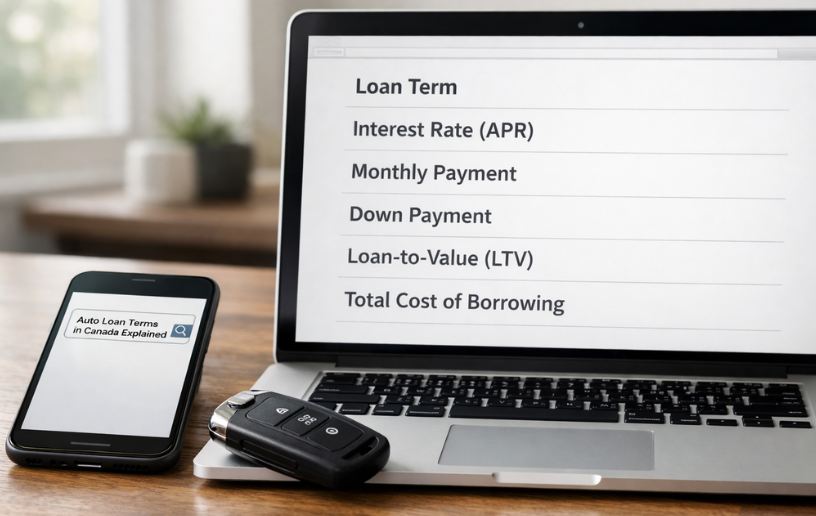
Before signing, it is important to review key loan details such as the interest rate (APR), loan length, payment frequency, and repayment flexibility. While longer terms may reduce monthly payments, they can also significantly increase the total borrowing cost over time.
Total Cost of Financing = Principal + Interest Paid
Understand the Risk of Negative Equity
Many Canadians become “upside down” on their car loan, meaning they owe more than the vehicle is worth. Longer financing terms can increase this risk, especially if you trade in the vehicle early. In some cases, unpaid loan balances roll into the next loan, creating larger payments and higher long-term debt.
Ask the Right Questions Before Signing
Instead of focusing only on monthly affordability, take time to understand the full agreement. Ask questions like: What is the total borrowing cost? How much interest will I pay overall? Are there prepayment penalties? Can I comfortably afford this loan long-term? Approval matters — but understanding what you are agreeing to matters just as much.
Finance Smarter: Avoid Costly Car Financing Mistakes
Applying for car financing in Canada can feel complicated, especially with rising vehicle prices, changing interest rates, and stricter lending requirements. However, many financing challenges are often the result of simple, avoidable mistakes.
From overlooking your credit profile to focusing only on monthly payments or skipping pre-approval, small decisions during the financing process can have a major impact on approval chances, borrowing costs, and long-term affordability.
The good news is that a little preparation can make a significant difference.
Taking the time to understand your financial situation, reduce existing debt, organize documents, and review financing options carefully can help you secure a smoother approval process and better loan terms.
Ready to Finance with Confidence?
Avoid unnecessary surprises and costly financing mistakes.
Get pre-approved for car financing to understand your options, know what you qualify for, and shop with greater confidence before stepping into a dealership.