
Car Title Loans in Calgary and Edmonton: How They Work in Alberta
19 September 2026Drive through almost any commercial strip in Calgary or Edmonton and you'll spot at least one storefront advertising fast cash against your vehicle. Car title loans have a visible presence in both cities, and they get searched for the same reason payday loans do: someone needs money quickly and their car is the one asset they own outright, or close to it. Before you hand over your keys or your registration, it helps to understand exactly what you're signing up for and what it actually costs compared to the alternatives sitting right next to it.
What a Car Title Loan Actually Is
A title loan is a short-term loan secured against a vehicle you already own, or own enough of. The lender places a lien on the title, appraises the car, and lends you a percentage of that appraised value, usually well below what the car is actually worth. You keep driving the vehicle in most cases, but the lender holds the legal claim to it until the loan is repaid. Miss enough payments and the lender can repossess and sell the car to recover what's owed, the same way a regular auto loan lender can, except the cash you received often has little to do with buying the vehicle in the first place.
This is a different product from financing a purchase. A standard auto loan puts you into a car. A title loan takes equity back out of one you already have, which is the same basic idea behind an auto equity loan, though the two aren't always priced or structured the same way.
Why Calgary and Edmonton Specifically
Both cities have a dense cluster of storefront title lenders, largely because Alberta's mix of higher vehicle ownership rates, a large population of shift and gig workers with irregular pay cycles, and stretches of strip mall real estate make it an easy market to operate in. That density means competition, and competition among these lenders doesn't always translate into better rates for the borrower the way it might with mainstream credit. It mostly means more locations offering a similar product at a similar cost.
What It Actually Costs
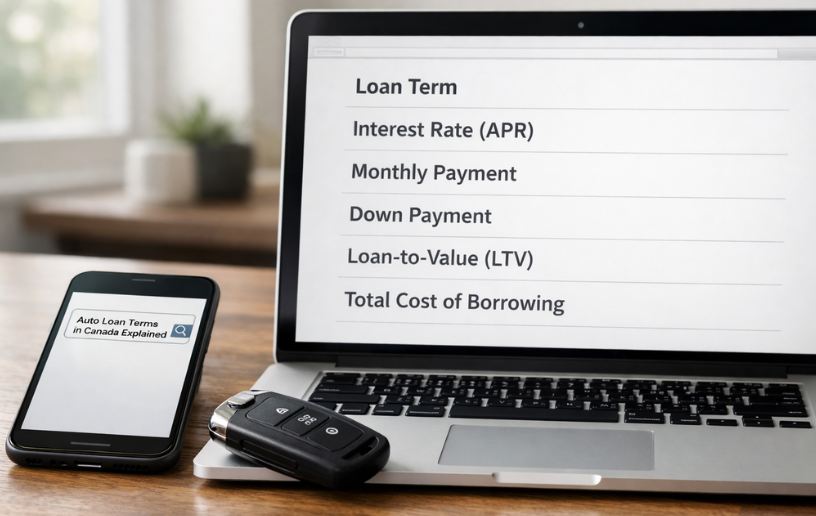
Title loans fall into the category of high-cost credit, and Alberta requires lenders offering this kind of product to disclose the full cost of borrowing before you sign, including the annual percentage rate and any fees. Read that disclosure line by line rather than skimming to the monthly payment. Title loans are frequently structured with short terms, sometimes a matter of months, and rolling the balance over into a new term when you can't pay it off adds fees on top of fees. What looked like a manageable amount to borrow against your car can grow considerably if the loan gets extended more than once.
Compare that against a regular installment loan from a lender who works with subprime credit. Our guide to bad credit car loans in Canada covers how those lenders actually price risk, and in most cases, even a higher-rate installment loan built around your income and a fixed term comes out cheaper over time than a short-term title loan that gets renewed more than once.
How Much You Can Actually Borrow
Lenders typically cap a title loan at a fraction of the vehicle's wholesale value, often somewhere in the range of a third to half, depending on the lender and the condition and age of the car. A newer, low-mileage vehicle with no liens against it will get you more room than an older car that's already carrying some depreciation. If you still owe money on the vehicle through a regular car loan, most title lenders won't touch it at all, since they need to be first in line on the lien.
The Real Risk Isn't Just the Rate
The rate matters, but the bigger risk with a title loan is what happens if your circumstances don't improve by the time the loan is due. Losing a car to repossession over a loan that was meant to be a short-term bridge is a much bigger financial setback than the original problem the loan was supposed to solve, especially if that car is also how you get to work. Before signing, be realistic about whether your income situation will actually be different in a few months, or whether you're likely to be back at the same lender asking to extend the term.
Questions to Ask Before You Sign
Get the total cost of borrowing in writing, expressed as both a dollar figure and an annual percentage rate, not just a payment amount. Ask directly what happens if you miss a payment, including whether there's a grace period before the lender can move toward repossession. Ask whether the loan reports to the credit bureaus at all, since some short-term lenders in this space don't report on-time payments, which means the loan won't help rebuild your credit even if you pay it perfectly. And ask what fees apply if you want to pay the loan off early, since a loan that penalizes early payoff is working against your best interest by design.
When a Different Kind of Loan Makes More Sense
If what you actually need is a manageable installment loan rather than a fast short-term bridge, it's worth checking what you qualify for through a lender who works across the credit spectrum before committing to a title loan storefront. A traditional installment loan, whether it's refinancing your existing car loan or a separate loan secured against a vehicle you own outright, generally comes with a longer term, a fixed schedule, and a lower total cost than a title loan that gets renewed even once. It also typically reports to the credit bureaus, so consistent payments actually work in your favor going forward.
The Bottom Line
Title loans exist in Calgary and Edmonton because they solve a real, immediate problem for some borrowers, but they're one of the more expensive ways to borrow against a vehicle you own. Before signing with a storefront lender, it's worth finding out what a longer-term, lower-cost option would actually look like for your situation, especially if there's any chance you'd need to extend the loan past its first term.
Auto Lending Canada works with buyers and owners across BC, Alberta, and Saskatchewan, including Calgary and Edmonton, on both vehicle purchases and refinancing existing auto loans. Start your application here to see what your options look like before you consider a title loan.