
Bad Credit Car Loans in Canada: The Complete Guide
04 April 2025Yes, you can get a car loan in Canada with bad credit. That's the short answer, and it's an honest one, not a sales pitch. What actually changes with bad credit is the rate you're offered, how much documentation a lender wants, and which lenders will work with you at all. This guide covers how credit tiers actually work, what lenders check beyond your score, and the real steps to get approved, so you know what you're walking into before you apply.
What "Bad Credit" Actually Means in Canada
Lenders generally bucket credit scores something like this: 760 and up is excellent, 660-759 is good, 560-659 is fair, and below 560 is where most lenders start describing an applicant as "bad credit." A thin file, meaning little or no credit history at all rather than a damaged one, often gets treated similarly to fair credit, since the lender simply doesn't have enough history to evaluate risk either way.
None of these bands are hard cutoffs. A 580 score with steady income and two years at the same job reads very differently to an underwriter than a 580 with unstable employment and no fixed address. Subprime auto lenders in Canada, the ones who specialize in this exact market, weigh income stability and debt load almost as heavily as the number on your credit report.
Can You Actually Get Approved?
In most cases, yes. Bad credit narrows your options and changes your rate, it doesn't eliminate financing. A meaningful part of the Canadian auto lending market exists specifically to serve buyers with damaged or thin credit, at rates that reflect the added risk but are still workable for most household budgets. What it takes is a realistic expectation going in: a lower score generally means a higher rate, sometimes a larger down payment requirement, and more paperwork to verify income than a prime borrower would need to provide.
What Lenders Check Beyond Your Score
Your credit score is the starting point, not the whole picture. Income stability matters, ideally documented with recent pay stubs, a Notice of Assessment, or several months of bank statements if you're self-employed. Your debt-to-income ratio matters too, since a strong score paired with a heavy existing debt load can still push your rate up or complicate approval. Our guide on debt-to-income ratio and car loan approval covers how lenders actually weigh this alongside your credit file.
Employment history and how long you've been at your current job also factor in, since consistency signals lower risk than frequent job changes, even at similar income levels. None of these fully offset a low score on their own, but together they give a subprime lender a fuller picture than the score alone provides.
Steps to Get Approved
1. Check Your Own Credit Report First
Pull your report from Equifax or TransUnion before you apply anywhere. Confirm your actual score, since guessing tends to be inaccurate in both directions, and check for errors. Incorrect late payments, accounts that aren't yours, or outdated balances do real damage and are worth disputing before you apply, not after a lender flags them. Our guide on minimum credit score requirements for car financing in Canada covers what different lender tiers typically expect.
2. Gather Proof of Income and Stability
Have pay stubs, a recent Notice of Assessment, or bank statements ready before you apply. Self-employed applicants get scrutinized more closely here, so six months of clean, consistent statements ready in advance saves a week of back-and-forth once you're in underwriting.
3. Get Pre-Approved Before You Shop
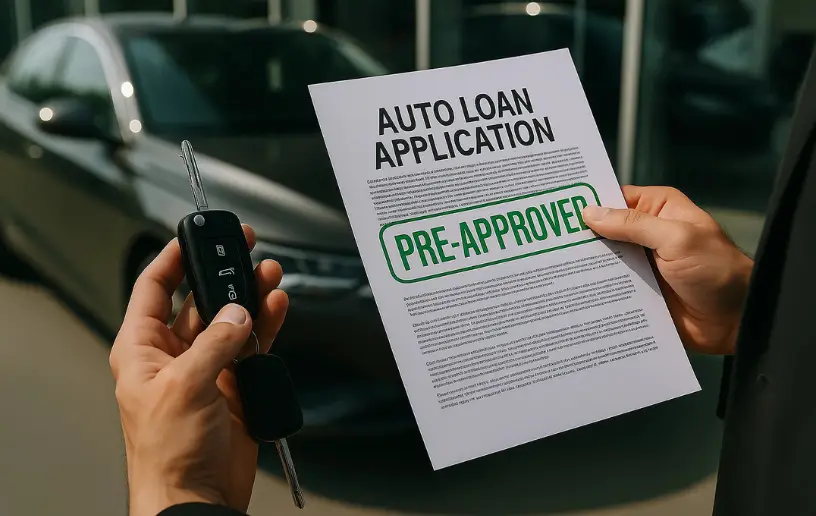
Pre-approval tells you your realistic rate range and budget before you're standing in a dealership finance office, and it puts you in a stronger negotiating position than walking in and hoping. It also means you're comparing a dealer's in-house financing against a number you already have, rather than taking their first offer at face value. Our breakdown of pre-approval versus final approval covers what each step actually locks in.
4. Consider a Down Payment or Trade-In
Even a modest down payment, or positive equity from a trade-in, lowers what you need financed and directly improves your loan-to-value ratio, which is one of the first things a subprime underwriter checks. It can be the difference between a workable rate and a marginal approval.
What Rates Actually Look Like
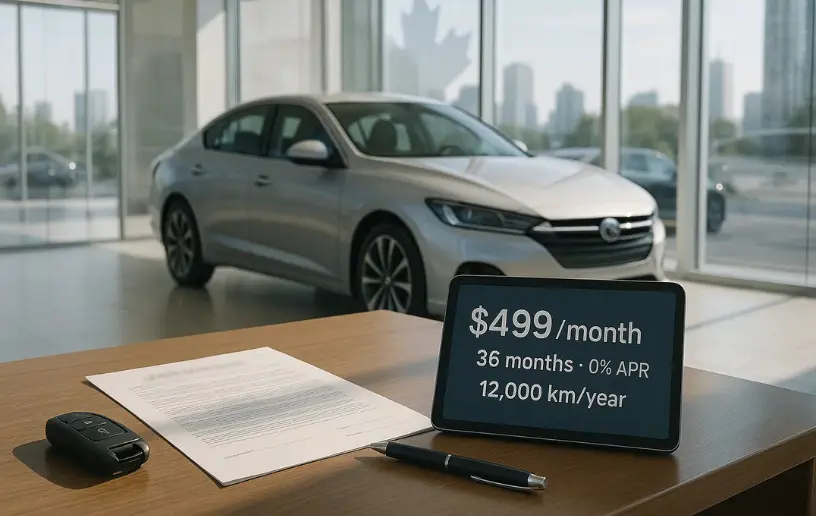
Bad credit auto loans in Canada commonly land somewhere between 15% and 30% APR, compared to roughly 6-9% for prime borrowers, depending on the province, the lender, and how far outside prime territory your file sits. That's a real cost difference over a 60 or 72-month term. It's also exactly why refinancing after 12-18 months of on-time payments, once your score has moved, is worth doing the moment you qualify for a better rate rather than riding out the original term.
A Car Loan Can Help Rebuild Your Credit
A car loan reported to Equifax and TransUnion is one of the more effective tools for rebuilding a damaged score, since it's installment debt reporting monthly for years, not a single event. Missing a payment does the opposite, and quickly. Our guide on how your car loan can make or break your credit score covers this in both directions.
Common Mistakes Worth Avoiding
Buying more vehicle than your approval realistically supports is the most common one. A lender approving a subprime application is far more comfortable financing a reliable $15,000 used vehicle than a $35,000 one, because the repossession-risk math changes with the loan amount. Skipping pre-approval and negotiating financing cold at the dealership is another, since it leaves you comparing nothing against nothing. And applying to several lenders spread out over weeks instead of within a short window does more credit-score damage than applying to the same lenders all at once; multiple auto loan inquiries within about two weeks are typically bundled together as rate shopping rather than counted separately.
What Specifically Moves the Needle on Your Rate
Beyond the basics above, there are several concrete levers, down payment size, vehicle choice, co-signers, and how you shop rates, that make a measurable difference to what you're actually offered. Our companion guide on car loans for bad credit in Canada: what actually moves the needle goes through each of those levers in detail if you want the tactical side of this once you understand the basics above.
The Bottom Line
Bad credit narrows your options, it doesn't close the door. Know your actual score before you apply, bring solid proof of income, get pre-approved rather than negotiating cold, and be realistic about the vehicle price relative to your approval. Auto Lending Canada works with buyers across BC, Alberta, and Saskatchewan across the credit spectrum, including people who've been turned down elsewhere. Start your application here to see what you can actually qualify for.