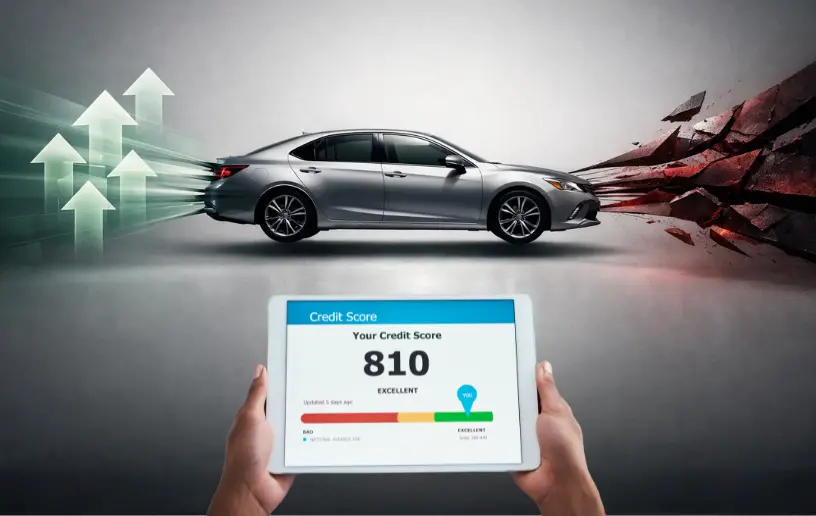
How Your Car Loan Can Make or Break Your Credit Score
06 December 2025For most Canadians, a car loan is not just a way to get a new vehicle. It is one of the largest credit products they will ever manage outside of a mortgage. What many people do not realize is that a single auto loan can influence almost every part of their financial future. From mortgages to credit card approvals to personal loans, the way you handle your vehicle financing becomes a powerful signal to lenders.
Every payment or missed payment shapes how banks see your reliability. Every term you choose affects how strong or fragile your credit profile is. And every inquiry, refinancing decision, rollover or approval can push your score upward or drag it down.
Many people unintentionally lock themselves into bad loan structures or get pushed into approvals they do not fully understand. You can get pre-approved at Auto Lending Canada for your next car to ensure you are starting with a structure that supports your financial goals.
The Five Credit Score Factors Influenced by a Car Loan
Your credit score in Canada is made up of five main elements. A car loan plays a strong role in each one, sometimes in ways most borrowers do not expect.
a) Payment History (35%)
This is the single most important portion of your score. Lenders want proof that you pay what you owe and do it on time. Your car loan becomes a monthly test of your financial discipline.
What matters most
- Paying on time every month
- Never allowing a payment to reach thirty days late
- Avoiding sixty or ninety day late marks which hurt far more
- Showing consistency over long periods
Even one late payment can stay on your file for six years. Three late payments can cause lenders to classify you as high risk, even if you eventually catch up.
b) Credit Utilization (30%)
This section usually refers to revolving products like credit cards. However, a car loan still affects how healthy your credit profile looks because installment loans improve balance and variety.
Installment products do not impact your utilization ratio because they are not revolving accounts. This is helpful for Canadians trying to keep utilization low while still needing to build credit. A well managed auto loan can actually make your profile appear more balanced.
c) Length of Credit History (15%)
A longer credit history typically means a stronger score. Car loans usually run for years which helps build age on your file. When you keep a loan active and clean over a long period, your score becomes more stable.
However, if you pay off your loan too early, that active account disappears. This can shorten your average age of credit and sometimes cause a minor dip.
d) New Credit Inquiries (10%)
Every time a dealership or lender performs a hard inquiry, it gets recorded. A few inquiries are normal. Many inquiries clustered together look risky, especially if you do not get approved.
Soft inquiries are harmless and do not affect your score. Hard checks do. Unfortunately, many dealerships run your file through multiple lenders at once which can lower your score before you even buy the car.
e) Credit Mix (10%)
Scoring systems reward Canadians who can handle different kinds of credit. A healthy mix includes both revolving forms like credit cards and Installment forms like car loans.
For newcomers or people with thin files, adding a car loan can dramatically improve this category. It gives the credit bureaus more data points to evaluate your behaviour and reliability.
Canadian Credit Score Benchmarks
The average credit score in Canada sits around the mid 660 range but varies by province. Borrowers in Alberta and Saskatchewan often show wider score ranges while Ontario and BC see more stable averages.
Typical lender tiers:
- 760 plus: Excellent. Best auto rates.
- 720 to 759: Very good. Prime approvals.
- 660 to 719: Good. Standard approvals.
- 600 to 659: Near prime. Higher interest.
- Below 600: Subprime. Stricter terms with heavy lender conditions.
Understanding your tier helps predict:
- what interest rate you should expect
- whether refinancing will be easy later
- how sensitive your score might be to inquiries
- how much a late payment will impact you
If you aren't sure where you stand, you can get pre-approved at Auto Lending Canada for your next car to see which tier you qualify for today.
How a Car Loan Can Improve Your Credit Score
When managed correctly, a car loan can be one of the most powerful credit building tools available to Canadians.
Steady consistent monthly payments
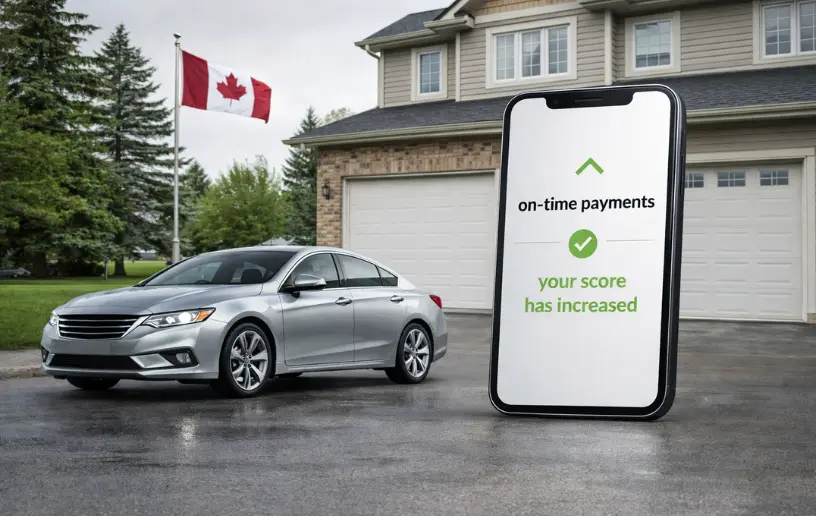
Every on time payment boosts your reliability profile. Over 12 to 18 months, a clean record of car payments can lift a score significantly.
Choosing an affordable monthly payment
Borrowers often get pressured into expensive approvals that push their monthly budget too far. Choosing a comfortable payment that you can maintain with ease is the secret to steady credit improvement.
Lower interest means lower chance of default
Lower interest rates reduce stress and make it easier to pay consistently. When your financial life feels manageable, your credit grows naturally.
Refinancing when your score improves
After 12 to 18 months of clean behaviour, many borrowers qualify for better rates. Refinancing at this stage can reduce your payment and keep your loan healthy. It can also move you from a subprime lender to a more preferred lender.
Installment loans signal reliability
Credit bureaus love predictable patterns. When you show that you can commit to a scheduled installment every month, lenders classify you as dependable. This increases your chances of getting approved for better products later, including mortgages.
How a Car Loan Can Damage Your Credit Score
Missed payments
Even one missed payment can cause your score to fall. If the payment crosses thirty days past due, the negative mark becomes severe.
Repeated late payments
A pattern of late payments tells lenders that you are struggling. This is often worse than a single mistake.
Loan defaults
If you stop paying entirely, the account becomes classified as a default. This stays on your record for years and can reduce your score drastically.
Repossession
A repossession is one of the most damaging events for credit. Even a single repossession over a small owed amount can follow a borrower for up to six years.
Dealer markups
Some dealerships increase interest rates without clearly explaining them. This creates unmanageable payments that lead to missed installments and long term damage.
Long term loans
Terms that stretch to eight or nine years often lead to negative equity and payment fatigue. These long contracts lock borrowers into debt cycles that become difficult to escape.
Major Challenges Canadians Face With Car Loans
High interest for thin file borrowers and newcomers - New immigrants or young Canadians often get pushed into expensive approvals because they lack history. These loans become difficult to manage long term.
Multiple dealership inquiries - Some dealers run ten or more checks at once. This creates unnecessary score drops even before you get approved.
Lenders who do not report payments - Some finance companies do not report on time payments which means you get no credit building benefit even though you pay every month.
Negative equity rollovers - Borrowers sometimes trade in cars while still owing money. The remaining debt gets pushed into the new loan which makes the new loan harder to manage.
Subprime contracts with hidden fees - Fine print fees and inflated pricing trap many Canadians in expensive and confusing loans.
Vehicles repossessed over small missed amounts - Even missing one Installment of a small amount can lead to repossession depending on the lender.
Auto Lending Canada works with borrowers who get trapped in these difficult situations by helping them restructure their contracts or secure more manageable terms.
How Much a Missed Payment Actually Damages Your Score
One late payment
A score may fall anywhere from thirty to ninety points depending on your history. If it is your first negative mark, the drop may be more dramatic.
Two late payments
This signals risk and lenders may downgrade your profile. The score drop can be severe.
Three or more late payments
This places you into a high risk category. Even after catching up, lenders see this pattern as unstable.
How long Negative Marks stay
Late payments remain on your file for six years. That is why catching up fast makes a difference. The sooner the account returns to good standing, the less long term damage you experience.
Should You Pay Off Your Car Loan Early?

Pros
• You save interest
• Your debt to income ratio improves
• You free up cash flow
• You reduce overall financial pressure
Cons
• Paying early shuts down an active account which can shorten credit history
• Removing an installment account weakens credit mix
• Your score may dip slightly due to reduced account diversity
• You might lose the chance to refinance strategically later
The best decision depends on your goals. If you are preparing for a mortgage, paying early might be wise. If you are building credit and need active accounts, keeping it open might be smarter.
Refinancing A Car Loan: When It Helps and When It Hurts
When Refinancing helps
- You secure a lower interest rate
- You reduce your monthly payment
- You replace a bad loan with a safer one
- You move from a subprime lender to a prime institution
When Refinancing hurts
- Too many lenders perform hard inquiries
- You refinance too early and lose credit age
- You roll negative equity into the new loan
- You extend the loan too far and fall into long term debt cycles
Dealer vs Bank vs Online Lender
Each lender type treats credit reporting differently. This influences how fast your score grows and how risky the loan becomes.
| Factor | Bank Lenders | Online Auto Lenders | Dealership (In-House Financing) |
| Reporting Accuracy | Very accurate and consistent | Strong, reliable, and timely | Often inconsistent or delayed |
| Payment History Quality | Clean, structured reporting | Clean and standardized | May show irregular patterns |
| Inquiry Type & Mistakes | Lowest risk of multiple or incorrect pulls | Transparent inquiry rules, typically minimal | Higher chance of multiple hard checks |
| Interest & Fees | Generally lowest rates | Competitive with banks | Higher rates, added markups or fees common |
| Credit Segment Focus | Primarily prime borrowers | Works with both prime + thin-file borrowers | More subprime approvals |
| Speed of Approval | Slower, more documentation | Quick approvals, simpler documentation | Fast but riskier |
| Overall Impact on Credit Score | Very positive due to accuracy and low errors | Strong positive impact, especially for new credit builders | Mixed or negative due to inconsistent reporting |
| Best For | Established credit profiles | Newcomers, thin files, self-employed buyers, established | Risk-tolerant or challenged credit borrowers |
For a transparent experience that prioritizes your credit health, get pre-approved at Auto Lending Canada for your next car.
How Newcomers, Students, and Bad Credit Borrowers Can Use Car Loans to Build Credit
- Start with a small manageable loan: Small principal amounts reduce stress and make monthly payments easier.
- 12 to 18 months of clean payments: This is usually enough to show credit bureaus a clear pattern of reliability.
- Avoid co-signing risky loans: Co-signing for friends or relatives can destroy your credit if they miss payments.
- Ensure your lender reports to bureaus: Some lenders do not. If your goal is to build credit, this becomes a wasted opportunity.
- Build your product mix slowly: Adding a secured credit card or low limit revolving account after a few months can speed up improvement.
What Canadians Should Check Before Signing Any Car Loan
A must check list for everyone before applying for a loan:
- APR (Annual Percentage Rate), not just interest rate: APR shows the true cost including fees. Many borrowers only look at the basic rate and get surprised later.
- Loan term: Shorter terms cost more monthly but less overall. Longer terms cost less monthly but more in total.
- Total cost of borrowing : Always calculate the entire amount you will pay, not just the monthly Installment.
- Prepayment penalty: Some loans charge fees for early payoff. Knowing this helps you plan.
- Hidden add ons: Extended warranties, protection packages or service contracts sometimes appear without explanation.
- Credit reporting clause: Make sure your payments will be reported.
- Insurance requirements: Some lenders require specific insurance plans which increase your expenses.
- Ability to refinance later: Ask whether refinancing is allowed and when.
The Four Step Auto Credit Success Framework
This system simplifies the entire journey and is easy for Canadians to follow:
Step 1: Choose the right payment plan
Affordable installments matter more for credit than a low interest rate. If you can pay it comfortably, you can build credit consistently.
Step 2: Protect the first 12 months
Avoid new credit, avoid missed payments, avoid overdrafts. This creates the strongest credit momentum.
Step 3: Refinance when your score stabilizes
Usually between 12 and 18 months. Lower payments reduce long term risk and free cash.
Step 4: Add a secondary product
A secured credit card or small line of credit speeds up your journey to 700 plus because it balances revolving and Installment credit.
A Smart Car Loan Is a Credit Building Tool
Borrowers who choose their loan carefully, avoid unnecessary inquiries, pay consistently and explore refinancing options at the right time often see their credit reach stronger levels within a year or two. Those who rush into approvals, ignore terms or manage payments poorly face long term credit damage that is expensive and emotionally draining.
Ready to take the first step toward a stronger credit score? Get pre-approved at Auto Lending Canada for your next car and drive away with confidence.