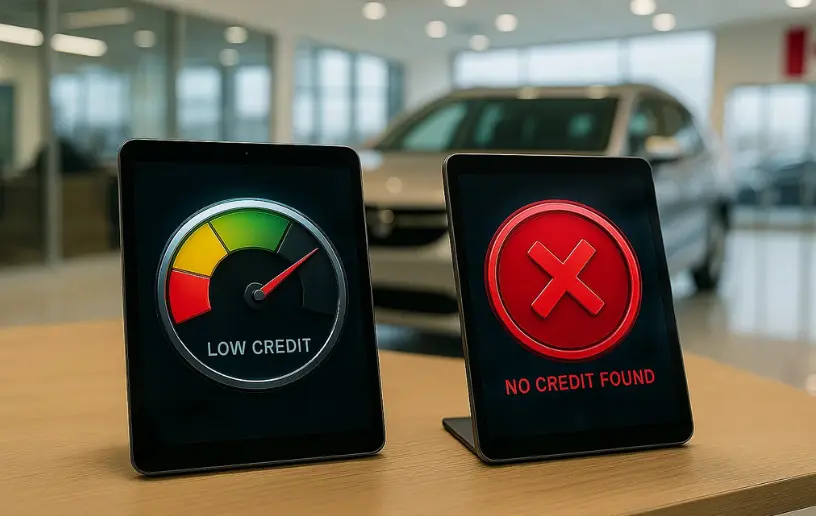
No Credit vs Low Credit Car Loans in Canada: Key Differences
16 November 2025Buying a car in Canada becomes trickier when your credit history isn’t perfect. If you’re a newcomer, student, self-employed worker, or someone rebuilding after a financial setback, you’ve probably wondered whether lenders treat no credit and low credit the same way.
Most people assume both situations fall under the broad category of ‘bad credit’, but the truth is more nuanced. Banks and auto financing companies assess these profiles very differently, and those differences shape everything — from your interest rate to the type of vehicle you can get approved for.
Let’s break this down clearly so you can make better decisions, spot better deals, and avoid common mistakes Canadians often run into when trying to finance a car without a perfect score.
Why No-Credit and Low-Credit Car Loans Are Common in Canada
A large share of Canadians don’t fit cleanly into the “good credit” category. The combination of rising living costs, expensive rents, student loans, tighter banking rules, and immigration growth has created a situation where many buyers either have no credit history at all or a credit score that’s below the ideal range.
For newcomers, this is almost unavoidable. You might have had excellent credit back home, but the moment you arrive in Canada, you’re considered completely new by Equifax and TransUnion. Young graduates face the same issue — without loans or long-term credit cards, they simply haven’t built a track record. And then there are Canadians who’ve experienced dips in their scores because of late payments, job loss, high credit card utilization, or old collections.
Car ownership in Canada isn’t a luxury. For many, it’s essential for work, school, family responsibilities, and daily commuting. That’s why the demand for no credit car loans and low credit auto financing is strong — but understanding the difference between the two gives you a real advantage.
What No Credit Means in Canada
No credit means exactly what it sounds like — you don’t have a Canadian credit history on file. It doesn’t mean you’ve handled money poorly. It simply means there’s not enough information for lenders to evaluate you.
This happens most commonly with:
- Newcomers who recently landed in Canada
- International students
- Young adults who never used credit
- People who’ve always paid with cash or debit
- Workers who relied on prepaid cards or alternative banking
Think of it this way. A lender wants data to make a decision. But if you’ve never taken a loan, never had a credit card, and never made payments that get reported to credit bureaus, the system has nothing to measure.
How Lenders Assess No-Credit Borrowers
Since lenders can’t rely on your past borrowing behaviour, they turn their attention to:
- Stability of your income
- Length of employment
- Type of job (full-time, part-time, self-employed)
- Monthly cashflow visible on bank statements
- Down payment or trade-in value
- Residency status (PR, work permit, student permit)
Your steady income matters more here than anything else. A newcomer with a strong salary and no Canadian credit can get approved more easily than someone with inconsistent income.
Why No Credit Isn’t a Negative Signal
This is where many newcomers get confused. They assume “no credit” automatically means “bad credit,” but lenders don’t see it that way. With no credit, you’re an unknown. With bad credit, you’re a known risk.
What Low Credit Means in Canada
Low credit means the lender can see your past borrowing behaviour — and some parts of it raise concern. In Canada, scores usually fall between 300 and 900. Most banks consider 660 and above as the “safe” zone.
Typical ranges:
- 300–559: Poor
- 560–659: Fair
A low score tells lenders that past borrowing decisions didn’t go smoothly or that your credit usage has been stretched too thin.
Common Reasons for Low Credit
This could be due to:
- Late or missed payments
- High credit card utilization
- Too many hard inquiries
- Debt sent to collections
- Loan defaults
- Bankruptcy or consumer proposals
- Short credit history
- Irregular income patterns
Some Canadians also have low credit simply because they weren’t familiar with how the system works. Using more than 30 percent of your credit limit or missing a single payment can drop your score quickly.
How Lenders Interpret Low Credit
Unlike no-credit borrowers, lenders can clearly see negative patterns. That’s why low-credit borrowers face more obstacles:
- Higher down payment requirements
- Higher interest rates
- More documentation
- More lender scrutiny
- Limited vehicle options at some dealerships
Still, low credit doesn’t mean you can’t get approved. It just requires more strategy.
Key Differences Between No Credit and Low Credit
Even though both groups are outside prime lending, the underlying risk is different. Here’s what lenders consider when comparing the two:
| Factor | No Credit | Low Credit |
| Lender Visibility | No past data | Past negative behaviour |
| Risk Perception | Medium | High |
| Interest Rates | Moderate | Higher |
| Approval Difficulty | Medium | High |
| Down Payment | Often optional | Often required |
| Main Barrier | Lack of history | History of missed or late payments |
| Best Strategy | Show stable income | Show recent positive behaviour |
Lenders are willing to take a chance on a no-credit applicant more quickly than someone with a proven track record of missed payments.
How Car Loan Approvals Work for No-Credit Buyers
When you’re applying for a car loan with no credit history, lenders shift their attention away from your credit score and toward the parts of your financial life that paint a clearer picture of how reliable you are. Instead of relying on past borrowing behaviour, they evaluate what your current situation says about your ability to handle monthly payments. Here are the areas they look at most closely, and why each one matters.
Your Job Stability
Lenders want to see that you’re bringing in steady income every month. Being employed for at least three months — even in an entry-level or hourly role — tells them you’ve settled into your job and have predictable paycheques. If you’ve just started a new job, they may still approve you, but they’ll look at the type of work, whether it’s full-time or part-time, and how long you were with your previous employer. Stability shows responsibility, and responsibility reduces lender risk.
Monthly Income Level
It’s not always about how much you earn — it’s about how consistently you earn it. Many newcomers and students mistake income level as the biggest barrier, but even part-time income is acceptable as long as deposits are regular and match your pay schedule. What lenders really assess is whether your monthly income comfortably covers a car payment, insurance, rent, and living costs. If the numbers make sense, your approval odds rise quickly.
Your Current Banking Habits
When lenders can’t lean on your credit history, they turn to your bank statements. They want to see clean deposits that align with your pay stubs, minimal cash withdrawals, and no NSF (non-sufficient funds) fees. A bank account that shows controlled spending, timely bill payments, and a healthy balance between pay cycles gives lenders confidence that you manage money responsibly — even without a formal credit record.
Residency and Duration in Canada
Newcomers often think their residency status makes financing harder, but it’s the opposite. Many lenders in Canada have dedicated programs specifically designed for new immigrants, international students, and temporary workers. These programs rely more on employment and income than credit history. If you’ve been in Canada long enough to show stable income — even just a few months — lenders see that as a positive sign.
Why These Factors Matter More Than Credit
For no-credit buyers, lenders build a picture entirely from your present rather than your past. Strong job stability, predictable income, responsible banking habits, and even a modest down payment work together to create that picture. Instead of evaluating the risk of past mistakes, lenders evaluate your current ability to handle payments. This is why many newcomers and recent graduates qualify faster than expected.
Realistic Expectations for No-Credit Loans
You can expect:
- Moderate interest rates
- Flexible terms
- Approvals based largely on income
- A chance to build credit quickly
For many newcomers, a car loan is often their first step toward establishing Canadian credit.
Ways to Improve Your Approval Odds
If you want to strengthen your profile:
- Keep at least two months of steady pay stubs
- Avoid applying to multiple dealerships
- Consider a co-signer if available
- Choose a car with a reasonable MSRP
- Make a small down payment
Even a $500 down payment can show commitment and reduce lender risk.
How Car Loan Approvals Work for Low-Credit Buyers
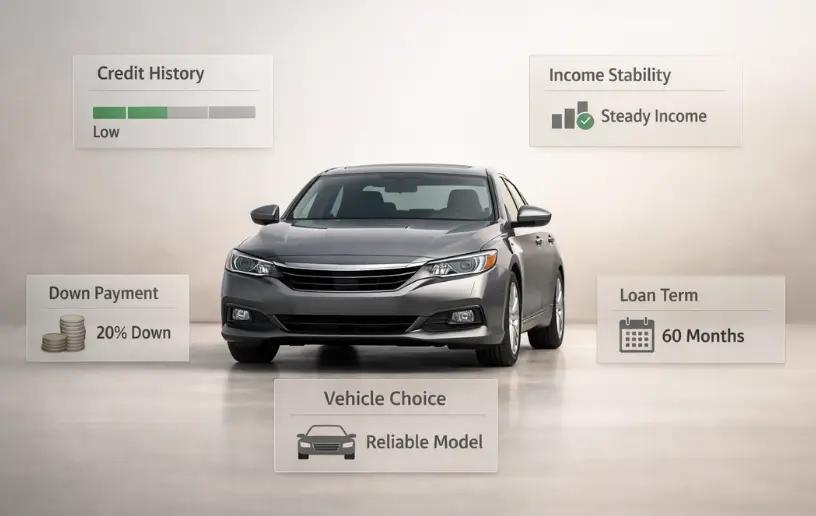
Low-credit approvals require a more detailed review. Lenders examine how recent your credit issues are and whether your current financial behaviour shows improvement.
Key Factors Lenders Review
- Were missed payments recent or years ago?
- Do you have open collections?
- Are you still in bankruptcy or a consumer proposal?
- How high is your debt-to-income ratio?
- Is your income stable enough to manage monthly payments?
This is where transparency helps. Many Canadians with low credit get approved once they explain their financial situation and show consistent income.
Realistic Terms for Low-Credit Loans
- Higher interest rates
- Larger down payments (5 to 20 percent depending on the lender)
- More documentation
- Vehicle restrictions at some dealerships
But low credit isn’t permanent. Positive changes over six to twelve months can shift you from subprime to near-prime.
Tips to Increase Your Chances
Here’s what makes a difference:
- Bring a co-signer with strong credit
- Pay off small collections before applying
- Don’t apply at multiple dealerships
- Keep utility and phone bills paid on time
- Choose a budget-friendly or used car
A slightly older vehicle usually leads to faster approvals because the lender is financing a lower amount.
Why MSRP Matters for No-Credit and Low-Credit Buyers
Lenders often calculate your loan amount like this:
MSRP – Down Payment – Rebates = Loan Amount
Higher MSRP means a bigger loan, which means higher risk. If you’re rebuilding credit or new to credit, choosing a model with a lower MSRP can:
- Increase your chances of approval
- Give you a lower monthly payment
- Reduce your interest cost over time
- Help you qualify for a shorter loan term
Some lenders even set maximum loan limits depending on your credit profile. A high-MSRP vehicle may simply fall outside their risk zone.
Best Auto Financing Options in Canada for No Credit & Low Credit Buyers
Financing a car without perfect credit isn’t impossible in Canada. You just need to understand which lender type fits your situation. Each option comes with its own strengths, limitations, and approval criteria. Here’s a clear breakdown to help you pick the right path.
1. Subprime Auto Lenders
Subprime lenders specialize in helping Canadians who have low or damaged credit. Their entire business model is built around evaluating applicants that traditional banks decline. They look at income, employment history, and stability more heavily than past credit issues.
The trade-off is interest rates — they’re higher because the lender is taking on more risk. But for buyers who need a car immediately (for work, school, or family), subprime lenders provide access when banks say no.
2. Credit Unions
Credit unions are known for being more people-focused compared to big banks. They often take time to understand your full financial picture rather than relying strictly on your score. This makes them a great option if your credit is low but your income is solid and stable.
Rates at credit unions can be friendlier than traditional lenders, but approvals can still be tougher if your score is very low.
3. Newcomer Auto Financing Programs
Several manufacturers in Canada — including Toyota, Hyundai, Honda, Kia, and Nissan — offer specific financing programs for newcomers. These programs are designed for people who have no Canadian credit history at all. Instead of relying on a credit score, they focus on your employment letter, income level, work permit or PR status, and overall stability.
4. Dealership Financing
Most dealerships partner with a range of lenders — from prime banks to subprime lenders — and will send your application to whichever lender they think fits your profile. This helps by giving you multiple options in one place.
The downside is that dealerships sometimes push higher-priced vehicles or add-ons because they’re incentivized by commissions.
Online Auto Financing Platforms (Auto Lending Canada)
Auto Lending Canada simplifies the entire loan process for anyone who doesn’t have perfect credit. Instead of going from dealership to dealership, submitting multiple applications, and collecting hard inquiries along the way, you fill out one quick form and get matched to lenders who actually work with your situation.
The platform is built for Canadians who fall outside traditional banking requirements, which means it supports:
- No credit
- Low credit
- Past bankruptcies or consumer proposals
- Non-traditional or self-employment income
- Newcomers who haven’t built Canadian credit yet
What this really means is that you don’t waste time with lenders who were never going to approve you in the first place. Auto Lending Canada filters all that noise for you and sends your file directly to lenders that already understand your profile.
Red Flags to Avoid During the Loan Process
When you’re in a sensitive credit position, it’s easy to fall into traps. Watch for:
A. Too-good-to-be-true approvals
If someone promises guaranteed approval or zero credit checks, walk away.
B. Hidden fees
Always ask for a line-by-line breakdown.
C. Yo-yo financing
Some dealerships initially “approve” you but call days later claiming the financing didn’t go through. This is a tactic to push higher rates.
D. Lenders who don’t report to credit bureaus
If your payments don’t get reported to Equifax and TransUnion, you won’t build credit.
E. Forcing unnecessary add-ons
Extended warranties, paint protection, and other extras shouldn’t be mandatory.
How Auto Lending Canada Helps You Get Pre-Approved for Car Loan
Whether you’re starting fresh or rebuilding, there are real pathways to approval in Canada. With the right lender, the right vehicle choice, and a bit of preparation, you can get a car that fits your budget and helps you grow your credit for the future.
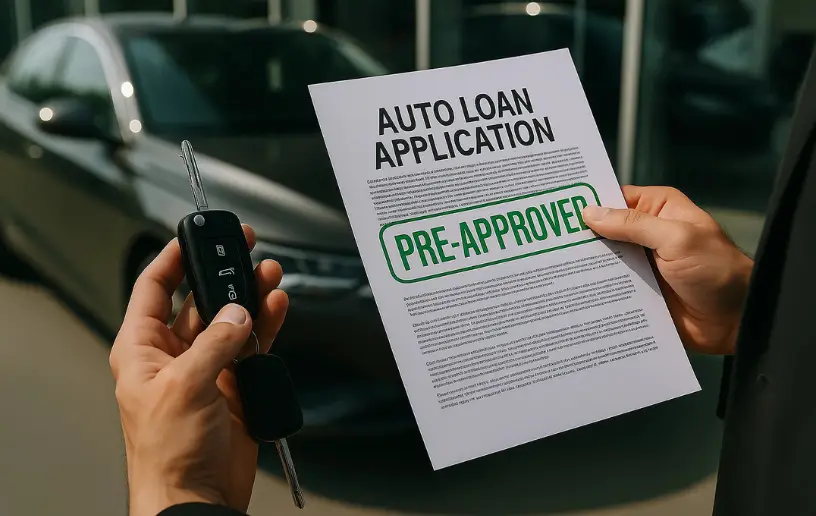
Auto Lending Canada simplifies the process for both no-credit and low-credit buyers. Instead of visiting multiple dealerships or facing multiple hard inquiries, you complete one quick pre-approval and get matched with lenders who specialize in your situation.
This makes the process smoother and helps you avoid common mistakes like over-shopping your credit.
FAQs for No-Credit and Low-Credit Buyers
1) Can I get a car loan with no credit?
Yes. Many lenders approve new-to-credit applicants based on income.
2) Does a car loan help build credit?
Absolutely. On-time payments improve your score with both credit bureaus.
3) Will a co-signer improve my chances?
A co-signer can bring your interest rate down and increase your approval odds.
4) How long does it take to improve a low score?
Most people see noticeable improvement within 3–6 months of positive activity.
5) Is a used or new car better for low-credit buyers?
Used cars with lower loan amounts often lead to faster approvals.