How the 2.5% Bank of Canada Rate Cut Affects Car Loans in Canada
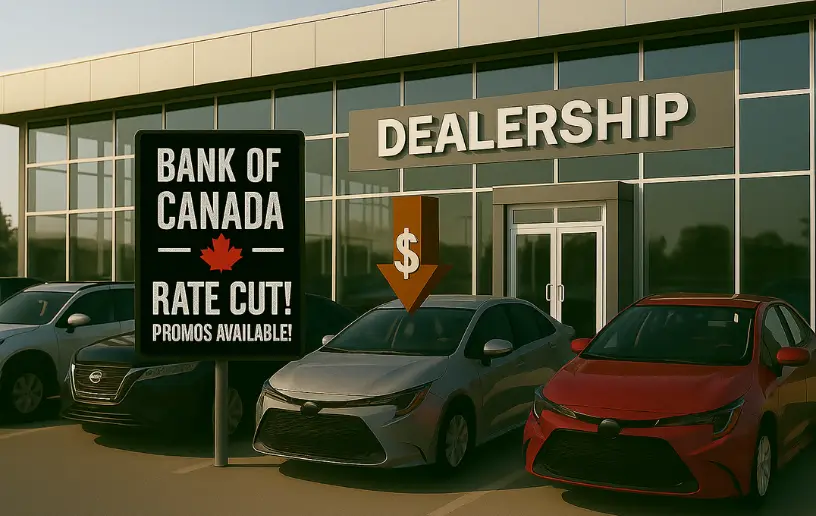
20 October 2025On September 17, 2025, the Bank of Canada lowered its policy rate to 2.50%. That shift influences auto financing interest rates and auto financing offers, shaping how quickly Canadians can secure better deals on new and used vehicles. You won’t see a perfect one-to-one drop at the dealership, but lower funding costs often set the stage for sharper car loan APRs—especially on new models where captive finance programs run promotional rates.
This guide explains what the cut means for car loan APRs in Canada, why new-vehicle financing tends to react faster than used-vehicle rates, and how credit score and loan-to-value (LTV) still determine your lane. You’ll learn how rate cuts vs. cash incentives change payments, how to compare offers using out-the-door totals (not teaser APRs), and the practical steps to take now—starting with a quick pre-approval to lock a rate window, shop with a clear budget, and move decisively when the right vehicle and promotion align.
How the BoC cut affects Auto Financing Interest Rates
The policy rate is the overnight rate that shapes lenders’ funding costs. When it drops, banks and automaker finance programs have more room to sharpen auto financing interest rates or boost auto financing offers (cash incentives, low-APR promotions). Your car loan APR won’t fall one-for-one on day one, but the move sets the tone for pricing over the next few weeks—especially for new-vehicle financing, where promotional rates are a core marketing lever.
What this means for Car Buyers
- Expect gradual pass-through:- Automaker finance programs typically refresh promotions monthly; banks and non-bank lenders adjust on their own timelines.
- New-vehicle APRs move first:- Automaker finance programs often roll out low-APR promos to drive volume, so new-car financing usually reacts before used-car rates.
- Used APRs can stay sticky:- Even if used prices cool, lenders’ risk models may keep used-auto APRs higher for longer.
- Pre-approval protects you:- Lock a rate window while you shop. If offers improve mid-search, you can switch; if they don’t, you still have a reliable fallback.
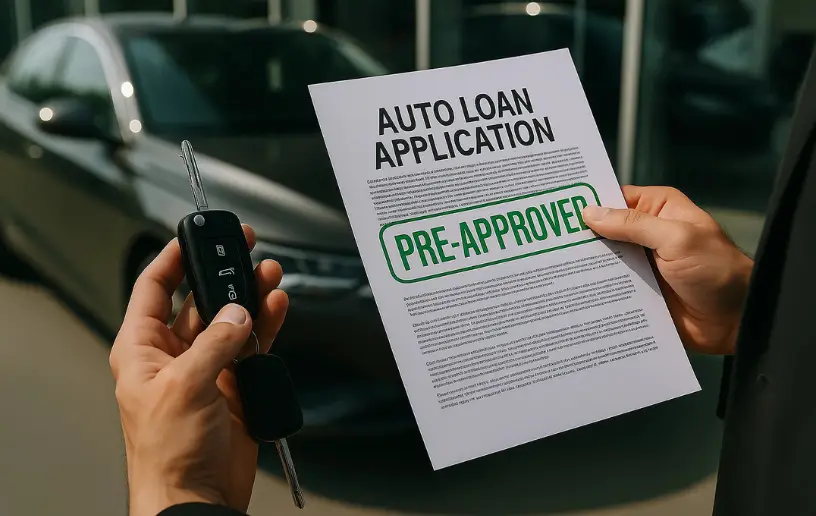
You can get pre-approved in under 3 minutes with Auto Lending Canada to see your best auto financing offers, rate range, and a clear budget before you visit the dealership.
How Car Loan APRs Move After a BoC Cut
Sharper Pricing
When the policy rate falls, banks’ and automaker finance programs’ cost of funds typically declines. That gives lenders more headroom to sharpen auto financing interest rates or fund cash incentives especially on new models with active sales targets.
Market Competition
Auto financing is a market-share game. If one brand launches aggressive auto financing offers (e.g., 0.99%–2.99% promos or extra cash credits) after a rate cut, competitors often respond to avoid losing traffic on core models. Having a pre-approval makes it easier to compare these rapidly changing offers apples-to-apples.
Risk Pricing
Even with lower funding costs, lenders price to risk. If their data shows higher loss expectations in certain tiers or vehicle segments, they may hold back some of the benefit from the rate cut.
New vs. Used Cars: Which Auto Financing Interest Rates Adjust Faster?
- New vehicles: Most responsive (thanks to subvented APRs) and more likely to show headline promotions early in the cycle.
- Used vehicles: APRs typically start higher and move slower. Focus on out-the-door price and total cost, not just the rate.
Leasing Note: Money Factor vs APR
Leases depend on a money factor (the lease financing rate) and residual value (what the vehicle is expected to be worth at lease-end). A lower funding cost can help money factor rates, but residuals move on their own timeline. Essentially, lease payments may improve—but not always as quickly or as much as loan APRs.
Car Loan Rate Cuts vs Incentives: Which Saves You More?
Small changes in auto financing interest rates and incentives affect your payment differently. Take a look at the tables below to compare scenarios quickly.
Table 1: –25 bps vs –50 bps vs $1,000 Incentive (Illustrative)
| Scenario | Loan Amount | Term | APR Change | Incentive | Monthly Impact (Typical) | What Usually Wins |
| A | $35,000 | 72 mo | — | — | Baseline payment | — |
| B | $35,000 | 72 mo | -0.25% | — | Down by a few dollars to $10–$12 | Small improvement |
| C | $35,000 | 72 mo | -0.50% | — | 2x improvement of Scenario B | Better than –25 bps |
| D | $35,000 | 72 mo | — | $1,000 | Often beats –25 bps on total cost | Frequently best on shorter terms |
Always compare total interest and out-the-door costs, not just the APR in isolation. On a $35,000 car loan, for instance, a small rate cut (like 0.25%) may lower your payment by only a few dollars each month, while a $1,000 cash incentive could deliver a much larger one-time saving upfront.
Table 2: New vs Used Car Example (Illustrative)
| Vehicle | Price | Term | APR | Incentive | Result (Directionally) |
| New model | $40,000 | 72 mo | 7.49% | — | Baseline new-car payment |
| New model (–25 bps) | $40,000 | 72 mo | 7.24% | — | Monthly down slightly |
| New model (+$1,000 incentive) | $39,000 | 72 mo | 7.49% | $1,000 | Payment often down more than –25 bps |
| Used model | $28,000 | 60 mo | 9.99% | — | Baseline used-car payment |
| Used model (–25 bps) | $28,000 | 60 mo | 9.74% | — | Payment down a bit |
| Used model (–$500 price) | $27,500 | 60 mo | 9.99% | — | Can match/beat –25 bps depending on term |
For a new $40,000 model financed over 72 months, a 0.25% rate cut (from 7.49% to 7.24%) only reduces your monthly payment slightly. However, a $1,000 incentive—essentially lowering the financed amount to $39,000—can often deliver a bigger real-world saving, especially when you include taxes and fees in the total cost.
For a used $28,000 model financed over 60 months, the same principle applies. A 0.25% rate drop helps a bit, but a small price discount (say $500) can match or even beat that impact depending on your term length.
Hence, when comparing auto financing offers, don’t focus only on the APR percentage. Evaluate how much each scenario changes your monthly payment, total interest paid, and out-the-door cost—because even small adjustments can shift what’s truly the better deal.
Want precise numbers for your vehicle and term? Get pre-approved to see your rate range and monthly impact in minutes.
Timing Your Application Smartly for Auto Financing Offers
Why pre-approval is the key to better auto financing offers
A pre-approval gives you a real, working budget before you even start comparing vehicles. You’ll know your rate range, maximum loan amount, and estimated monthly payments upfront. This turns you into a cash-equivalent buyer, giving you more control at the dealership—because you’re negotiating vehicle price, not just the payment. You can easily compare the dealer’s financing offer against your pre-approved auto loan and choose whichever gives the better total cost.
Getting pre-approved with Auto Lending Canada takes just about three minutes and doesn’t affect your credit in most cases, so you can move fast when the right vehicle appears.
How to time your car loan application around new promotions
Automaker finance programs usually refresh their promotions once a month, often around the start or end of a calendar month. These windows can bring new APR offers, cash incentives, or lease specials, depending on inventory levels and factory goals. Month-end and quarter-end remain especially strategic—dealers push to hit targets, which can translate into extra flexibility or dealer-level bonuses.
Factory orders and delivery timing
If you’re ordering a vehicle rather than buying from inventory, your timing matters even more. Always confirm:
- Estimated delivery date and how delays might affect pricing or incentives.
- How long your pre-approval and rate window stay valid if delivery crosses into a new promotional period.
A short delay can sometimes move your car into a different promo cycle, which may change your APR or available incentives. By staying pre-approved, you’re ready to act the day your preferred trim arrives—no waiting for new paperwork, no last-minute rate surprises.
Who Benefits Most from Lower Auto Financing Interest Rates
- Strong credit score tiers: Excellent and very good tiers typically see the sharpest promotional APRs first on new vehicles.
- Good credit + higher down payment: Even 3–5% more down can improve your loan-to-value (LTV) and unlock better pricing.
- Mainstream trims with local content: High-volume models often get competitive auto financing offers sooner when funding costs ease.
See your best offers before you visit the dealer—get pre-approved with Auto Lending Canada!
Risks and Misconceptions About Car Loan APRs
- Rate cuts aren’t instant at the dealership. Lenders update programs on their own calendars; it’s normal to see a few weeks of lag.
- Used APRs may stay sticky. Even if used prices ease, lenders can hold rates higher for risk reasons.
- Promos can shrink even when rates fall. Automakers rebalance between low APR and cash rebates based on inventory. Always compare total cost.
- Credit score still rules. A 25-bp BoC cut won’t erase the spread between “good” and “very good.” Improving your credit score often saves more than waiting.
Auto Financing Checklist: 5 Smart Steps Before You Buy
1. Get pre-approved before you shop
Start with a quick auto financing pre-approval. It gives you a rate window, a realistic budget, and the confidence to negotiate like a cash buyer. You’ll know exactly what you can afford—and it takes just a few minutes with Auto Lending Canada.
2. Shortlist 2–3 models (plus one backup)
Compare two or three vehicles that fit your needs and budget, and keep one backup trim in mind. This flexibility helps if pricing, availability, or auto financing offers change while you’re shopping.
3. Request out-the-door quotes
Don’t rely solely on APR headlines. Ask for out-the-door (OTD) quotes that include taxes, fees, and dealer add-ons. OTD pricing gives you a true cost comparison and prevents last-minute surprises during financing.
4. Confirm delivery timing
If you’re ordering a vehicle, confirm the estimated delivery date and make sure your pre-approval validity covers that window. Aligning your rate lock with the expected delivery ensures you don’t lose your deal if promotions change mid-process.
5. Track promo cycles and timing
Automaker finance programs typically refresh monthly, while dealers push harder at month-end and quarter-end to meet sales targets. Monitoring these cycles can help you catch limited-time low-APR offers or extra cash incentives before they expire.
Get Pre-Approved for Auto Financing Today
You can’t control promo calendars—but you can control your readiness. Start with a quick pre-approval to see your best auto financing offers, auto financing interest rates, and a budget you can trust—then shop like a pro.
Get pre-approved with Auto Lending Canada with no obligation and only a soft check today!
Auto Financing Interest Rates: FAQs for Canadian Buyers
1) Will car loan rates drop more after the 2.5% policy rate?
Possibly, but it’s not guaranteed. Lenders price off their funding, risk view, and promotional strategy—not just the policy rate. Expect changes to land in weeks, not hours.
2) Do used-car APRs fall as fast as new-car APRs?
Usually not. New-car promos are a marketing lever; used APRs are more tied to risk and often move more slowly.
3) Is leasing automatically cheaper after a cut?
Not necessarily. Lease math depends on the money factor and residual value. Sometimes a loan with a cash incentive beats a lease for total cost.
4) How long does a pre-approval last?
It varies by lender, but it’s typically a defined window that covers your shopping period and most delivery timelines.
5) If the BoC cut, why didn’t my dealer quote drop right away?
Because lenders update programs on their own calendars and may choose to push cash incentives instead of APR cuts. Always compare the mix (rate + incentive + price).