
Car Loans for Bad Credit in Canada: What Actually Moves the Needle
12 September 2026If your credit score has taken a hit, a car loan is still on the table in Canada. It just won't look like the loan your neighbour with an 800 score got. Rates are higher, terms are shorter, and lenders ask for more paperwork. None of that means you're stuck walking or begging for rides. It means you need to know what a subprime lender is actually checking before you apply, not after you get a confusing rejection.
What lenders mean by "bad credit"
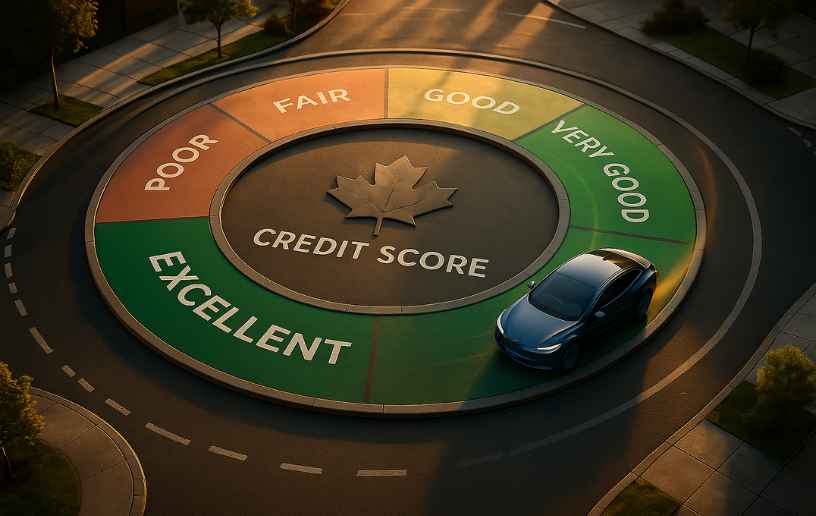
In Canada, most lenders bucket credit scores roughly like this: 760+ is excellent, 660-759 is good, 560-659 is fair, and anything below 560 is where "bad credit" conversations start. Below 300 is basically a starting score with no history at all, not necessarily a bad one.
Score alone doesn't decide the outcome. A 580 with steady income and six months at the same job reads very differently to an underwriter than a 580 with three jobs in a year and no fixed address. Subprime auto lenders in Canada, the ones who specialize in exactly this market, weigh income stability and debt-to-income ratio almost as heavily as the number on your credit report.
The steps that actually change your approval odds
Forget the generic "pay your bills on time" advice for a second. Here's what specifically affects a subprime auto approval:
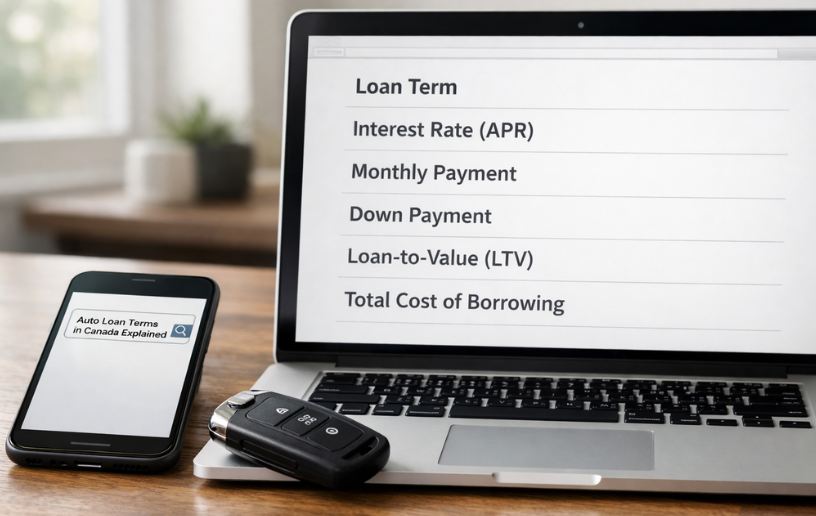
Put down what you can. Even $500-1,000 down signals to a lender that you have skin in the game, and it directly lowers the loan-to-value ratio, which is one of the first numbers an underwriter checks. A larger down payment can also be the difference between a 19% rate and a 24% rate on the same vehicle. For a closer look at how this works, see our guide on car loan down payments in Canada, and if you don't have cash to put down, our post on no down payment car loans in Canada walks through what those options look like.
Bring proof of income that's easy to verify. Pay stubs, a recent Notice of Assessment, or bank statements showing regular deposits. Self-employed applicants get scrutinized harder here, so having six months of clean statements ready before you apply saves a week of back-and-forth.
Consider a co-signer with stronger credit, if you have one available. It's not always necessary, but it can meaningfully lower your rate, especially in the 500-580 range where a lender is deciding between "yes at a high rate" and "no."
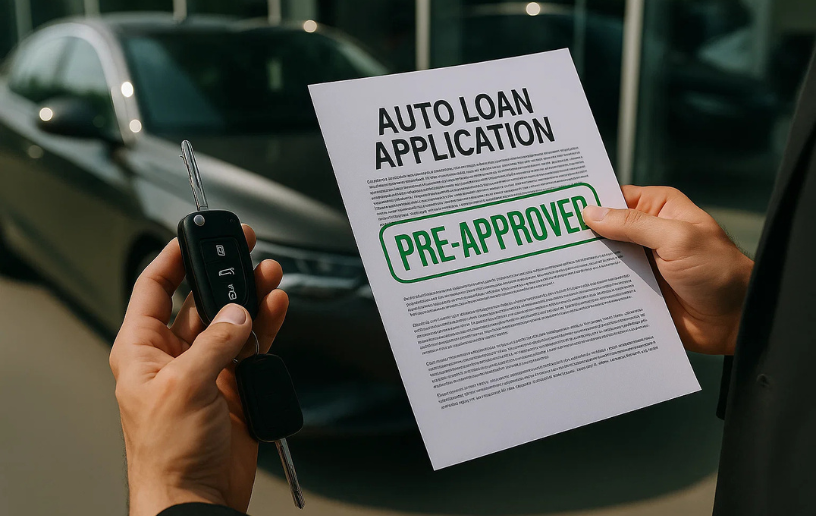
Shop the loan and the car separately. Dealerships sometimes mark up the interest rate on financing they arrange, and you won't always know by how much. Getting pre-approved through a lender that specializes in bad credit auto loans, before you walk onto a lot, gives you a number to compare against whatever the dealer offers.
Choose a vehicle that matches the loan, not the other way around. A lender approving a subprime application is far more comfortable with a reliable $15,000 used vehicle than a $35,000 one, because the math on repossession risk changes with the loan amount. Buying a cheaper, dependable car now and refinancing in a year or two once your score improves is a legitimate strategy, not a consolation prize. Our used car loan guide covers how vehicle age and condition affect the terms you're offered.
If you have a vehicle to trade in, don't overlook it. Positive trade-in equity works almost exactly like a cash down payment and lowers the amount you need financed. We break down the mechanics in our post on how trade-in equity affects your car loan.
What the interest rate actually looks like
Bad credit auto loans in Canada commonly land somewhere between 15% and 30% APR, compared to 6-9% for prime borrowers, depending on the province, the lender, and how far underwater the credit history is. That's a real cost difference over a 60 or 72-month term, and it's worth running the numbers before signing: a $20,000 loan at 9% costs roughly $4,000 in interest over five years, while the same loan at 24% costs closer to $13,000. The gap is why refinancing after 12-18 months of on-time payments is worth doing the moment you qualify for a better rate, rather than riding out the original term.
Rebuilding credit through the loan itself
A car loan reported to Equifax and TransUnion is one of the more effective tools for rebuilding a damaged score, mainly because it's installment debt reporting monthly for years, not a single event. Missing a payment does the opposite and fast. If cash flow is tight in a given month, calling the lender before the due date, not after, is usually the difference between a workable arrangement and a mark on your file that takes years to fade.
Where this leaves you
A low credit score narrows your options, it doesn't eliminate them. Know your real budget before you shop, get pre-approved separately from the dealership, bring solid proof of income, and treat the vehicle price as the lever you control most directly.
Auto Lending Canada works with buyers across BC, Alberta, and Saskatchewan across the credit spectrum, including people who've been turned down elsewhere. Start your application here and find out what you can actually afford before you talk to a dealer.