
Used Car Financing in Canada: Rates, Requirements & How to Get Approved (2026)
22 August 2026Financing a used car in Canada works differently than financing a new one, and most of those differences don't show up until you're already at the dealership or messaging a private seller. Lenders look harder at the vehicle itself, not just your credit file. The car's age and mileage can move your rate, shrink your loan term, or knock certain vehicles out of contention entirely. If you're buying used this year, here's what actually happens behind the scenes when a lender decides whether to approve you, and at what price.
Why used car loans aren't priced like new car loans
A lender's real concern is the collateral. If you stop paying, the car is what they repossess and sell, and a vehicle loses a chunk of its value every year it's on the road. A three-year-old car is a much safer bet for a lender than a twelve-year-old one with 180,000 km on it, so that risk gets built directly into the rate.
New car loans in Canada often start in the low single digits for buyers with strong credit, sometimes lower still with manufacturer incentives. Used car rates run higher across every credit tier, and the gap widens as the vehicle ages. That's not really a Canada-specific quirk, it's how auto lending works most places, but it catches a lot of first-time used buyers off guard when they assume their credit score alone sets the rate.
Age and mileage limits: the part most buyers don't see coming
Every lender sets its own cutoffs, but there are patterns across most of the Canadian market. A lot of lenders cap loans at vehicles no older than 8 to 10 years by the end of the loan term, not at the time of purchase. So a 7-year-old car financed over 5 years might push right up against that limit, and it can affect the term you're offered even when your credit is fine.
Mileage works the same way. A common ceiling sits somewhere around 150,000 to 200,000 km, though it varies a lot by lender and by how specialized they are in higher-mileage vehicles. Go past it and you may still get approved, just with a shorter term, a higher rate, or both. A handful of lenders specialize in older or higher-mileage vehicles, which is part of why a broker who knows the market can matter more on a used purchase than on a new one. They know which lenders will actually look at a 9-year-old car with 160,000 km on it, and which ones will pass without a second glance.
How this plays out in practice
Say you're eyeing something from our list of top-selling used cars in Canada. A lot of those models hold value well precisely because they're common, easy to service, and cheap to insure, which lenders like. A 4-year-old Civic or CR-V with 60,000 km sails through most lenders' age and mileage checks without anyone blinking. A 10-year-old version of the same car with 220,000 km is a different conversation, even though it might still be a perfectly reasonable car to drive every day.
Inspections and vehicle history: what to expect
Dealership-financed used cars usually come with some form of inspection already done, and a reputable dealer will show you the paperwork without you having to ask twice. Private sales are where things get riskier, since there's no dealership standing behind the car and no built-in inspection step.
If you're buying privately, get a pre-purchase inspection from an independent mechanic before you sign anything. A couple hundred dollars now beats inheriting someone else's transmission problem. Pair that with a vehicle history report, which won't catch everything a physical inspection would, but will flag prior accidents, odometer rollbacks, outstanding liens, and whether the car carries a salvage or rebuilt title. We put together a full guide to running a free VIN check and pulling a car history report if you haven't done one before. It takes a few minutes and it's one of the easiest ways to avoid a bad purchase.
Some lenders will also want to see the vehicle's condition or history before finalizing funding, particularly on private sales or older vehicles, because they're underwriting the collateral as much as they're underwriting you.
Down payments: how much is actually normal
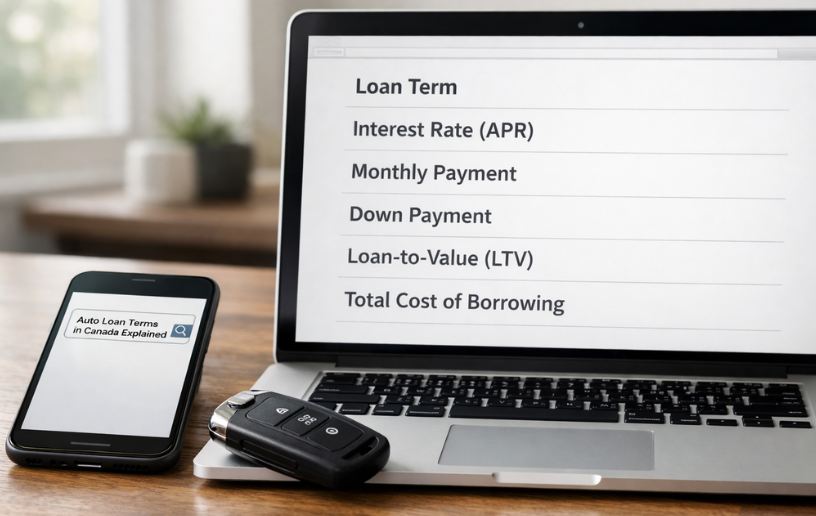
There's no fixed rule, but a reasonable working range for used vehicles is somewhere between 10% and 20% of the purchase price. Sometimes less if your credit is strong and the vehicle is newer, sometimes more if it's older or you're rebuilding credit. Putting money down does a few things at once: it lowers your monthly payment, it reduces the total interest you pay over the loan, and it protects you from being underwater on the car sooner than you'd expect. Depreciation on an already-depreciated vehicle can still outpace a small loan balance in the first few months.
If you can't put much down, that's not automatically a dealbreaker. It just means the rest of the loan structure matters more. A shorter term and a smaller loan-to-value ratio tend to offset a thin down payment in a lender's eyes.
Dealership financing versus private-sale financing
These are genuinely different processes, worth understanding before you commit to either.
Dealership financing is built for speed. The dealer typically has relationships with multiple lenders, submits your application on the spot, and can often get you a decision the same day. The vehicle has usually already gone through some level of inspection and reconditioning, and paperwork like the bill of sale and lien registration gets handled as part of the transaction.
Private-sale financing takes more legwork. You need to arrange financing yourself, either directly with a lender or through a broker, before or during your negotiation with the seller, and not every lender finances private sales at all. The ones that do will usually ask for more documentation: a bill of sale, proof of the vehicle's condition, sometimes a safety inspection depending on your province. You're also the one responsible for verifying the car's history, since there's no dealer doing that legwork for you. The upside is that private sales are often priced lower than the same vehicle at a dealership, so the extra effort can pay off if you're diligent about the details.
Credit still matters, but not the way people assume
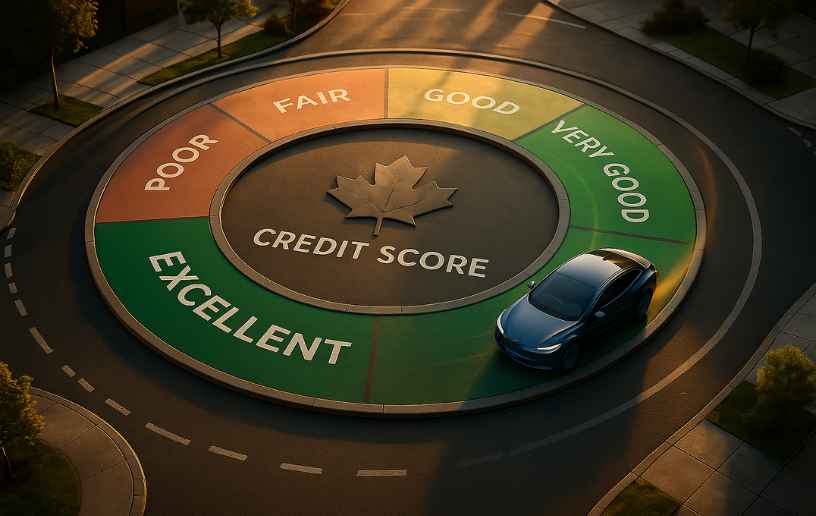
Your credit score affects your rate, but it isn't the only input, especially on a used vehicle. Lenders weigh your credit alongside the vehicle's age, mileage, and loan-to-value ratio all at once. Two buyers with identical credit scores can get meaningfully different offers if one is financing a 2-year-old SUV and the other a 9-year-old sedan with high mileage.
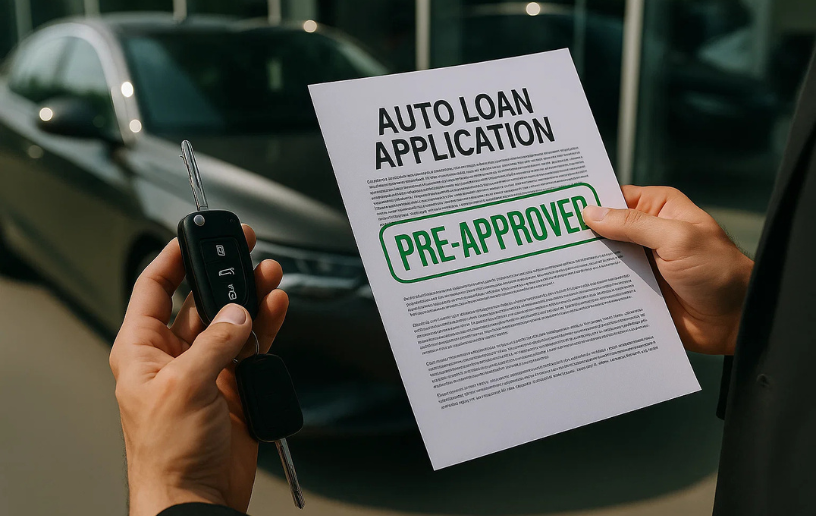
This is also where the difference between pre-approval and final approval matters more for used cars than new ones, because the specific vehicle you end up choosing can change the terms you're offered. A pre-approval gives you a working budget and a sense of your likely rate before you start shopping. Final approval is what actually locks in your terms once a lender has reviewed the exact car, its age, mileage, and history, that you're buying. We break down how that process works in our guide to the difference between pre-approval and final approval, worth a read before you start seriously shopping.
Getting ready to apply
A few things make the process smoother no matter which lender or dealer you end up with. Know your budget before you start browsing. Have your documents ready: proof of income, ID, proof of residence. Get a sense of your pre-approval range so you're not negotiating blind. And if you've already picked out a vehicle, run the VIN check first. It's a five-minute step that can save you from financing a car with a hidden problem.
Used car financing isn't more complicated than new car financing. It's just weighted differently. The vehicle carries more of the decision than it does with a new car, so the more you know about that vehicle going in, the smoother the approval tends to go.
Get pre-approved for used car financing in minutes.