
Car Loan Pre-Qualification vs. Pre-Approval in Canada: What's the Difference?
24 August 2026If you've started shopping for a car loan in Canada, you've probably run into both terms within the same afternoon of browsing: pre-qualification and pre-approval. Lenders and dealerships tend to use them loosely, sometimes interchangeably, which is exactly why so many buyers end up confused about what they actually have in hand. Are you approved? Sort of approved? Just estimated? The distinction matters more than it seems. Walk into a dealership with the wrong assumption and it can cost you time, or worse, leave you disappointed after you've already picked out a vehicle.
This is a different question from the one we cover in our piece on the difference between pre-approval and final approval, which deals with what happens after a lender has already done serious underwriting work. Here, we're stepping back a stage earlier, to the point where you're still figuring out what you can realistically afford and which lenders might work with your credit profile.
What is a car loan pre-qualification?
Pre-qualification is the quick, low-commitment first look. You give a lender some basic information, income, approximate credit standing, how much you want to borrow, and they hand back an estimate of what you might qualify for, along with a rough idea of possible rates. Most of the time this uses a soft credit pull, so it doesn't affect your credit score and won't show up as an inquiry that other lenders can see.
Because the process is fast and low-effort, it's also loose. The lender is working from information you self-reported, not verified pay stubs, not a confirmed vehicle, not a hard look at your full credit file with Equifax or TransUnion. Think of it as a sketch rather than a signed document. It tells you the general shape of what's possible so you can start budgeting sensibly. It isn't a promise, and it isn't meant to be.
How does pre-qualification work for a car loan, step by step
Typically you'll fill out a short form online or in person with details like your estimated income, employment status, and the loan amount you're considering. The lender runs a soft inquiry, checks it against their general lending criteria, and returns an estimated range, maybe a rate band, maybe a rough monthly payment. Some lenders skip the credit pull entirely at this stage and rely purely on self-reported numbers. Either way, nothing here is locked in yet. That happens later.
What is a car loan pre-approval?
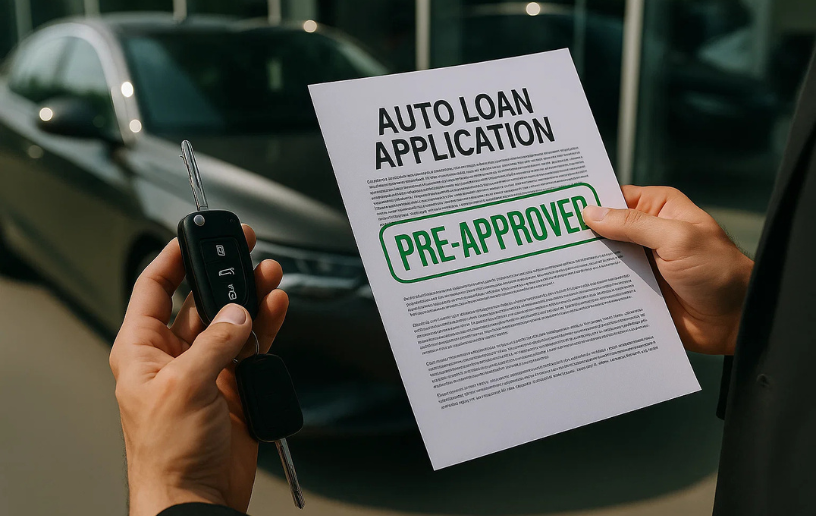
Pre-approval goes further. The lender actually verifies your information, usually with documentation like proof of income, employment confirmation, and sometimes bank statements, and in most cases performs a hard credit pull. A hard inquiry does register on your credit report and can cause a small, temporary dip in your score, but it also gives the lender a real picture of your creditworthiness instead of a guess based on what you typed into a form.
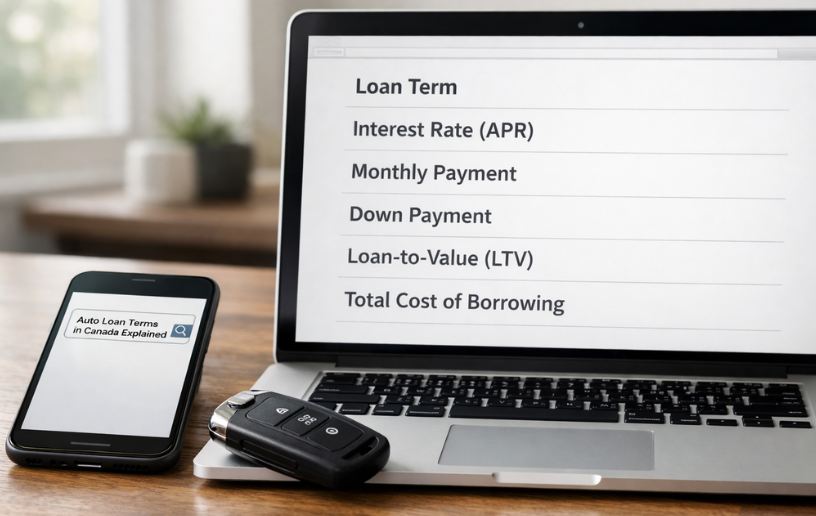
The output is more useful too. A pre-approval typically comes with a specific loan amount, a defined interest rate (sometimes locked in for a set window, often 30 to 60 days depending on the lender), and terms you can actually shop with. Say you're pre-approved for $30,000 at a set rate for 45 days. That gives you a real ceiling and a real deadline to work within while you look for the right vehicle, rather than a ballpark figure that might not hold up. If you want the fuller mechanics of what a solid pre-approval offer looks like and how to use it while negotiating at a dealership, our guide on getting pre-approved for a car loan in Canada walks through that in more detail.
Car loan pre-approval vs pre-qualification in Canada: the practical differences
Laid out side by side, the gap between the two comes down to four things: how your credit gets checked, how binding the number is, how long it lasts, and when in the process you'd actually use each one.
Credit pull type
Pre-qualification generally uses a soft credit check, which doesn't affect your score. Pre-approval generally involves a hard credit check, which does. If you're early in the process and want to compare a few lenders without dinging your credit repeatedly, pre-qualification lets you do that safely.
How binding the offer is
This is the part people get wrong most often. Pre-qualification does not guarantee a car loan. It's an estimate based on unverified information, and once a lender actually checks your income documents, employment, and full credit history, the number can change, sometimes by a lot. Pre-approval is closer to a real offer because it's built on verified data, but even pre-approval isn't the finish line. Final approval still depends on the specific vehicle, its value relative to the loan amount, and a final review before funds are released.
How long each is valid
Pre-qualification estimates have a short shelf life, since they're based on numbers that shift: income changes, new debts, rate movements in the broader market. Pre-approvals usually come with an explicit expiry window because the lender has locked in terms based on your credit profile at that specific moment. Once that window closes, you'd typically need to reapply or get updated numbers before moving forward.
When to use each stage
Pre-qualification is the right tool when you're still browsing, trying to work out a realistic budget before you've picked a vehicle or even a dealership. It's fast, it costs you nothing on your credit report, and it gives you a starting number to plan around. Pre-approval makes sense once you're serious: ready to walk into a dealership or start negotiating on a specific car, and wanting a rate and amount that a seller will actually take seriously.
Why the difference matters at the dealership
Showing up with a pre-qualification estimate and treating it like a locked rate is one of the more common ways buyers end up frustrated mid-negotiation. A salesperson may quote numbers based on what you tell them you were "pre-qualified" for, and then the actual financing comes back different once your credit and documents are verified. That gap isn't a bait and switch. It's just what happens when an estimate meets a verified offer.
There's a related trap worth mentioning: even with a real pre-approval in hand, it's easy to let a firm number make you feel more locked into a purchase than you should. Our post on avoiding emotional overspending after pre-approval covers how to keep a strong offer from turning into a reason to stretch your budget.
Credit score plays a role at both stages
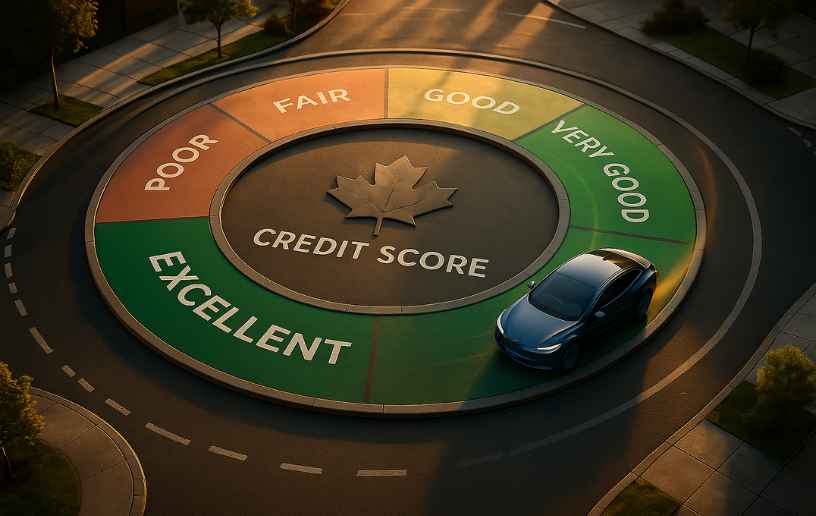
Your credit standing shapes what a lender estimates at the pre-qualification stage and what they'll actually offer once they verify things at pre-approval. If you're not sure where your credit sits, or what counts as a healthy range in Canada, it's worth reading our breakdown of what a good credit score looks like in Canada before you start requesting numbers from lenders. Knowing your range in advance helps you read a pre-qualification estimate for what it is, a starting point, not a done deal.
So which one should you get first?
If you're weeks away from buying and just want a sense of what's realistic, start with pre-qualification. It costs you nothing in credit-score terms and gives you a number to plan around. Once you're closer to actually shopping, ready to test drive, negotiate, and sign, move to pre-approval so you're working with verified terms instead of an estimate. Skipping straight to pre-approval isn't wrong either. Some buyers would rather know exact numbers from the start, and that's a reasonable trade-off, it just means accepting the hard inquiry earlier in the process.
Neither step guarantees the final loan, and that's worth repeating. The vehicle you choose, its appraised value, and the lender's final documentation review all still factor into the last approval. Treating pre-qualification, or even pre-approval, as a done deal before that final step is where buyers most often get caught off guard.
If you're ready to see real numbers rather than a rough estimate, you can get pre-approved for a car loan and find out what rate and amount you actually qualify for before you start negotiating.