Tariffs & Car Prices in Canada: Lock Your Best Rate with Pre-Approval
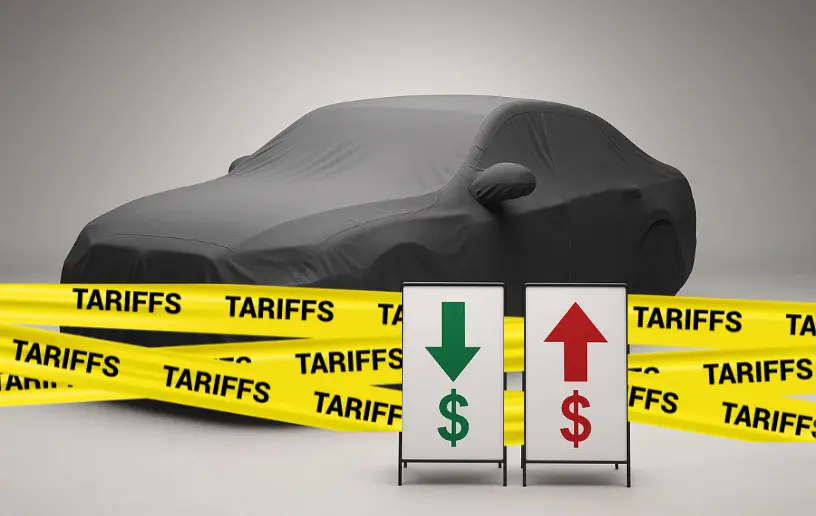
05 October 2025If you’re planning to buy a vehicle in the next few months, here’s the thing: trade friction between the United States and Canada is no longer just background noise. Tariffs on vehicles and parts, production adjustments, and supply chain rerouting are quietly pushing up the real cost of owning a car. Prices may rise and incentives may fade, but you can be ready and make your auto-financing decision now.
This guide breaks down what’s changing, which vehicles are most exposed, how costs pass through to monthly payments, and the smartest way to hedge your risk—starting with a fast pre-approval so you can lock your rate and shop with leverage.
What’s changing in Canada’s Car Market?
Tariffs and Pricing Pressure
Some cars and parts now cost more to bring into Canada. You may not see a big Manufacturer's Suggested Retail Price (MSRP) jump right away, but you’ll notice fewer low-APR deals, shorter promos, or fewer trim options.
EV Policy Shifts and Uncertainty
The government has adjusted near-term EV targets. Good news for automakers today, but it creates uncertainty for 2026 incentives and pricing. That can change lease estimates, APRs, and which EVs dealers keep on the lot.
Production Rebalancing and Tighter Supply
Parts delays have pushed some brands to slow or shift production for Canada. Expect fewer units of certain models, longer wait times, and less room to negotiate on hard-to-find trims.
Weaker Trade Balance and Import Costs
When imports get pricier, models with more non-North-American content feel it first. That raises the risk of gradual MSRP increases and higher out-the-door costs (once taxes and fees are added).
What this means for your purchase
If you’re shopping in the next 3–6 months, plan for fewer promos and possible waits on specific trims. Get pre-approved first so you know your rate range and budget, then pick a primary model plus a backup with higher local content.
Which vehicles are most exposed to price increases and incentive cuts in Canada?
Imported Luxury Brands
Think BMW, Mercedes-Benz, Audi. Many trims are shipped in from Europe or other non-NA plants. Lower volumes + longer supply chains = less room to absorb extra costs.
EVs and Hybrids with Global Battery/Electronics Supply
Examples: Hyundai IONIQ 5, Kia EV6, some Tesla variants, select Toyota/Lexus hybrids and PHEVs. Even if final assembly is in North America, battery packs and control modules often cross borders, which can tighten incentives or nudge pricing.
Low-volume or Niche Performance Trims
Special editions and halo models—think AMG/M, Type S/GR, track packages—sell in small numbers. When costs rise, these trims are the first to see price adjustments or reduced availability.
Buyer tip: If you’re eyeing an imported luxury trim or a hot EV, plan for longer waits and fewer low-APR promos. Pre-approval lets you pivot fast if pricing moves.
Models less likely to surprise you
High-content Models assembled in Canada or The United States
Popular examples include Toyota RAV4, Lexus RX, Chevrolet Silverado, Ford F-150, Jeep Wrangler. High North American content typically buffers tariff shocks better than fully imported lines.
High-volume Mainstream Trims
Compact SUVs, Full-size Pickups, and core Sedans are where brands fight hardest to stay competitive. Instead of big MSRP jumps, you may see feature changes or shorter promo windows.
Buyer tip: If you want fewer surprises, short-list a locally assembled model in a common trim. You’ll usually get faster delivery and more predictable finance options.
How Cost Pressure becomes a Higher Monthly Payment for you

1) MSRP increases and higher principal
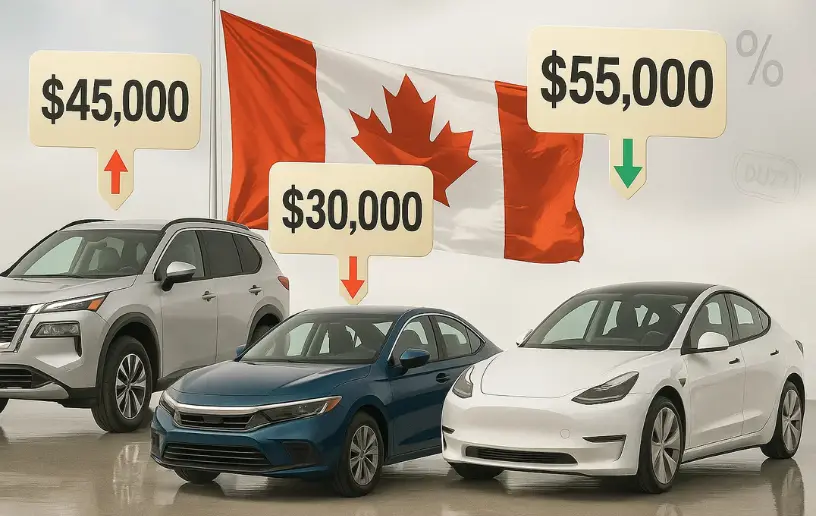
A 5–10% rise on a $40,000 car means $2,000–$4,000 more financed. Over 72 months, that lifts the monthly payment and total interest.
2) Fewer Promotions and limited low-APR offers
When supply is tight, low-APR deals and cash rebates shrink or run for shorter periods. You may see “as low as” rates, but fewer buyers qualify.
3) Tighter approval criteria from lenders
In uncertain markets, lenders raise the bar through higher minimum credit scores, stricter debt-to-income ratios, and lower loan-to-value limits. Pre-approval helps you know your bracket before any sales quote.
4) Ordering delays and changing offers
If you place an order and wait 6–12 weeks, incentives and promotional APRs can change before delivery. Without a pre-locked financing window, your deal can shift.
What a small price change looks like in dollar value
Let’s keep it simple. Two buyers, same borrower profile, same 72-month term.
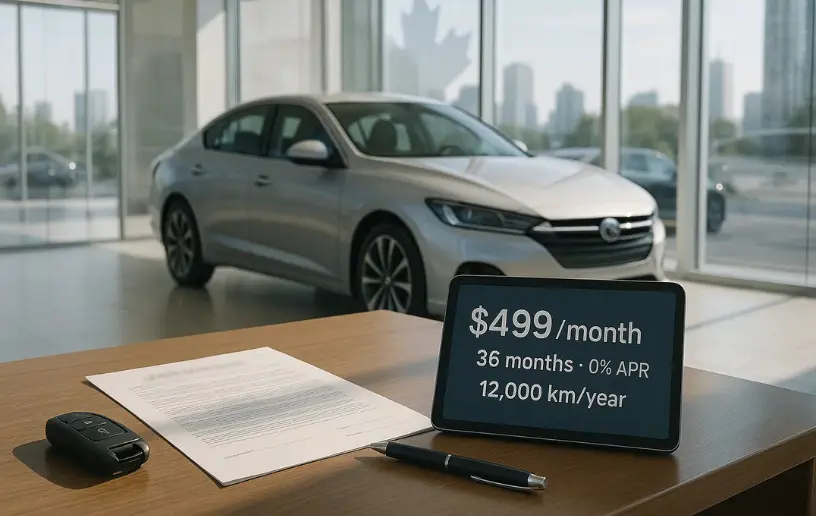
• Buyer A purchases at $40,000 with a promotional APR of 4.99%.
• Buyer B waits three months. MSRP drifts to $42,000. Promotions tighten; they qualify at 6.49%.
Result: Buyer B finances $2,000 more at a higher rate. Monthly payments rise, and total interest paid over the term increases materially. Nothing else changed—only timing and financing conditions. That’s the core message: in a moving market, ‘when’ you lock your financing matters a lot.
How Car Loan Pre-Approval with Auto Lending Canada helps Canadian Car Buyers

Rate window and eligibility clarity
We give you a rate range and term options that hold for a set period (subject to standard verification). If promotions change, you’re not starting from zero.
Soft credit check to start
We begin with a soft inquiry in most cases, so you can explore options without affecting your score. If a hard inquiry is needed to finalize terms, we’ll ask first.
One application, multiple lenders
We compare offers across a national lender network. Because lenders price risk differently, we surface the best fit for your profile and vehicle.
Stronger negotiation position
Walking in pre-approved is like walking in with cash. You focus on vehicle price and value, not last-minute finance surprises.
Likely to buy within 3–6 months? Check your pre-approval status now, so you can shop the market without the market shopping you.
How to spot Higher vs Lower exposure models in 60 seconds
1) Check Final Assembly through VIN or Window Sticker
- VINs starting with 1, 4 or 5 = USA, 2 = Canada, 3 = Mexico. Letters (W, J, K, etc.) usually indicate overseas assembly.
- Window sticker will show Final Assembly and often North American content %.
2) Ask 2 Questions about Car Parts
- Where are the battery and electronics sourced? For EVs and hybrids, packs and control modules imported from outside North America usually mean higher exposure.
- Are the key components regional or imported? Engines, transmissions, and major electronics sourced outside North America typically add more risk to pricing and incentives.
3) Look at Volume and Trim
- Common trims of mainstream models are usually steadier.
- Special editions/low-volume performance trims move in price or availability first.
4) Verify Incentive stability
- Ask the dealer which trims regularly qualify for promos vs which lose promos first.
Choosing your Loan Structure in a volatile market
1) Choose a term you can finish
84–96 months can shrink today’s payment but locks in more interest and a longer risk window. Where possible, aim for 60–72 months and support it with a realistic down payment.
2) Budget Total Cost of Ownership
Don’t fixate on the monthly payment alone. Include insurance, fuel/charging, maintenance, and tires—especially if you’re moving to a heavier or more powerful vehicle.
3) Keep your exit options open
Skip add-ons you don’t need just to “make the deal work.” Lean loan structures are easier to refinance, trade, or exit if the market shifts.
Impact on New vs Used vs CPO Cars
New Vehicles (recommended for most buyers)
New models deliver the latest safety tech, better efficiency, and full warranty coverage. In tighter markets, low-APR promos can be limited or shorter, so focus on in-stock trims, stay flexible on colour/packages, and secure financing so you can act when the right unit appears.
Smart moves for new-car shoppers
- Prioritize locally assembled, high-content trims for steadier pricing and faster delivery.
- Ask which trims qualify for promos most often (dealers know the patterns).
- If ordering, confirm build/delivery timelines and how long your rate window stays valid.
Used Vehicles
Used prices can stay firm when new inventory is tight, and used-car APRs are often higher. If you compare, evaluate total cost of ownership—mileage, wear items, remaining warranty—not just sticker price.
Certified Pre-Owned (CPO) Cars
CPO adds factory inspection and warranty that regular used cars don’t offer, but availability can be thin on in-demand models and pricing can sit close to new. Treat CPO as a backup, not the target.
Negotiation Tips to get a better Car Price

1) Separate the conversations
Agree on the vehicle price first, then discuss financing, then extras. Mixing everything at once hides where costs creep in.
2) Use pre-approval as your guardrail
If a dealer’s finance offer beats your pre-approval on equal terms, take it. If not, your pre-approval is the benchmark you can rely on.
3) Shop the timing
Month-end and quarter-end can still matter for dealer targets—even with tighter inventory. That’s when you’re more likely to find movement.
4) Stay trim-flexible
If your must-have configuration is limited, consider a nearby trim with higher local content or better availability. Over the full term, that choice can save thousands.
You can get pre-approved in just 3 minutes with Auto Lending Canada and then choose to stack any dealer offer beside it for a clean, apples-to-apples comparison.
Why your out-the-door price is higher than MSRP in Canada
MSRP is only the starting point. Taxes and fees stack on top, so always budget the drive-away (out-the-door) price, not just the sticker.
Common line items added to MSRP
- Sales tax: HST/PST/QST/GST (varies by province)
- Tire stewardship fee: per-tire environmental charge
- A/C excise: on air-conditioned vehicles
- Freight/PDI: manufacturer freight and pre-delivery inspection
- Doc/admin fee: dealership paperwork fee (varies by store)
- Plates, registration, insurance: separate charges, but real cash outlay
Why a small price bump hits harder
A $1,000 MSRP increase can feel closer to $1,130–$1,160 out-the-door once taxes and fees are applied. Every dollar added to MSRP gets multiplied by provincial taxes and fixed fees.
How to keep it clear
- Ask for a written out-the-door quote from each dealer—same vehicle, same options
- Compare totals, not just MSRP or monthly payment
- Confirm what’s included (freight/PDI, doc fee) and what isn’t (plates, insurance)
Quick Checklist before you visit a Dealership
- Pre-approval confirmation (rate range, max amount, eligible terms)
- Shortlist with backups (favorite model + “safer” alternative)
- Realistic down payment to keep LTV in a favorable band
- Total out-the-door calculation (with taxes/fees, not just MSRP)
- Delivery timing (if ordering, confirm how long your financing window stays valid)
Get Pre-Approved Today with Auto Lending Canada
You can’t control tariffs, sector deals, or production pauses. You can control when you secure your financing and how you shop. In a market where prices and promos can shift mid-process, pre-approval is a protective move—it locks your options, clarifies your budget, and gives you negotiation power.
Start your pre-approval with Auto Lending Canada—it takes about two minutes, and there’s no obligation.
Frequently Asked Questions
Q) Will tariffs automatically make my monthly payment higher?
Not automatically. But when MSRP rises or incentives shrink, the loan amount and APR can move up, which raises payments. A pre-approval helps you lock a rate range and budget before changes land.
Q) Are EVs the most exposed to price changes?
Often, yes. EVs rely on battery and electronics supply chains that cross borders, which can introduce more volatility than locally assembled ICE models—especially during policy adjustments.
Q) Is pre-approval a hard inquiry?
We start with a soft check in most cases, so you can explore options without affecting your score. If a hard inquiry is needed to finalize terms, we’ll ask first.
Q) Can I still negotiate if I’m pre-approved?
Absolutely. Pre-approval turns you into a cash-equivalent buyer, and often improves the conversation. If a dealer beats your terms apples-to-apples, take the win.
Q) Should I wait for prices to fall?
In uncertain markets, waiting can mean fewer promotions and higher MSRPs. If your purchase is likely in the next 3–6 months, pre-approval now reduces your risk and gives you leverage when the right unit appears.