
Are Car Loan Rates Going Up in Canada Right Now?
21 September 2026If you have been putting off a car purchase while waiting for rates to drop further, the last few weeks probably made you nervous. For most of 2026, the story on interest rates was straightforward: the Bank of Canada kept trimming its policy rate, and car loan pricing drifted down with it. That story just got more complicated.
What the Bank of Canada Actually Did This Month
On September 2, 2026, the Bank of Canada held its policy rate at 2.25 percent for the seventh straight decision. On its own, a hold is not news. What made this announcement different is that the Bank explicitly warned that tariffs and rising oil prices could push inflation above 3 percent, and that this risk could force a rate hike rather than another cut. A couple of major banks have since put an October hike on the table as a real possibility, not just a hedge in a footnote.
That is a meaningful shift in tone. Earlier this year, when the Bank was still cutting, we covered how those rate cuts flowed through to car loan pricing. The current situation is closer to the opposite question: what happens if the multi-year cutting cycle is done, or even reverses.
The Bank of Canada Rate Is Not Your Car Loan Rate
It helps to separate two things that get talked about as if they are the same number. The policy rate is what the Bank of Canada charges major banks for overnight lending. Your car loan rate is what a specific lender charges you, based on prime rate, your credit profile, the loan term, the age of the vehicle, and how much risk that lender is pricing in for your file specifically.
When the Bank of Canada moves, prime rate usually moves with it fairly quickly, but lenders do not always re-price every product on the same day. Auto lending in particular tends to lag a bit, and different lenders adjust at different speeds depending on their own funding costs and how competitive they are trying to be that month. So a hold at 2.25 percent does not automatically mean your quote today looks identical to a quote you would have gotten in August, and a hike in October, if it happens, would not necessarily show up in car loan pricing overnight either.
What a Hold With Hike Risk Actually Means for Buyers
Here is the honest version of where things stand. If the October hike some banks are forecasting actually happens, auto loan rates are more likely to firm up than to keep drifting lower, at least in the near term. If it does not happen and inflation cooperates, rates likely stay close to where they are now rather than falling sharply, since the Bank has already signalled it is more worried about inflation risk than about slowing growth. Either way, the environment where rates just kept getting cheaper every quarter looks like it is pausing. Nobody, including the banks currently disagreeing with each other about October, can tell you with certainty which way this breaks.
What we can say is that if you have been waiting specifically for a meaningfully lower rate before buying, that bet has gotten riskier than it was in the spring.
Fixed vs. Variable: Does This Change the Math
This is exactly the kind of environment where the fixed-versus-variable decision matters more than usual. A fixed rate locks in your payment for the life of the loan regardless of what the Bank of Canada does next, which removes the guesswork entirely. A variable rate can work in your favour if cuts resume, but it also means you are exposed if the hike scenario plays out. We break down how each one actually behaves over a full loan term in our guide to fixed vs. variable rate auto loans in Canada, which is worth reading before you sign anything in a market that is this uncertain.
Should You Wait for a Better Rate or Lock One In Now
There is no universal answer here, but there is a useful way to think about it. Waiting only pays off if rates actually fall, and right now the people whose job it is to predict this are split, with some forecasting a hike as soon as next month. If you need a vehicle for work, a growing family, or a car that is becoming unreliable, the cost of driving an unsafe or unreliable vehicle for another two or three months while you wait on a rate call is a real cost too, even if it does not show up on a loan statement.
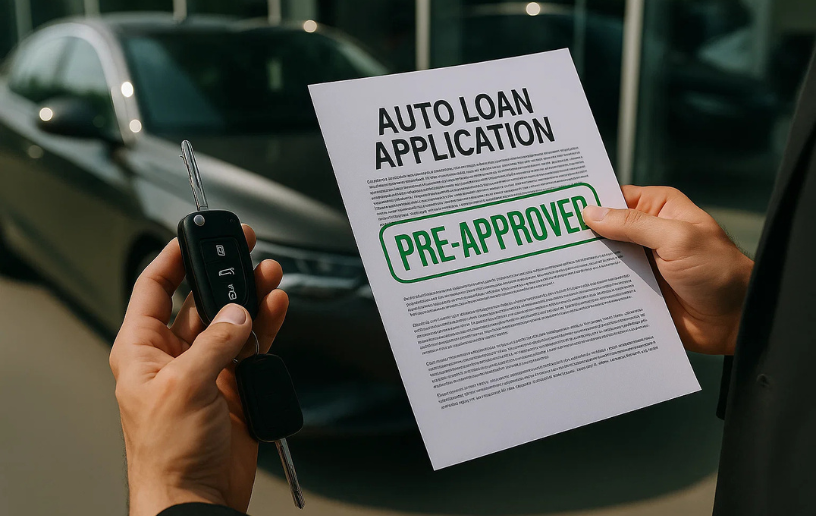
If your credit and budget already support a payment you are comfortable with today, getting pre-approved lets you lock in current terms while you shop, without committing you to buy immediately. That gives you a real number to compare against, rather than guessing at what October might bring.
How to Get the Best Rate Available, Regardless of Which Way Things Move
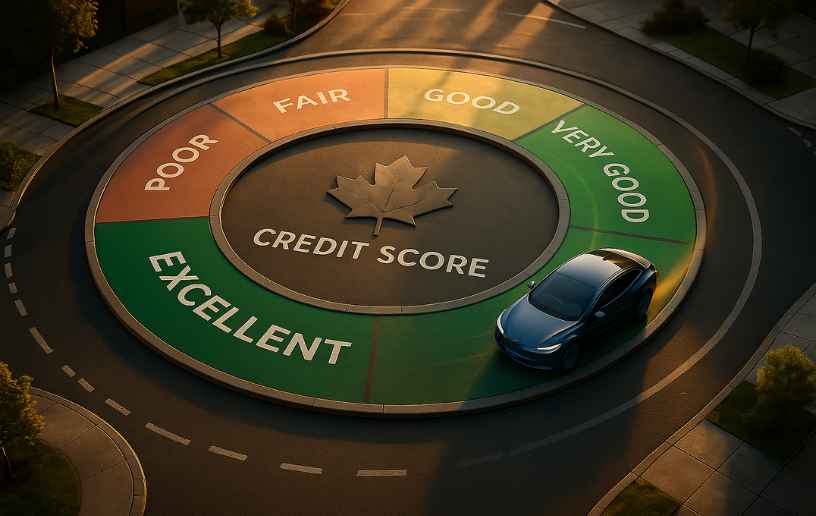
Whatever the Bank of Canada does next, some things affect your rate more than the headline decision ever will. Your credit score is the biggest lever you control, and even a modest improvement before you apply can outweigh a small shift in the benchmark rate. Comparing more than one type of lender matters too. Banks, credit unions, and dealer financing do not price risk the same way, and we cover how those differences actually play out in our comparison of credit union versus bank car loans in Canada. If you want a fuller picture of where rates sit across term lengths and vehicle types this year, our 2026 car loan rates guide is a good next stop.
Shopping around within a short window, generally two to four weeks, also protects your credit score, since credit bureaus typically treat multiple auto loan inquiries in that period as a single event rather than several hard pulls.
The Bottom Line
Rates are not clearly rising yet, but the assumption that they would keep falling no longer holds up the way it did earlier in the year. The Bank of Canada has held steady for seven decisions in a row while openly flagging hike risk for the next one, and that is a real change in the story, even without a rate move on paper yet. Rather than trying to time a decision that split economists cannot agree on, the more useful move is usually to know your own number: what you can actually afford, what your credit currently qualifies you for, and whether a vehicle purchase can reasonably wait.
Auto Lending Canada works with buyers across British Columbia, Alberta, and Saskatchewan to find current rates that fit your actual situation, not just the headline number. Start your application here to see what you qualify for today.