
Credit Union vs. Bank Car Loans in Canada: Which Gets You a Better Rate?
29 August 2026If you're shopping for a car loan in Canada, there's a good chance your bank already sent you a pre-approval offer before you even asked. Banks aren't the only option, though, and for a lot of borrowers they're not even the best one. A credit union car loan in Canada often comes with a lower rate, a more forgiving underwriter, and someone on the other end of the phone who actually knows your name. The catch: you usually have to become a member first, and membership can come with its own hoops. So which one actually gets you a better deal, a credit union or a bank? Honestly, it depends on your credit, your local branch, and how much patience you have for paperwork. Here's how the two compare, and where an alternative lender fits in when neither one says yes.
Credit Unions vs. Banks: The Basic Difference
Banks are shareholder-owned, federally regulated, and built for volume. A big bank might approve thousands of car loans a week using an automated scoring model that barely glances at your file before spitting out a rate. Credit unions work differently. They're member-owned co-operatives, usually provincially regulated, and every person who takes out a loan is technically a part-owner of the institution. That structure changes how they lend.
You Have to Join Before You Can Borrow
This is the part that trips people up. You can't walk into a credit union and apply for a car loan the way you would at a bank. You need to open a membership account first, which usually means a small share purchase (often $5 to $25) and sometimes a residency requirement tied to the province or region the credit union serves. It's a minor speed bump, but it does mean a credit union auto loan in Canada isn't always the fastest option if you're trying to close a deal on a car this weekend.
Underwriting Tends to Be More Relationship-Based
Once you're a member, credit unions often look at more than the number your credit bureau file spits out. Loan officers at smaller, local branches sometimes have room to weigh your banking history with them, your income stability, or the fact that you've had an account there for a decade. A large bank's automated system generally doesn't factor those things in the same way. That's not a guarantee of a lower rate or an easier approval. It's just a real structural difference that shows up often enough to matter.
Typical Rates and Approval Criteria
For borrowers with strong, established credit, credit union car loan rates in Canada are frequently competitive with, or slightly below, what a bank quotes. Part of that comes down to structure: credit unions don't answer to outside shareholders chasing quarterly profit targets. Banks tend to have more standardized rate tiers based almost entirely on your credit score, income verification, and debt load. Predictable, but with less room for a human to make an exception.
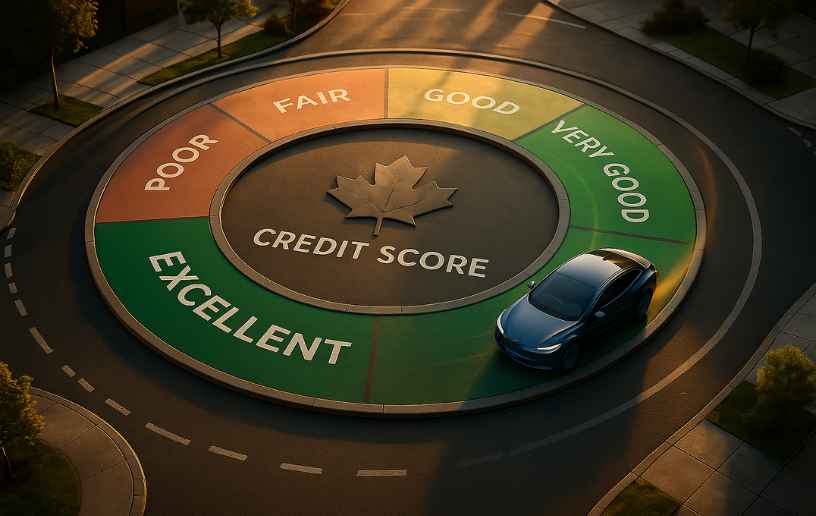
Both banks and credit unions generally expect good-to-excellent credit, verifiable income, and a manageable debt load relative to what you earn. If you're not sure where your score falls, our guide to what counts as a good credit score in Canada breaks down the ranges lenders actually use. Lenders at both types of institutions also tend to look at your debt-to-income ratio alongside your score. A thin credit file with low debt can sometimes get approved where a high score with maxed-out obligations won't.
Want a closer look at how bank rates stack up against dealership financing specifically? We covered that in our banks vs. dealership interest rate comparison, worth a read if you're weighing more than two options at once.
Pros and Cons of Credit Union Car Loans
The upside of credit union car financing is fairly consistent across the country: member-focused service, occasionally lower rates for people with strong credit, and underwriting that can factor in your relationship with the institution instead of a score alone. Members sometimes get better terms on related products too, like a lower rate if you also hold a chequing account or set up automatic payments through the credit union.
The downside is real. Membership requirements can slow things down or shut you out entirely if you don't live in the credit union's service area. Smaller credit unions may have fewer branches, more limited online tools, and stricter local-ties rules than a national bank. And if your credit is inconsistent, or you're newer to Canada with a thin file, that relationship-based underwriting can cut the other way. A loan officer who doesn't know you yet has less to go on than a long-time member does.
Pros and Cons of Bank Car Loans
Banks offer convenience. No membership requirement, often faster online applications, and a rate you can generally shop and compare across several institutions in an afternoon. If your credit is strong and your income is easy to document, a bank car loan is usually simple to get and simple to compare.
The trade-off is rigidity. There's less room for unusual income situations, self-employment, recent immigration, a recent credit hiccup, because the approval process leans heavily on standardized scoring rather than a person weighing your specific circumstances. If your file doesn't fit neatly into the model, a bank is often a flat no rather than a negotiation.
When Neither One Says Yes
Not everyone fits the box a bank or credit union is built around. Self-employed borrowers without straightforward T4 income, newcomers to Canada who haven't built a credit history here yet, and people rebuilding credit after a rough patch often get declined by both. Not because they're bad borrowers, but because traditional underwriting models aren't built to evaluate them individually.
This is where alternative and online auto lenders, including companies like Auto Lending Canada, tend to fill the gap. These lenders typically work with a wider network of financing partners and are often more willing to look at the full picture: current income, down payment, employment stability, rather than relying almost entirely on a credit score cutoff. Rates from alternative lenders usually run higher than what a strong-credit borrower would get at a bank or credit union. That's the trade-off for more flexible approval criteria, so it makes more sense as a practical option for people who've already been turned down elsewhere than as a default first stop.
If you're trying to figure out whether a loan, a line of credit, or another financing structure fits your situation better, our comparisons of car loans vs. lines of credit and personal loans vs. car loans walk through how each is structured and repaid.
How to Actually Compare Offers
Once you have quotes in hand, from a bank, a credit union, a dealership, or an online lender, the comparison isn't as simple as picking the lowest number on the page. A few things worth checking on every offer.
APR vs. Interest Rate
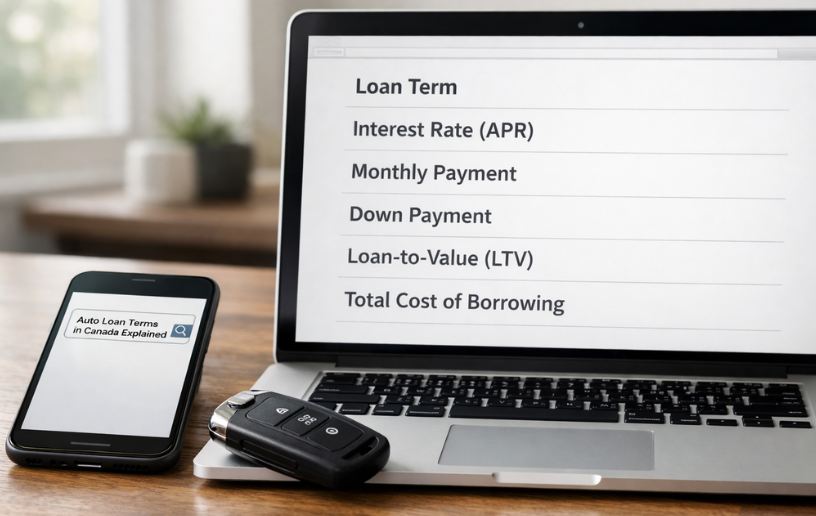
The interest rate and the APR (annual percentage rate) aren't the same thing, and lenders don't always lead with the one that costs you more. The APR bundles in certain fees on top of the base interest rate, so it's a more accurate picture of what the loan actually costs over its term. Compare APR to APR, not a bank's APR against a dealership's advertised interest rate.
Term Length
A longer term lowers your monthly payment but stretches out how long you're paying interest, which usually means paying more in total over the life of the loan. A shorter term costs more per month but less overall. Neither is automatically the better choice. It depends on your budget and how long you plan to keep the vehicle.
Prepayment Penalties
Some loans charge a fee if you pay them off early, whether that's because you sell the car, refinance, or just want to be done with the payments sooner. Ask directly whether a prepayment penalty applies before you sign. It's not always disclosed as prominently as the rate.
Getting Pre-Approved
Comparing a credit union car loan, a bank offer, and everything in between takes some legwork, but it's worth doing before you sign anything. And if a bank or credit union hasn't worked out for you, whether that's a membership issue, a credit score that didn't clear the bar, or income that's harder to document, it's still worth seeing what else is out there. You can get pre-approved through Auto Lending Canada to see where you stand as an alternative option, with no obligation to move forward.