
Car Loan Rates in Canada: What to Actually Expect in 2026
14 September 2026"What's a good car loan rate in Canada right now?" is one of the most common questions we get, and it's also one of the hardest to answer with a single number, because the honest answer depends heavily on your credit, your down payment, and the vehicle itself. What we can do is walk through the real ranges buyers across BC, Alberta, and Saskatchewan are actually seeing, and more importantly, what specifically moves your rate up or down within those ranges.
Typical Rate Ranges by Credit Tier
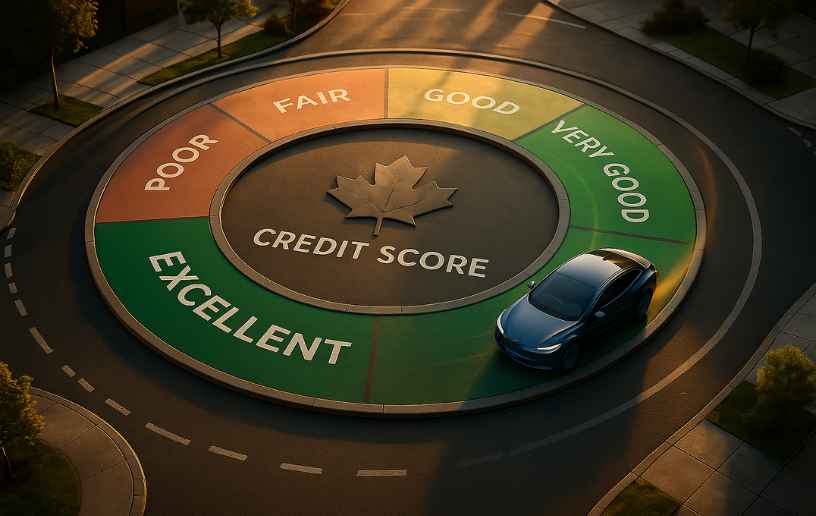
Lenders group applicants into tiers, and each tier carries a meaningfully different rate band. As a general guide: buyers with excellent credit, roughly 760 and up, tend to see the lowest rates available, often in the single digits depending on the lender and term. Buyers with good credit, in the 660-759 range, usually land a bit higher but still within a reasonable prime or near-prime band. Buyers with fair credit, 560-659, typically move into subprime territory, meaningfully higher rates that reflect the added risk. Below 560, or with little to no credit history at all, rates climb further, though approval is still realistic through lenders who specialize in this range.
These bands shift over time with the Bank of Canada's policy rate and broader lending conditions, so treat them as a general shape rather than a fixed number, and always confirm current rates with a lender directly rather than relying on a figure you saw months ago.
What Actually Moves Your Rate Within a Tier
Two buyers with the same credit score can still get different rates, because credit score is only one input.
Down Payment
Putting more down lowers the amount financed relative to the vehicle's value, which reduces the lender's exposure and often improves your rate, sometimes meaningfully. Zero-down financing is available and gets approved regularly, but it typically carries a higher rate than the same buyer would get with even 10-15% down. Our guide on car loan down payments in Canada covers this trade-off in more depth.
Loan Term
Longer terms, 72 to 84 months, bring the monthly payment down but usually carry a slightly higher rate and always cost more in total interest over the life of the loan. Our breakdown of what 84-month loans actually cost runs the real numbers on this trade-off.
New vs. Used
New vehicles typically qualify for lower rates than used ones for the same buyer profile, since newer vehicles hold predictable value and depreciate more slowly in year one relative to their price. Older or higher-mileage used vehicles carry more uncertainty for a lender, which shows up as a modest rate premium.
Fixed vs. Variable
Most Canadian auto loans are fixed-rate, meaning your payment doesn't change over the term regardless of what happens with broader interest rates. Variable-rate auto financing exists but is far less common than in mortgages. Our guide on fixed vs. variable rate auto loans covers when the less common variable option is actually worth considering.
How to Actually Shop Rates Without Hurting Your Credit
Every hard credit check dings your score slightly, which makes some buyers hesitant to get quotes from more than one lender. That hesitation costs more than it saves. Multiple auto loan inquiries made within a short window, typically about two weeks, are treated by credit bureaus as rate shopping and bundled together as a single inquiry for scoring purposes, not counted separately. That means comparing two or three real offers within the same short window costs you roughly the same credit impact as applying to just one, while giving you an actual number to negotiate against instead of a single take-it-or-leave-it quote.
Provincial Notes Worth Knowing
Rate conditions themselves are mostly set nationally, driven by the Bank of Canada's policy rate and each lender's own risk pricing, not by provincial borders. What does shift by province is the mix of vehicles and buyers, and a few tax and insurance differences that affect your total cost even when the rate itself is identical. Our comparison of car loan costs in BC, Alberta, and Saskatchewan breaks down how PST, insurance systems, and registration rules change your real monthly cost even at the same interest rate. If you're in a specific city, our guides to Alberta, British Columbia, and Saskatchewan cover what to expect locally.
Run the Actual Numbers Before You Shop
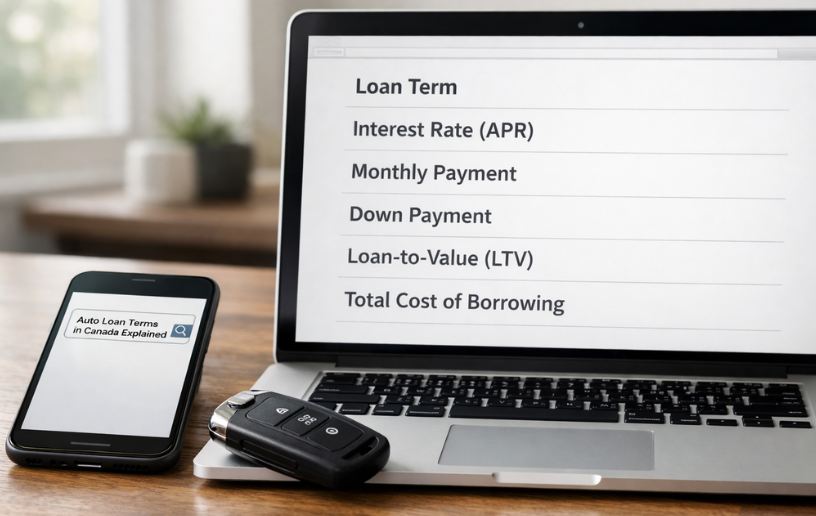
A rate by itself doesn't tell you much without seeing what it does to your monthly payment and total interest. Our car loan calculator shows the real math behind a given rate, term, and loan amount, so you can compare a lower rate over a longer term against a higher rate over a shorter one in actual dollars rather than guessing which is the better deal.
If You're Not Sure Which Tier You're In
Rather than guessing where you land based on a rough sense of your credit, getting pre-approved gives you a real, specific rate range based on your actual file. It costs nothing, doesn't commit you to anything, and means you walk into any negotiation already knowing roughly what you should be paying, rather than hoping the number a dealer offers is a fair one. If your credit isn't in the strongest tier, our guide on car loans for bad credit in Canada covers what specifically improves your odds and your rate.
The Bottom Line
There's no single "car loan rate" in Canada right now, only a range that depends on your credit tier, down payment, term, and the vehicle itself. Knowing which levers you actually control, down payment, term length, and shopping multiple lenders within a short window, matters more than any general rate figure you'll find online.
Auto Lending Canada works with buyers across BC, Alberta, and Saskatchewan across the credit spectrum to find a real rate for your actual situation. Start your application here to see what you'd actually qualify for.