
0% Financing Car Deals in Canada: What They Really Cost (and Who Actually Qualifies)
29 August 2026Every few months, another automaker rolls out 0% financing car deals in Canada, and the ads make it sound simple: buy now, pay nothing extra to borrow. The offers are real. Manufacturers fund them, dealers close deals at 0% APR, and nobody's lying to you in the commercial. But the fine print is where the actual decision gets made, and most shoppers never look closely enough to know whether they'd even qualify, let alone whether 0% is the cheaper option once every number is on the table.
This isn't an argument against 0% financing. When it lines up with your credit and the vehicle you already wanted, it's a good deal, full stop. What follows is how these offers are actually built, who tends to get approved for them, and what to do instead if the math doesn't work out in your favor.
How Manufacturer 0% Financing Actually Works
0% APR car financing in Canada is a subsidy, not a discount. The automaker's financial arm agrees to lend money at no interest and eats the lost interest income itself. Companies like GM Financial, Toyota Financial Services, and Ford Credit do this because moving inventory matters more to them than collecting interest, especially on models that have been sitting on dealer lots longer than planned.
That's also why 0% offers almost never cover a manufacturer's whole lineup. They show up on specific trims, specific model years, sometimes even specific transmission or drivetrain combinations within a single model. The base trim might qualify while the mid-range trim you actually want doesn't. A 2025 model might carry the offer while the redesigned 2026 version doesn't, because the automaker wants last year's stock gone before the new one shows up. Regional variation is common too. An offer running in Ontario this month might not exist in Alberta, depending on what each region's dealers are trying to clear off their lots.
The Trade-Off Almost Nobody Mentions Upfront
0% financing and cash rebates are usually mutually exclusive. You pick one or the other, not both. So if a manufacturer is offering $3,000 cash back on a model and you take 0% financing on that same model instead, you're typically giving up the $3,000 to get the interest savings.
Whether that trade is worth it depends on the math, and it's worth doing before you sign anything. On a $35,000 loan over 60 months, a 0% rate versus a market rate of roughly 7-8% can save several thousand dollars in interest over the life of the loan, often more than the rebate itself. But on a shorter term, a smaller loan amount, or an unusually large rebate, cash back can come out ahead even after you account for the interest you'd pay elsewhere. It's a straightforward calculation. It's also one the dealership has no particular reason to walk you through unprompted, since either path closes the sale.
There's a pricing angle too. Some of these promotions run on the vehicle's full MSRP with no room to negotiate, on the logic that the manufacturer is already subsidizing the deal and doesn't want a dealer stacking further discounts on top of that. If you skip negotiating on price simply because the rate reads as zero, you can end up paying more for the vehicle than someone who negotiated hard and took a low, non-zero rate somewhere else. The "free" financing is really a shift in where the discount shows up, not necessarily a bigger discount overall.
Who Actually Qualifies
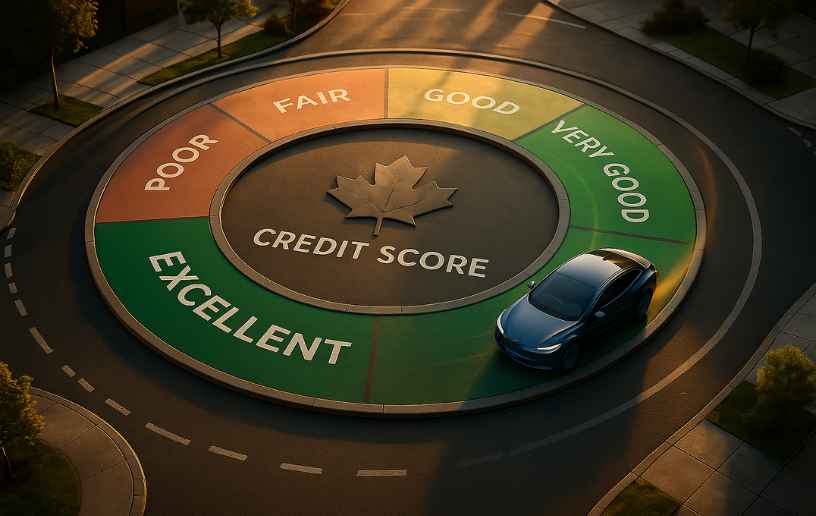
0% offers are underwritten to a manufacturer's top credit tier. In practice that usually means a credit score in the high 700s or better, a clean repayment history with no recent late payments or collections, stable and verifiable income, and enough room in your monthly budget that a new car payment doesn't strain it. Lenders phrase this differently depending on who you ask, but the bar sits well above what's needed for an ordinary approved loan. This is the tier reserved for the cheapest possible money.
Self-employed applicants tend to run into friction here even with strong finances, because manufacturer captive lenders generally want traditional pay stubs and T4s rather than notice-of-assessment income averaged across a couple of tax years. Newcomers to Canada hit a related wall: without a Canadian credit history built up over time, there's often nothing for an automated approval system to score favourably, no matter how solid the income actually is. None of that means these buyers can't get financed. It means they're unlikely to land in the 0% tier specifically, since that tier exists for the lowest-risk applicants a lender can identify.
If you're not sure where your own profile lands, how bank and dealership rates typically compare is worth reading before you assume a manufacturer promotion is your only shot at a reasonable rate.
If You Don't Qualify for 0%, What Actually Sets Your Rate
Outside that top tier, the 0% offer isn't on the table, and the question becomes what a realistic rate actually looks like. A handful of things carry most of the weight: credit score and history, down payment size, loan term, the age and type of vehicle, and total debt relative to income. A dealer doesn't control any of this. It's what a lender's underwriting model runs on, and different lenders weigh the same inputs differently.
This is where shopping the financing separately from the vehicle actually pays off. A lot of buyers assume the dealer's finance office is the only source of a loan, when banks, credit unions, and specialty auto lenders all price risk differently, and a rate that looks average at one can be meaningfully better or worse at another. If your credit history has some dents in it, missed payments, a consumer proposal, a thin file, it's worth reading what bad credit car loans in Canada actually look like in terms of realistic rate ranges, so you're not assuming you're locked out of financing when you're probably not.
Down payment size matters more than people expect, mostly because it changes the loan-to-value ratio a lender is underwriting against. If you're weighing whether to put money down at all versus keeping cash on hand, look at how zero-down car loans in Canada are priced relative to loans with a traditional down payment. The trade-off isn't always what it looks like on the surface.
Compare Total Cost, Not the Headline Number
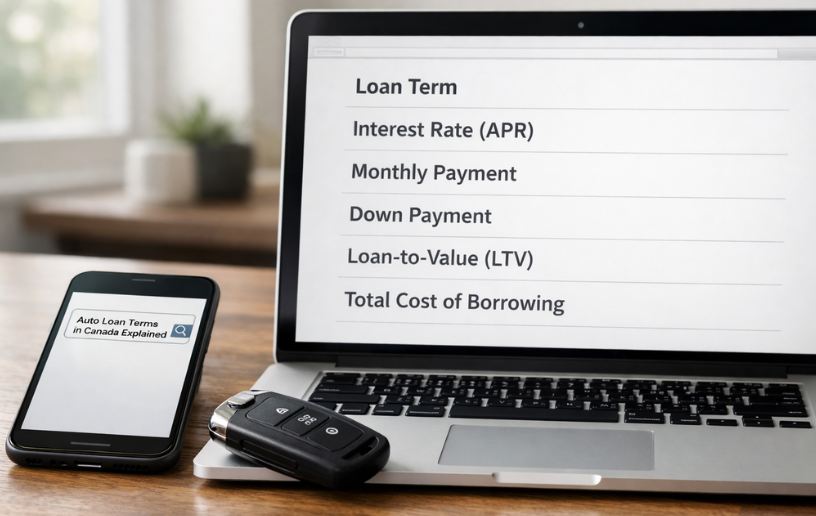
Whether you're looking at a manufacturer's 0% offer or a market-rate loan from a bank, what actually matters is total cost over the life of the loan: purchase price, interest paid, and any fees, not the rate by itself. A 0% loan on an overpriced vehicle can cost more than a 6% loan on one you negotiated down properly. A longer term lowers the monthly payment but almost always raises total interest paid, sometimes by a lot, which is one more reason to understand how fixed and variable rate structures behave over a typical loan before picking one.
Price the vehicle and the financing as two separate decisions, then add them back together. Get the out-the-door price with the 0% offer applied. Then get the out-the-door price with the cash rebate applied instead, financed at whatever rate you'd realistically qualify for elsewhere. Compare the two totals, not the two rates. That's the comparison that tells you which path actually costs less, and it skips the guesswork "0%" is built to create.
If you want a clearer read on where your credit and income actually put you, rather than guessing based on an ad you don't yet know you qualify for, apply here to get pre-approved with Auto Lending Canada. You'll see a real rate for your situation, whether that ends up being a manufacturer promotion, a bank loan, or a lender that works with a wider range of credit profiles.
0% financing deals aren't a trick and they aren't free money. They're a narrow offer built for a specific kind of buyer on a specific set of vehicles. Knowing where you actually stand before you walk into a dealership is what turns "what's the rate" into "what's the real cost," and the second question is the one that tells you whether you got a good deal.