
Zero Down and Low Down Payment Car Loans in Canada: What's Realistic
29 August 2026Search "zero down car loan canada" and you'll find no shortage of ads promising it. Fewer of those ads mention that $0-down financing isn't something every applicant qualifies for, or that it's not handed out without a lender looking closely at the rest of your application first. Whether you end up with a true zero down deal, a low down payment car loan, or something in between usually comes down to your credit history, your income, and how much risk the lender is taking on by financing the full price of a vehicle that starts losing value the day you drive it off the lot.
Here's how down payment requirements actually work in Canada, why they shift so much from one applicant to the next, and what you can realistically do to bring your upfront cost down, even with less-than-perfect credit.
Is a zero down car loan actually realistic in Canada?
Sometimes. Lenders do approve no money down car financing, and it tends to go to applicants who already look like a safe bet: steady employment, a solid credit score, manageable existing debt, a vehicle price that lines up with what they can afford. When all of that lines up, there's less reason for a lender to ask for cash upfront, because the loan already looks stable on its own.
Everywhere else on the credit spectrum, which is most people, it gets more complicated. Thin credit, an inconsistent history, a few dings on the report, and a $0 down request becomes a harder sell. The lender is being asked to finance 100% of a depreciating asset for someone they have less certainty about. That doesn't take financing off the table. It usually just means a down payment becomes part of how the deal gets structured.
How down payment requirements scale with your credit profile
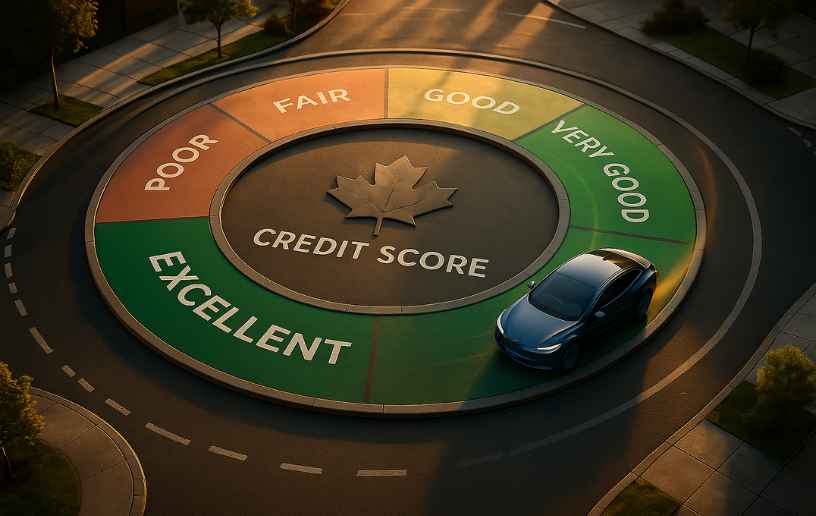
Down payment size in auto lending isn't a flat rule. It's a sliding scale tied to risk. Someone with strong credit and a clean repayment history might get approved with little or nothing down. Someone rebuilding credit after a rough patch, a consumer proposal, or a stretch of missed payments will typically be asked to put more down, sometimes 10-20% of the vehicle price depending on the lender and the vehicle itself.
None of this is personal. A down payment reduces the amount financed, which lowers the lender's exposure if the loan defaults. It also signals commitment, since someone who's saved and put their own money toward a purchase is less likely to walk away from it. If your credit history has some rough spots, our guide to bad credit car loans in Canada covers how lenders weigh risk beyond just a score.
Your debt load matters here too. Lenders don't just look at your credit score, they look at how much of your income is already committed to other debts. That calculation, usually called a debt-to-income ratio, plays directly into how much a lender is willing to finance without a down payment cushion behind it. Our breakdown of debt-to-income ratio and car loans goes into how that number gets calculated and why it can matter as much as your credit score.
What a low down payment actually does to your loan
Even when a low down payment car loan gets approved, it changes the shape of the loan in ways worth thinking through before you sign anything.
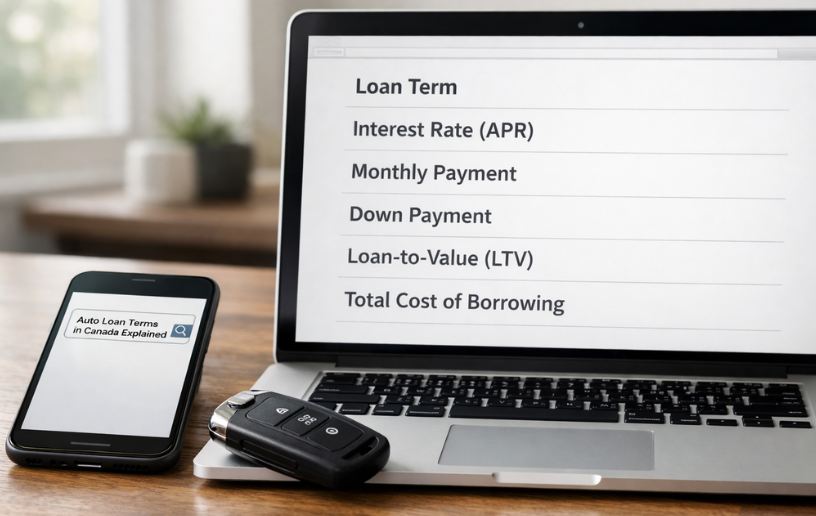
The obvious effect is on your monthly payment. Financing more of the vehicle's price means a larger loan balance, which means a higher payment at the same rate and term, or a longer term to keep that payment manageable. Stretch the term out and you'll generally pay more in interest over the life of the loan, even if the rate itself never changes.
The less obvious effect is negative equity, sometimes called being underwater on a loan. New vehicles lose value fast in the first year or two, often faster than a low or no down payment loan balance shrinks. Sell or trade in the vehicle early, or have it written off after an accident, and you could owe more than the car is actually worth. That's the real tradeoff with $0 down financing: it gets you into a vehicle without upfront cash, but it also leaves less cushion between what you owe and what the car is worth, especially in the early months.
This is why it's worth being realistic about vehicle price before you shop, not after you've already fallen for something. Our guide on how much car you can actually afford walks through setting a price range based on your full financial picture, not just what a lender might be willing to approve.
Where gap insurance fits in
If you do go the low or zero down route, ask about gap insurance. It covers the difference between what your regular insurance pays out on a totaled or stolen vehicle and what you still owe on the loan. It won't lower your down payment or your monthly payment, but it closes off the negative equity risk that comes with financing a larger share of the vehicle's price. For anyone putting little down, it's one of the more useful protections available, and it's usually cheap relative to the risk it covers.
Practical ways to lower the down payment you need
If a full zero down car loan isn't in the cards for your situation, there are still a few ways to bring the upfront cash down without giving up on financing altogether.
Trade-in equity is the most straightforward one. Own your current vehicle outright, or owe less than it's worth, and that equity can go straight toward the down payment on your next loan, covering some or all of what a lender is asking for without you saving a dollar extra.
Picking a less expensive or slightly older vehicle changes the math too. A smaller loan amount means a smaller down payment in dollar terms even at the same percentage, and it usually means an easier approval overall since the lender is financing less risk. That doesn't mean settling for something unreliable. It means matching the vehicle to what actually fits your budget and your approval odds, rather than the other way around.
Improving your approval profile before you shop can shift what a lender is willing to offer, too. Paying down a credit card balance, correcting an error on your credit report, or waiting a few months to build a longer positive payment history can move you out of a category that requires a larger down payment. Check where you stand before you're sitting at a dealership finance desk under time pressure. A pre-approved car loan gives you a clearer read on your realistic down payment before you're negotiating on the spot.
Being honest about what "zero down" really means
No lender can promise a no money down approval before reviewing an actual application, and any pitch that suggests otherwise deserves some skepticism. What's realistic is this: your down payment requirement is shaped by your full financial picture, and it can move in your favour with some preparation. Some applicants genuinely qualify for $0 down. Plenty of others land somewhere in the low, manageable range once trade-in equity, a more modest vehicle choice, or a stronger application profile get factored in. Either outcome can produce a workable loan. The difference is mostly how much cash you need on hand at signing.
It also helps to think about timing. Applying for financing right after a job change, a move, or a big swing in your credit utilization is rarely the moment a lender is most flexible on down payment. Giving your file a few months to stabilize, even while you keep saving whatever you can toward a down payment, often does more for your terms than rushing into a purchase the week you decide you need a car. None of this guarantees a specific outcome, but it does put you in a stronger position when a lender is deciding how much of the purchase price they're comfortable financing without cash upfront.
The only way to know where you actually stand is to run the numbers on your own situation instead of guessing from someone else's approval story. If you want a realistic read on what down payment you'd need, apply here and Auto Lending Canada can walk you through what your credit profile and budget actually support, whether that ends up being zero down, a low down payment, or something in between.