How AI Is Shaping Auto Financing in Canada: Smarter Loans, Safer Vehicles, and Faster Approvals
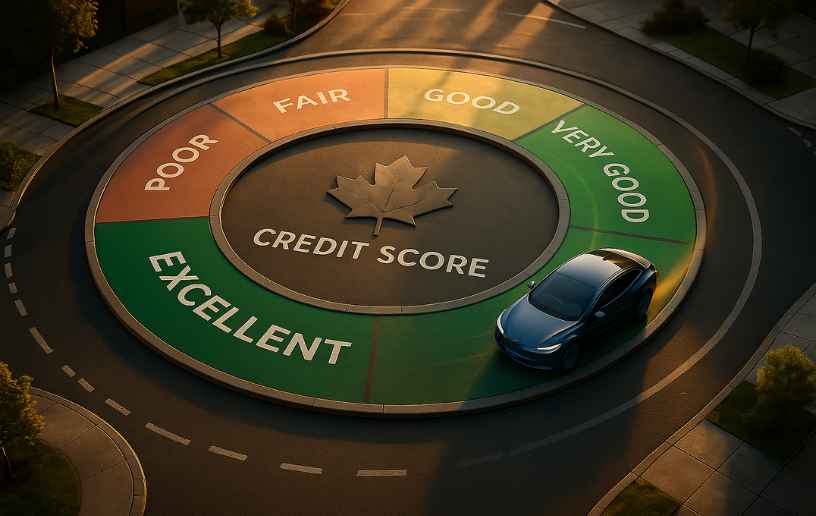
05 January 2026The way Canadians finance vehicles has changed dramatically over the past few years. What once required days of paperwork and guesswork now happens in minutes through intelligent systems that look beyond traditional credit scores. Whether you're a first-time buyer, looking for your next used vehicle, or exploring electric car options, the lending landscape is becoming faster, more transparent, and more personalized than ever before.
This shift matters to everyone shopping for a car. Better approval processes mean more people can access financing. Smarter risk assessment means fairer pricing and transparent platforms means borrowers have real control over their decisions.
This guide walks you through how modern lending technology is reshaping auto finance in Canada. You'll discover how approval decisions are made, how your personal circumstances affect your interest rate, how used car values are assessed, and how fraud prevention protects everyone. More importantly, you'll learn how to position yourself to get the best possible terms and approval odds when you're ready to buy.
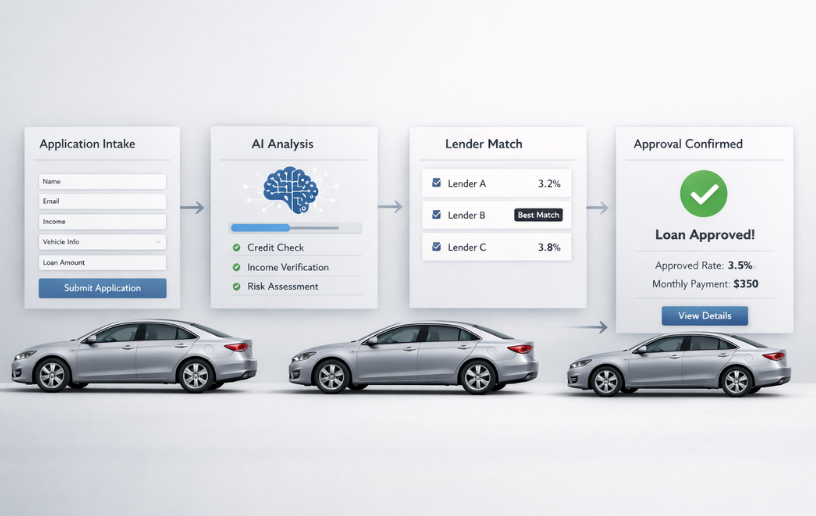
How Loan Approvals Are Becoming Smarter and Faster
For decades, traditional lending relied on a simple system. A lender pulled your credit score from Equifax or TransUnion, compared that number to their approval thresholds, and made a binary decision: approved or rejected. A single missed payment from five years ago could disqualify you, even if you'd been financially reliable ever since.
This approach had obvious limitations. Credit scores capture historical borrowing behavior, but they miss enormous amounts of relevant financial information. Someone with a thin credit history but stable employment and consistent income is treated as riskier than they actually are. Newcomers to Canada, recent immigrants, or self-employed professionals often face unfair rejection even though they're creditworthy.
Modern approval systems evaluate dozens of data points simultaneously: employment stability and tenure, income consistency over time, current monthly expenses, rent payment history, utility bill payments, transaction patterns across your bank account, and even how you behave during the application process itself.
Ultimately lenders report approval processing times have dropped from multiple days to just minutes. For you as a borrower, this means less uncertainty and faster access to financing.
Alternative Data Is Opening Doors for More Borrowers
One of the biggest developments in modern lending is the use of alternative data. This includes information that wasn't traditionally available to lenders but that actually predicts financial behavior quite well.
This matters enormously for people who are underserved by traditional lending. Someone with immigrant status who's been in Canada for a few years but hasn't built a deep credit history can now demonstrate creditworthiness through rent receipts, employment records, and banking information. A self-employed professional with irregular but solid income can show that income through business bank account patterns rather than waiting for tax returns. Gig workers can demonstrate stability through consistent customer ratings and earnings patterns.
The result is that creditworthy borrowers who would have been rejected by banks are now getting approved—often at competitive rates because the data proves they're actually reliable.
How Loan Terms Are Being Customized to Your Situation

Beyond One-Standard Offer
Traditionally, once approved, borrowers received a standardized offer. You qualified for financing at a fixed rate based on your credit band. Everyone with a similar score got roughly the same offer, whether their financial situations were identical or completely different.
Modern systems now generate personalized offers for each borrower. The same underlying approval data that determines whether you qualify also feeds into a pricing algorithm that customizes three key elements: the interest rate you'll pay, the length of the loan term, and the size of your monthly payment.
Consider two borrowers both approved at the same credit tier. One has six months of emergency savings, has worked at the same company for twelve years, and has minimal monthly debt obligations. The other was recently hired, has no reserves, and carries significant existing debt. Traditional lending would offer them nearly identical terms. Modern systems recognize the difference and adjust accordingly. The first borrower might receive a more favorable rate because their risk profile is genuinely lower. The second might be offered a shorter loan term because faster repayment protects both parties.
Vehicle-Specific Pricing Reflects Real Collateral Value
The vehicle you choose affects your loan terms too. A Honda or Toyota with a reputation for holding value and requiring modest maintenance might qualify for more favorable terms than a vehicle known for steeper depreciation. A newer model with strong predicted resale value gets priced differently than an older vehicle with uncertain demand.
This vehicle-specific approach matters because it aligns the loan terms with actual risk. If you finance a car with strong residual value, both you and the lender are protected, your equity in the vehicle remains strong, which reduces default risk. If you choose a vehicle likely to depreciate sharply, a lender needs to price that risk appropriately, which might mean a slightly higher rate or stricter down payment requirement.
For you as a borrower, this transparency is valuable. Rather than accepting a generic offer, you can understand exactly how your vehicle choice affects your financing.
How Pre-Approval Protects Your Financial Control
Before you visit a dealership or start shopping seriously, getting pre-approved is one of the smartest moves you can make. Pre-approval means a lender has already reviewed your application, verified your information, and confirmed the maximum amount they're willing to lend you and at what approximate rate.
The benefit extends beyond knowing your budget. Pre-approval puts you in a position of strength when shopping. You know exactly what you can afford, so you won't waste time looking at vehicles outside your range. You're not dependent on dealership financing, so you can negotiate from a stronger position. You won't experience the embarrassment of finding your perfect car only to be told you've been declined.
Get pre-approved today with Auto Lending Canada. You complete an online application in minutes without affecting your credit score. The system reviews your information and provides feedback on whether you qualify and at what loan amount. With that pre-approval in hand, you can shop confidently, knowing exactly where you stand financially.
Used Cars and the Concept of Fair Pricing
Why Used Car Values Are Hard to Predict?
The used car market has always been murky. A vehicle's fair market value depends on dozens of variables: age, mileage, maintenance history, regional demand, brand reputation, service records, accident history, and increasingly, environmental exposure and battery condition for electric vehicles. Dealers traditionally relied on price guides like Black Book or local market knowledge, both subject to bias and gaps.
Modern valuation systems use machine learning to analyze massive historical datasets, identifying patterns that human judgment misses. These systems reveal insights like how depreciation varies dramatically by brand. A Honda or Toyota loses roughly eight to nine percent of its value annually after the first few years, while other brands might lose twelve to fifteen percent. Geography matters too—the same vehicle is worth more in regions where it's in higher demand. Maintenance history dramatically affects value, but not always in ways you'd guess.
The Depreciation Curve: What It Means for Your Loan
One finding from data analysis is the depreciation curve–how vehicle values change over time. Most vehicles experience sharp value loss in the first few years, then the rate of depreciation slows. But there's a critical inflection point: after about fifteen years, depreciation accelerates again, with vehicles losing thirteen percent or more of their value annually.
This matters for your loan because depreciation affects how much equity you have in your vehicle. If you finance a vehicle that depreciates faster than your loan repayment schedule, you could end up owing more than the car is worth. Modern lenders use depreciation prediction to structure loans that protect you from this situation, often by requiring slightly larger down payments or shorter terms for vehicles with steep depreciation curves.
Electric Vehicles: Valuation in an Uncertain Market
Electric vehicles introduce extra complexity. Battery degradation, technological obsolescence, and shifting consumer preferences create uncertainty that traditional valuation models struggle to capture. Early EVs depreciated much faster than expected. Newer EVs, however, are showing better-than-anticipated residual values, with strong price-year correlations indicating market stabilization.
Lenders now use more sophisticated models that factor in battery health data, technology generation, and regional charging infrastructure development. This means EV financing is becoming more accessible and realistically priced as the market matures.
For you buying a used EV, this improved modeling means you're financing based on realistic market data rather than lender conservative estimates. You get better loan terms because the underlying asset is being valued accurately.
How Fraud Prevention Protects Everyone's Interests
The Current Fraud Crisis: Why It Matters to You
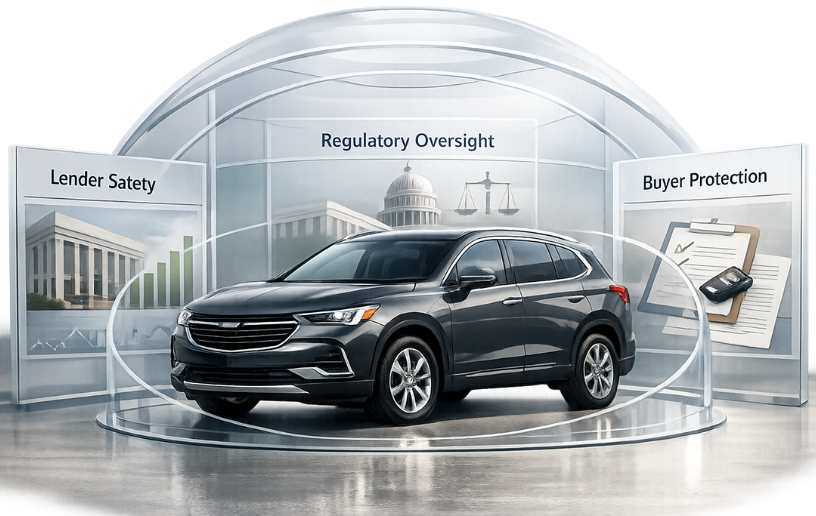
In 2025, Canada's auto lending industry faced the highest level of fraud ever recorded. What's striking is that the majority wasn't identity theft or stolen identities. It was first-party fraud: borrowers using their own names to secure loans they couldn't genuinely afford by misrepresenting income or hiding existing debts.
This crisis matters to you because fraud raises costs for everyone. When lenders experience high fraud losses, they become more conservative. They raise interest rates, tighten approval criteria, require larger down payments, and demand more documentation. Honest borrowers end up paying the price for fraudsters' actions.
The root causes reveal why the crisis is happening now.
- Economic pressure: Rising interest rates, persistent inflation, and elevated housing costs have compressed household budgets, making misrepresentation increasingly tempting.
- Digital acceleration: Lenders built approval systems optimized for speed and convenience much faster than they built identity verification and behavioral monitoring systems.
- Fraud signals are fragmented: Lenders see credit files, dealers observe application behavior, and investigators review outcomes months later when defaults harden, but these perspectives are rarely connected in real time.
Modern Fraud Detection & How to Catch Problems Early
New approaches are beginning to address these vulnerabilities. Real-time identity verification systems now cross-check claimed employment and income immediately when you apply, not weeks later during servicing. Behavioral analytics assess not just what you claim but how you behave during the application process, unusual urgency, device inconsistencies, or narrative gaps that hint at dishonesty.
Device fingerprinting and velocity controls identify coordinated fraud schemes. When multiple applications come from the same device within hours, systems flag those as suspicious. When income claims are inconsistent with employment patterns or public records, systems catch that automatically.
For honest borrowers, this is good news. Lenders that successfully prevent fraud can maintain competitive rates, improve approval odds for qualified borrowers, and offer better terms.
Chatbots and Virtual Support Make the Process Less Confusing

AI-Powered Guidance for Complex Decisions
Auto financing contracts are complex. Understanding the difference between a fixed and variable rate, knowing what prepayment penalties mean, and modeling how a shorter loan term affects monthly payments can leave first-time buyers overwhelmed. For borrowers with lower credit scores or complex financial situations, the jargon alone can be intimidating.
Modern digital platforms increasingly include chatbots and virtual advisors powered by natural language technology. These tools can answer questions about loan terms, explain prepayment options, model different repayment scenarios, and even conduct real-time eligibility assessments. A first-time buyer can ask "What if I put down an extra $5,000?" and immediately see how that affects their monthly payment, interest cost, and loan timeline.
For borrowers navigating challenging financial situations, virtual advisors can provide judgment-free guidance, explaining how different choices affect approval odds and monthly payments. This transparency builds confidence and leads to better decision-making.
24/7 Access Without Judgment
Customer service teams have office hours. Virtual systems don't. If you have a question about your loan at 11 PM on a Sunday, a voice-enabled system can answer immediately. If you're facing a temporary financial hardship and want to understand what options might be available, a chatbot can explain hardship programs without requiring you to navigate phone menus or feel embarrassed about your situation.
This access, combined with genuine understanding of borrower circumstances, has the potential to reduce default rates significantly. Borrowers in temporary hardship who can quickly access information about modification options or temporary forbearance are more likely to stay current than those left wondering if options exist.
Smarter Borrowing: What You Should Know in 2026
How Data-Driven Lending Affects Your Approval Odds
Understanding that modern lending evaluates far more than just your credit score should inform how you prepare your application. If you're going to apply for a car loan, here's what actually matters to modern systems:
- Employment stability signals genuine income risk reduction. A five-year tenure at the same employer carries far more weight than multiple job changes. If you've recently changed jobs, document that your income is comparable and the role is stable.
- Income consistency matters more than the total amount. Someone making $50,000 reliably is lower risk than someone making $80,000 with dramatic monthly variation. If you're self-employed or in gig work, gather several months or ideally a year of income statements to demonstrate stability.
- Existing debt obligations are crucial. You might have excellent income, but if you're carrying $50,000 in student loans, $15,000 in credit card debt, and a substantial mortgage, your monthly obligations eat significantly into what you can afford for a car payment. Lenders evaluate your total debt-to-income ratio, not just your raw income.
- Payment history on everything matters. If you've been late on credit cards or utility bills, that's visible. But more importantly, if you're current on everything, that demonstrates discipline.
- Liquid savings indicate financial stress tolerance. Someone with $10,000 in emergency reserves is lower risk than someone with no savings, even at the same income level. If you can build up some savings before applying, that strengthens your application significantly.
Leverage Your Pre-Approval to Get Better Terms
Once pre-approved, use that approval strategically. Shop with confidence for vehicles in your approved price range. When you find the right vehicle, work with the dealer to finalize the purchase.
The goal is to position yourself so that you're making the buying decision based on which vehicle works best and at what price, not scrambling to secure financing after you've already fallen in love with a specific car.
Take the Next Step with Auto Lending Canada
The auto lending landscape of 2026 is fundamentally different from what it was even five years ago. Vehicles remain expensive, interest rates remain elevated, and fraud risk continues to be a challenge for the entire system. But simultaneously, approval processes are faster, lending is more inclusive, pricing is more transparent, and support tools are more accessible.
The strategic move is to start with pre-approval. Take time to gather your documents, review your credit report, and assess your actual financial situation honestly. Then apply through a platform designed to serve borrowers like you—whether that's a traditional bank, credit union, or specialized online lender like Auto Lending Canada.
With pre-approval in hand, you can shop confidently. You know your budget. You know your approximate interest rate. You know whether a specific vehicle fits your financial situation. And you're not dependent on dealer financing at the moment you're emotionally committed to a purchase.
The borrowers winning in 2026 are those taking control of the process rather than reacting to it. Get pre-approved first. Shop second. That sequence puts you in control, and control leads to better decisions and better financial outcomes.