
How to Read Auto Loan Contracts to Avoid Getting Cheated
20 December 2025An auto loan agreement is not routine paperwork. It is a legally binding financial contract that defines your obligations, your risks, and your rights for several years. Once signed, it governs how much you pay, when you pay, what happens if you miss a payment, and how quickly a lender can act against you.
Many Canadian borrowers focus on the monthly payment and interest rate alone. The real exposure often sits quietly in the fine print. Hidden fees, strict default triggers, aggressive repossession rights, and clauses that impact your credit report can cost thousands of dollars if misunderstood.
This guide breaks down a standard auto loan agreement line by line, using professional insight to help you read, understand, and evaluate every major clause before signing. The objective is simple: informed borrowers make safer financial decisions.
Understanding the Structure of a Loan Agreement
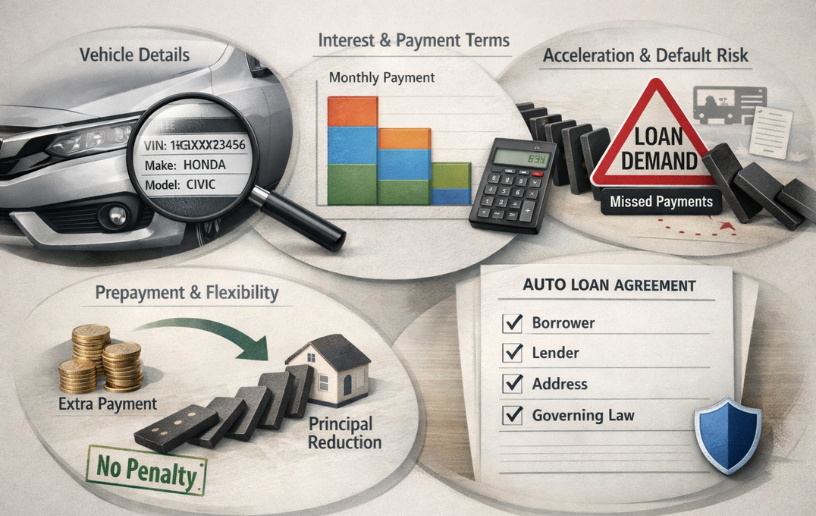
Auto loan contracts follow a structured format designed to protect the lender while ensuring legal enforceability. Most Canadian auto loan agreements are divided into core sections:
- Vehicle Details
- Parties and Legal Identification
- Payment Terms and Allocation
- Interest Rate Type and Compounding
- Late Fees and Default Conditions
- Prepayment Rights
- Collateral and Secured Loan Mechanics
- Acceleration Events
- Enforcement Rights
- Waivers by Borrower
- Expenses and Legal Costs
- Governing Law
- Successors and Assigns
Each section addresses a specific risk area. Lenders organize contracts this way to comply with provincial regulations, reduce ambiguity, and ensure they can enforce the agreement if issues arise.
Understanding this structure allows borrowers to read with intent rather than confusion. While the document should be read sequentially, it must also be cross referenced. Payment terms interact with interest. Default clauses interact with acceleration and repossession. Insurance obligations interact with collateral enforcement.
Reading any clause in isolation creates blind spots.
Section 1 – Vehicle Details
The vehicle details section legally defines the asset securing your loan. This includes the vehicle identification number, make, model, year, color, and sometimes trim level.
This information determines what can be repossessed, insured, or claimed in the event of default or loss. Errors here can cause serious disputes, including insurance claim denials or contested repossessions.
Best practice is to verify every detail against official registration and purchase documents. Confirm the VIN character by character. Ensure the vehicle description matches what you are actually receiving, including trim level if listed. Any discrepancy should be corrected before signing, not after.
Section 2: Parties and Legal Identification
This section identifies who is legally bound by the agreement. The borrower and lender are defined here, and these terms are used repeatedly throughout the contract.
For individual borrowers, your legal name must match government issued identification. Nicknames, abbreviations, or spelling errors can complicate enforcement and dispute resolution.
For business borrowers, accuracy is even more critical. The contract must correctly identify whether the borrower is an individual, corporation, partnership, or sole proprietorship. A mismatch can expose personal assets unintentionally or create ambiguity around liability.
Section 3: Payment Terms and Allocation
Most contracts specify that payments are applied first to interest, then to principal, and finally to fees. This matters because early in the loan term, a large portion of your payment may go toward interest. If you make extra payments, you want confirmation that they reduce principal rather than being treated as future payments.
Confirm whether payment frequency can be changed and whether additional payments are allowed. Even small timing misunderstandings can trigger technical default.
A professional approach is to calculate the total amount paid over the life of the loan, not just the monthly amount. This reveals the true cost of borrowing and helps compare offers accurately.
Section 4: Interest Rate Type and Compounding
Interest clauses require careful reading. Fixed interest remains constant throughout the term. Variable interest can change based on external benchmarks, increasing uncertainty.
Compounding frequency has a major impact on cost. Daily compounding increases total interest compared to monthly or annual compounding. Many borrowers overlook this detail, yet it can add thousands over time.
Some agreements advertise zero interest financing. These offers often contain conditions. Missed payments may trigger retroactive interest or penalties.
Be cautious of vague adjustment language. Any clause allowing rate changes without clear limits or triggers is a red flag.
Section 5: Late Fees and Default Conditions
Late fees vary widely. Review the fee amount, grace period, and how often fees can be charged. Some lenders compound late fees by adding them to the balance, which then accrues interest.
Default is broader than missed payments. Contracts often define default to include insolvency, false information, or breach of other clauses. This means a problem unrelated to payment can still trigger enforcement.
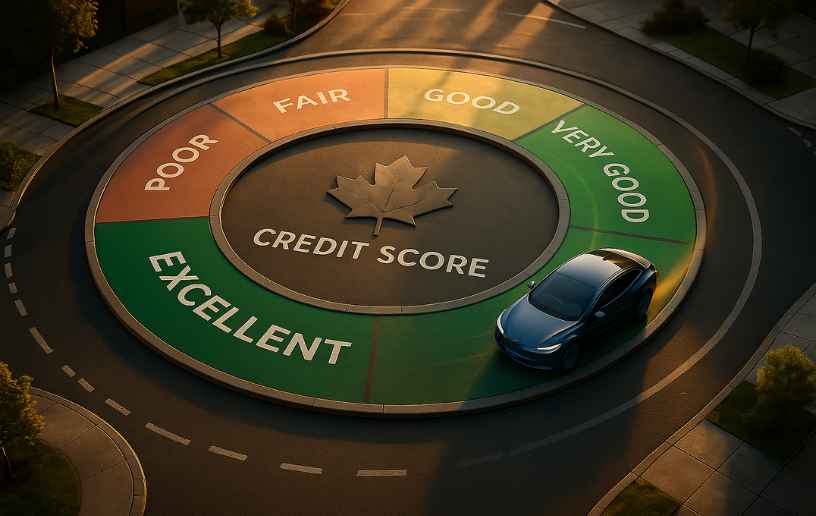
Equally important is how defaults are reported to credit bureaus. Even a single missed payment can damage credit scores and affect future mortgage or refinancing eligibility.
Section 6: Prepayment Rights
Prepayment clauses determine whether you can pay off the loan early and how those payments are treated.
In Canada, many auto loans allow prepayment without penalty, but this must be confirmed in writing. Ensure that extra payments reduce principal immediately rather than being applied to future installments.
Strategic prepayment can significantly reduce interest costs and shorten the loan term. Without clear prepayment rights, you lose flexibility and potential savings.
Section 7: Collateral and Secured Loan Mechanics
The vehicle serves as collateral for the loan. This gives the lender the right to repossess, sell the vehicle, and apply proceeds to the outstanding balance.
Understand the triggers for repossession and whether notice is required. Some contracts allow repossession without prior notice once default occurs.
Language about transfer upon default means ownership may effectively shift once enforcement begins. Risk mitigation includes maintaining insurance, staying current on payments, and communicating early if issues arise.
Sections 8 and 9: Acceleration Events and Enforcement Rights
Acceleration events are situations that allow the lender to ask for the full remaining loan amount at once instead of just the missed payment. This can happen not only if you miss a payment, but also if you face financial trouble, declare insolvency, or default on another loan. What feels like a small setback can quickly turn into a demand for the entire balance.
Enforcement rights state how much control the lender has once an acceleration event happens. Phrases like “sole and exclusive” can give the lender the rights to the vehicle. This matters because a short delay or mistake can suddenly become a full loan crisis, leaving very little time to recover or negotiate.
Section 10: Waivers by Borrower
Waivers are clauses where the borrower gives up rights they would normally have under contract law or consumer protection principles. These rights are often designed to slow down enforcement or give borrowers time to respond. When waived, lenders gain speed and control.
This can lead to the lender demanding the full loan balance without formally notifying you in advance.
For an example: If you miss a payment, you may expect a reminder or a chance to correct it. With waivers in place, enforcement can begin immediately. This reduces your ability to negotiate, explain hardship, or arrange payment plans before consequences escalate.
Waivers do not mean the lender will always act aggressively, but they give the lender the legal ability to do so without delay. Always check carefully before you waive off any.
Section 11: Expenses and Legal Costs
If default occurs, borrowers are often responsible for legal fees, administrative costs, repossession expenses, and interest on unpaid amounts.
Some contracts cap these costs based on provincial law or usury limits. Others are broad.
Professionals model worst case scenarios to understand total exposure before signing.
Section 12: Governing Law
Governing law determines which province’s laws apply to enforcement, repossession, and interest limits.
Consumer protection laws vary by province. Cooling off periods, cancellation rights, and disclosure obligations differ.
Borrowers should confirm that jurisdiction is predictable and aligned with where they reside..
Section 13: Successors and Assigns
This clause binds heirs, successors, and assigns. The lender can transfer the loan to another party, and obligations continue.
For borrowers, this means the contract outlives ownership changes or restructuring.
Reading the Fine Print

Phrases to understand before signing the document
Sole and exclusive option
This phrase means the lender alone decides whether to enforce a right. It allows the lender to choose if and when to accelerate, repossess, or pursue legal remedies. Borrowers will have no ability to challenge timing or fairness. The lender’s discretion will be absolute within the contract
Without notice or consent
This phrase allows the lender to act without warning or borrower approval. It gives the lender the authority of Repossession, Loan assignment or sale and even Acceleration. Borrowers may only learn about enforcement after it has already happened. This removes the opportunity to correct mistakes or negotiate.
Broad acceleration triggers
This term allows a lender to treat the loan as fully due not just when you miss a payment, but also for small issues like an insurance lapse or paperwork mistake. This matters because even minor problems can quickly turn into big consequences.
Extensive waivers
These clauses remove procedural rights and protections. This allows for Faster enforcement, Reduced communication and Limited dispute options. It compresses timelines and reduces borrower leverage during hardship or disputes.
Practical Step by Step Reading Approach
When reviewing an auto loan contract, a disciplined, methodical approach is essential. Start by reading the agreement sequentially from beginning to end, ensuring you understand each section before moving on. As you progress, highlight key financial terms, including interest rates, APR, fees, prepayment rights, and collateral clauses. Take the time to cross-reference related sections, such as how late fees interact with acceleration clauses or how prepayment terms affect total interest cost.
Using calculators to quantify the total cost over the life of the loan provides a tangible sense of financial commitment and helps identify hidden expenses that may not be obvious at first glance. Whenever a term or clause is unclear, request clarification in writing from the lender.
Comparing Multiple Loan Agreements
Once you understand a single contract thoroughly, it is wise to compare multiple loan agreements side by side. Focus on the most impactful elements: interest rate, APR, fees, prepayment rights, collateral requirements, acceleration triggers, and waiver clauses. By reviewing these items in parallel, borrowers can quickly identify which terms are standard and which introduce unnecessary risk. Templates often reveal subtle differences that could have major long-term consequences if overlooked.
Final Professional Checklist Before Signing
- Verify identities
- Confirm vehicle details
- Confirm loan amount and term
- Understand interest and compounding
- Review late fees and grace period
- Confirm prepayment and refinancing rights
- Understand collateral and acceleration
- Review Waivers and Borrower Rights
- Check governing law
- Quantify total cost and risk before committing.
Only sign when every item is fully understood and verified.
The Final Inspection: Secure Your Auto Loan with Auto Lending Canada
Auto loan contracts are not designed to educate borrowers. They are designed to enforce obligations. Reading a contract line by line is financial self protection.
Don’t navigate the fine print alone. At Auto Lending Canada, we believe transparency is the foundation of a great deal. Our team of experts is dedicated to helping you secure the best possible terms while ensuring every detail of your contract works in your favor.
Ready to get started? Get pre-approved today and let us find the perfect loan for your budget.
Frequently Asked Questions (FAQs)
1. What is the difference between the interest rate and APR?
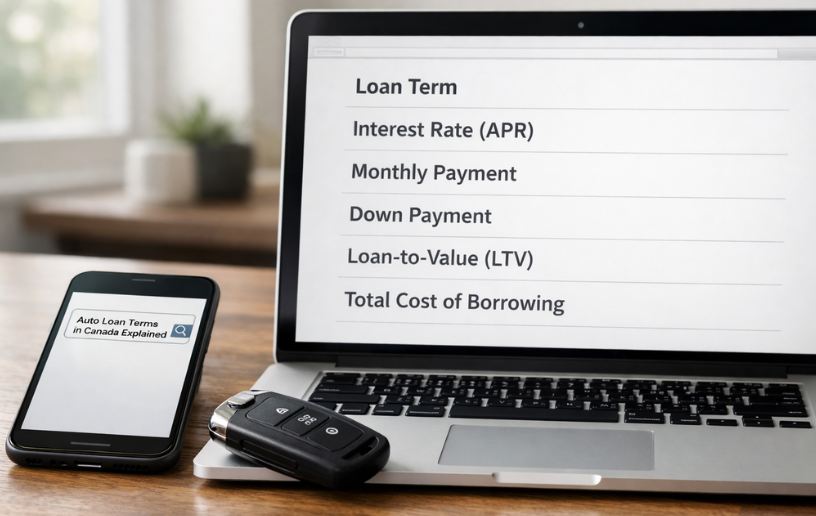
The interest rate is the cost of borrowing the principal, while the APR (Annual Percentage Rate) includes additional lender fees, admin charges, and financed add-ons. APR gives a truer picture of the total cost of the loan. Comparing only the interest rate can be misleading.
2. What happens if I miss a car loan payment?
Missing a payment can trigger late fees, affect your credit score, and, in some contracts, activate acceleration clauses allowing the lender to demand full repayment. Always check the grace period, fee structure, and credit reporting obligations.
3. Can I pay off my car loan early without penalty?
Many Canadian auto loans allow prepayment, but terms vary. Confirm that early payments reduce the principal rather than just advancing future installments. Some loans include prepayment penalties or restrictions that could affect savings from early repayment.
4. What is collateral, and how does it affect me?
The vehicle is typically pledged as collateral, meaning the lender can repossess it if you default. Ensure insurance requirements are met, and understand triggers for repossession. Collateral clauses also affect refinancing or loan transfer options.
5. How does a car loan contract affect my credit score?
All timely payments are reported positively, but late payments, defaults, or repossession can have immediate negative effects. Understanding reporting obligations helps borrowers anticipate long-term consequences.