Soft Pull vs. Hard Pull: Impact of Auto Loan Inquiries on Credit Score
25 December 2025Applying for an auto loan should feel empowering. You are planning a major purchase, evaluating financing possibilities and trying to secure the best rate. Yet for many Canadians the moment credit inquiries are mentioned the experience becomes confusing. The terms soft pull and hard pull are tossed around by lenders, but rarely explained clearly.
Understanding the difference between the two has a direct effect on how confidently you can shop for a vehicle and how you protect your financial profile. This detailed guide breaks everything down in a simple way while offering insights used inside the auto finance industry
Why Credit Inquiries Matter in Auto Financing
Any lender that considers giving you money needs to evaluate your risk level. Your credit report is one of the most powerful tools used to understand how consistently you have handled debt in the past and how reliably you are likely to repay a new loan.
Each time your credit file is accessed an inquiry is recorded. Some inquiries affect your score while others do not. Some give lenders surface details while others provide the full picture.
The difference between these inquiry types has real consequences. Two people with identical credit scores can receive very different offers if one of them has too many recent hard inquiries.
Lenders interpret recent inquiries as a sign that you may be shopping for large amounts of credit or struggling financially. A thoughtful strategy helps you avoid unnecessary score drops while still exploring your options with confidence.
What Exactly Is a Soft Pull
A soft pull is a gentle credit check that does not influence your score. It is typically used by lenders during the early stages of the auto loan journey to understand your general eligibility.
The information accessed through a soft pull is limited. It gives an overview of your credit history, revealing patterns like payment behaviour and open accounts, but does not expose every detail found inside a full credit report. This makes it ideal for the pre screening stage where the goal is to determine whether a lender should proceed to a full assessment.
Most pre qualification tools rely on soft pulls because they allow customers to compare options without risk.
What a Soft Pull Shows Lenders
Even though soft pulls do not offer the same depth as a full report they still provide valuable insight. Lenders can see
- Whether you have a history of missed payments
- How many accounts you currently manage
- Whether there are any major derogatory marks
- Your approximate credit health category
This is enough to create an early picture of how risky or stable you may appear. It also allows lenders to guide you toward loan products that match your profile. Customers benefit from this stage because no credit score damage occurs even if several lenders perform soft inquiries during the search for the best loan.
What Exactly Is a Hard Pull
A hard pull also known as a hard inquiry is the official credit check that occurs when a lender moves forward with your formal application. This version of your credit report is detailed. It includes every open and closed account, balances, missed or late payments, types of credit used and the overall age and depth of your credit file.
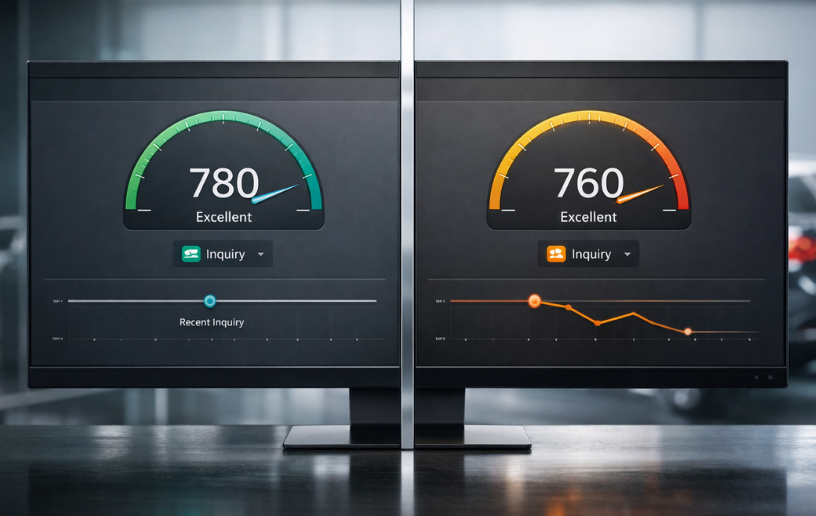
Because a hard pull reflects your true borrowing picture it influences your credit score. This score impact is generally small but remains noticeable. A single hard inquiry might lower your score by three to ten points depending on your credit history and the scoring model being used.
Lenders rely on hard pulls to complete their risk assessment and finalize loan approval. No lender can release funds or issue a binding loan contract without one. Even lenders who specialize in helping customers with damaged credit such as those found across Canada require a hard pull before completing the financing process.
Why Hard Pulls Affect Your Score
Credit scoring systems are built around predicting risk. When you apply for new credit it signals that you are taking on financial responsibility. A single application is not concerning. Multiple applications within a short period can be interpreted as a sign of financial instability or urgent need.
Hard pulls appear in the portion of your credit report that influences the largest risk related metrics. Even though the direct score drop from one inquiry is small the pattern of many inquiries can cause lenders to hesitate. This is why it is important to be strategic when applying for auto loans.
How Long Hard Inquiries Stay on Your Report
Hard inquiries stay visible on your credit report for up to two years. The score impact itself usually lasts around twelve months. After that period the inquiry becomes much less important for scoring, though it remains visible historically.
If you space out your applications and avoid unnecessary hard pulls your credit score will stay healthier. When working with experienced lenders the timing of pulls is usually managed carefully to avoid overlapping unnecessary hits.
How to Control Hard Pulls When Shopping for Auto Loans in Canada
Borrowers in Canada can protect their credit score by using a disciplined approach:
- Start only with soft pull pre-qualifications
- Shortlist 2–3 lenders based on soft pull offers.
- Apply to all hard-pull lenders within 14–30 days to stay in the rate-shopping window.
- Tell the dealership not to send your application to multiple lenders without permission.
- Avoid applying for credit cards or personal loans around your auto loan application.
- Check both bureaus (Equifax + TransUnion) before applying.
- Dispute any unauthorized inquiries—common in dealership shotgun cases.
- Ask lenders which bureau they use so you avoid loading inquiries on both.
Should You Avoid Hard Pulls Entirely?
No. Hard pulls are required for any financed vehicle in Canada. The goal is not to avoid them, but to reduce unnecessary pulls.
Hard pulls only become a problem when:
- Spread over many weeks or months
- Mixed across credit cards, loans, personal loans
- Repeated at multiple dealerships
- Triggered by aggressive subprime lenders
Soft Pull vs Hard Pull: The Real Difference
| Factor | Soft Pull (Soft Credit Inquiry – SCI) | Hard Pull (Hard Credit Inquiry – HCI) |
| Purpose | Used for pre-qualification, rate checks, and early comparisons | Required for final loan approval and underwriting |
| Use Case | Comparing multiple lenders safely | Triggered when you submit an official application |
| Data Depth | Limited overview of your credit profile | Full detailed credit history and credit behavior |
| Visibility to Lenders | Only visible to you; lenders don’t see it | Visible to all lenders on your report |
| Impact on Credit Score | No impact on your credit score | May lower score by 5–10 points on average |
| Risk to Borrower | Zero risk; ideal for shopping around | Too many hard pulls can raise risk perception |
| Approval Capability | Cannot be used to approve an auto loan | Mandatory for any lender to finalize approval |
| Best Practice | Use early to understand your eligibility | Use only when you’re ready to proceed with one lender |
When Each Type of Inquiry Occurs in the Auto Loan Process
The auto loan process generally follows a predictable pattern.
Stage One: Initial exploration
You visit dealership websites, online financing platforms or lenders to check what type of loan you might qualify for. This stage uses soft pulls.
Stage Two: Rate review and pre qualification
You want to compare interest rates, loan structures and possible monthly payments. Lenders usually rely on soft pulls because customers want clarity without obligations.
Stage Three: Formal loan application
You choose your lender and decide to apply. This triggers a hard pull because the lender now needs the complete credit profile.
Stage Four: Loan approval and funding
This stage happens only after a hard pull. The lender evaluates all credit report information, verifies income and then finalizes the loan contract.
How Rate Shopping Works Under Credit Scoring Models

Auto financing is one of the few categories where rate shopping is recognized and partially protected under major scoring systems.
FICO and similar models try to group multiple auto loan inquiries made within a short window into a single scoring event. This window can range anywhere from 14 - 45 days depending on the scoring model in use.
The purpose of this rule is to allow consumers to compare options without being punished for doing so. However the protection is not absolute. Even when grouped together lenders still see each inquiry individually on your report. Although the grouped score impact might remain low the pattern of several inquiries can still influence how lenders view your borrowing behavior.
This is where choosing an experienced automotive lender like Auto Lending Canada becomes important since we help you time your applications correctly.
How Soft Pulls Support Smarter Decision Making
Soft pulls allow you to prepare strategically. Rather than applying blindly you can identify which lenders are more likely to approve your specific profile. You can also understand how your credit history will be viewed without risking damage.
For many borrowers, especially those rebuilding their credit, soft pull driven pre qualification avoids the frustration of repeated rejections. It provides a clear direction before taking any score related consequences.
How Hard Pulls Influence Approval Results
A hard pull exposes every detail. This means lenders evaluate you based on
- Past repayment discipline
- Credit utilization ratios
- The number of accounts in good standing
- Recent negative marks
- The age of your credit history
- The stability of your overall financial behavior
A clean, well maintained report increases your chances of securing better rates. If your file has inconsistencies the hard pull helps the lender determine a fair and responsible approval plan. Many Canadian lenders including those working with flexible borrowers use this information not to decline but to structure repayment terms in a manageable way.
Common Misunderstandings About Credit Inquiries
Many Canadians avoid comparing loan options because they fear damaging their score. Most of this fear comes from myths. Here are the most common misunderstandings.
Here is an expanded look at these common credit myths. Understanding these distinctions is the difference between navigating the Canadian lending market with fear and navigating it with a strategy.
1. Myth: Checking Your Own Score is Harmful
The Reality: Checking your own credit via a banking app or a credit bureau (Equifax or TransUnion) is a Soft Inquiry. These are essentially "administrative" checks. Because you aren't seeking new debt when you look at your own file, the credit scoring models do not view this as a risk. You can check your score daily without losing a single point.
2. Myth: Soft Pulls Show Lenders Everything
The Reality: Soft pulls provide a "snapshot," not the full album. They usually include your basic score and perhaps a high-level summary of your debt-to-income ratio or payment history. Lenders use these for pre-approvals or promotional offers. However, they lack the granular data—like specific collection items or detailed legal filings—that appear during a Hard Pull.
3. Myth: Every Hard Pull Damages Your Score Significantly
The Reality: A single hard inquiry typically results in a minor dip, often between 5 to 10 points. For most borrowers, this is negligible and bounces back within a few months of responsible payment. The danger only arises when you have a high volume of inquiries in a short window, which suggests to lenders that you are "credit hungry" or in a financial crisis.
4. Myth: Rate Shopping is Always Safe
The Reality: Credit bureaus recognize that car buyers want the best rate, so they "deduplicate" similar inquiries made within a specific window (usually 14 to 45 days). While this protects your score from multiple hits, those inquiries are still visible on your report. If you stretch your shopping over several months, the "window" closes, and each new check will count as a separate hit.
5. Myth: A Soft Pull Guarantees Approval
The Reality: A soft pull is a "green light" to apply, not a "yes" to the loan. It suggests you meet the baseline criteria, but a lender’s final decision involves a Hard Pull to verify the deep details of your history. Only after that deep dive—and a verification of your income—is an official approval granted.
How Lenders Use Both Inquiry Types Together
Most responsible lenders combine soft and hard pulls in a structured way. The soft pull helps identify the right loan path. The hard pull confirms the final risk assessment.
By separating these stages lenders protect customers from unnecessary score drops and reduce uncertainty. This is also how platforms across Canada currently operate because customers increasingly want clarity without commitment.
Best Practices for Managing Credit Inquiries During Auto Loan Shopping
Start with soft pull based pre qualification: It helps filter which lenders fit your credit profile.
Avoid applying at multiple lenders on different days: If you are comparing options, keep applications within the same time window for better score protection.
Limit the number of dealerships that submit your application: Dealerships often send your application to multiple lenders at once which can cause several hard pulls at the same time.
Choose one lender once satisfied with the terms: After comparing offers, settle on the lender that best suits your needs before moving to the hard pull stage.
Review your credit report in advance: This allows you to fix errors and position yourself for better approvals.
Why Understanding Inquiry Types Leads to Better Loan Decisions
Credit inquiries are a small part of your credit report but carry significant influence over your financial options. When you understand the difference between soft and hard pulls you avoid unnecessary score drops, compare lenders with confidence and approach the application stage with a clear plan.
Canadians who fully understand their inquiry behavior tend to receive better loan structures, negotiate more confidently and avoid falling into predatory lending traps. A number of transparent lenders in the country including Auto Lending Canada have begun using clearer communication around soft and hard pulls to help customers protect their financial health.
Get Pre-Approved Today at Auto Lending Canada
Auto loan inquiries do not have to be confusing. A soft pull is a risk free preview that guides your early decisions. A hard pull is the official assessment that finalizes loan approval and temporarily affects your score. When used thoughtfully both inquiry types create a smoother, safer and more informed borrowing experience.
Ready to see where you stand without the risk? Let’s find the loan that supports your goals and gets you on the road with total peace of mind. Get pre-approved today at Auto Lending Canada for your car loan offers!