How to Sell a Car That Still Has a Loan on It in Canada
14 September 2026Owing money on a car doesn't mean you're stuck with it. Most vehicles in Canada that get sold privately or traded in still have a loan attached, and lenders deal with this constantly. What trips people up isn't whether it's possible, it's the order of operations: who gets paid, when the lien actually comes off, and what happens if the sale price doesn't quite cover what you owe.
Here's how it actually works, whether you're selling to a dealer, trading in, or selling privately to another person.
The lien is the whole story
When you financed the vehicle, your lender registered a lien against it, usually through your province's personal property registry (PPSA in most provinces, or the equivalent). That lien means the lender has a legal claim on the vehicle until the loan is paid off, regardless of who's driving it or whose name shows up in casual conversation as the "owner." You can't legally transfer clean title to a buyer while that lien is active. It has to be paid off and released first, or the sale has to be structured so it happens at the same moment as the payoff.
This is exactly why a serious private buyer, or their bank if they're financing the purchase, will usually run a lien search before handing over money. If they find an active lien and you haven't disclosed it, that deal is dead on the spot, and rightly so from their side. Be upfront about it from the first conversation. It's normal, not a red flag, as long as it's handled properly.
Step one: get your real payoff amount
Don't work off your last statement balance. Call your lender and ask for a payoff quote, sometimes called a per diem or discharge quote, which is the exact amount needed to clear the loan as of a specific date, including any interest accrued since your last payment. This number is almost always a bit higher than your statement balance and it's the only number that matters here. Payoff quotes are typically only valid for a set window, often 10 to 15 days, so get a fresh one once you have an actual sale date in mind.
If the sale price covers what you owe
This is the straightforward case. Whether you're selling to a dealer, trading in toward another vehicle, or selling privately, the process is the same in principle: the payoff amount gets sent directly to your lender, and you keep whatever's left.
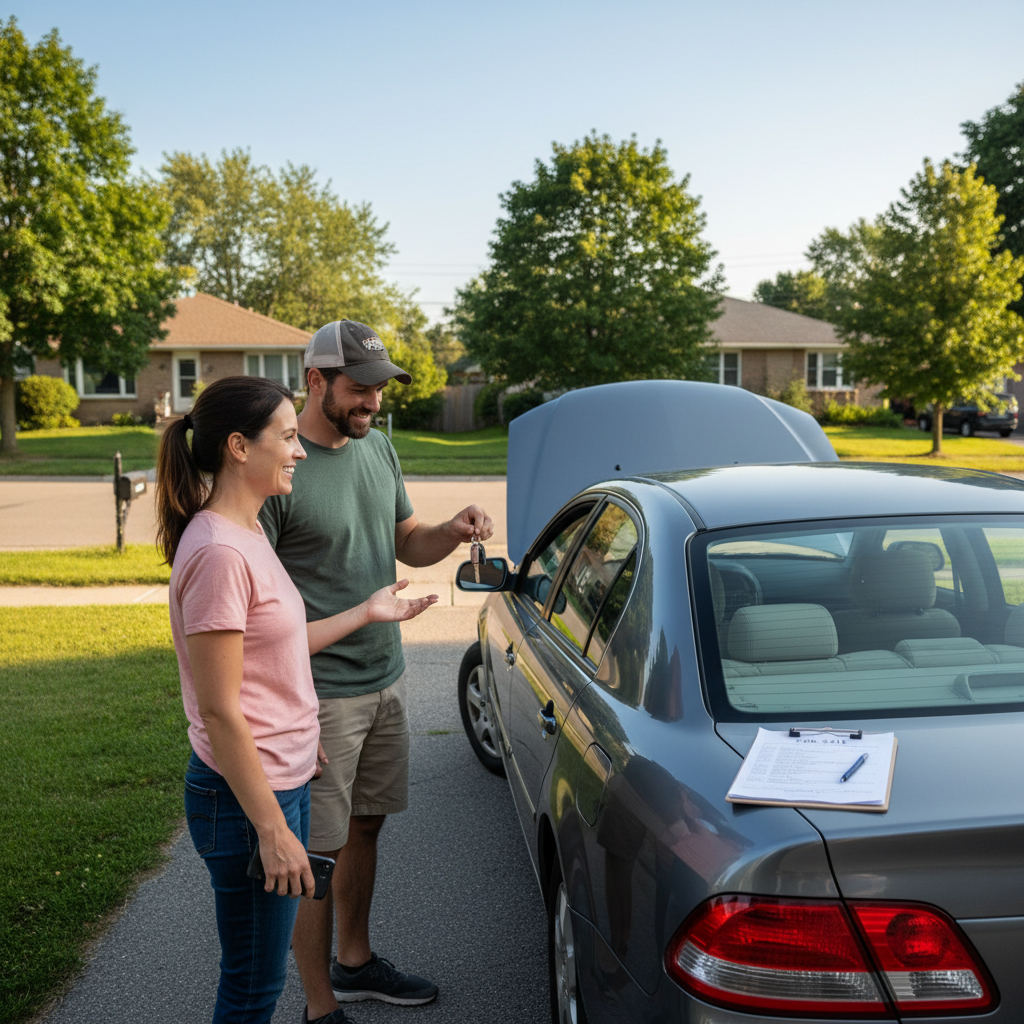
With a dealer trade-in, the dealer typically handles this for you. They pay off your existing loan directly as part of the transaction and roll any positive equity into your next deal, or hand it to you as a credit. With a private sale, it's more manual. The cleanest way is to have the buyer's payment, or at minimum the portion equal to your payoff amount, go directly to your lender, often by bank draft, with the balance coming to you separately. Your lender can usually confirm exactly how they want to receive that payment and how quickly they'll release the lien once it clears. Don't hand over the vehicle or sign a transfer until you have written confirmation the lien is released or in process, even if the buyer has already paid you.
If the sale price doesn't cover the payoff
This is negative equity, and it's more common than people expect, especially on newer vehicles or longer loan terms where the balance hasn't caught up to depreciation yet. If your payoff is $19,500 and the best offer you've got is $17,000, that $2,500 gap doesn't just disappear. You either need to cover it out of pocket to clear the lien, or it gets rolled into financing on your next vehicle, which is a common but not automatic option. We've covered this exact math and the tradeoffs in detail in our guide to negative equity car loans, including when it makes sense to wait rather than sell at a loss right now. It's worth checking your actual numbers before you list the car anywhere, since a private sale that leaves you short doesn't help much if you can't cover the difference.
Get an honest value estimate first
Before you accept an offer or even set an asking price, get a real read on what the vehicle is actually worth, not just a dealer's first lowball number. Our guide to checking your car's trade-in value in Canada walks through how to cross-check estimates so you're negotiating from real numbers instead of guessing.
Selling privately versus trading in
Private sales usually net more money than a trade-in or a dealer buyout, sometimes a few thousand dollars more on the same vehicle, because you're cutting out the dealer's margin on the resale. The tradeoff is more legwork: you're coordinating the payoff timing yourself, meeting strangers, and handling the transfer paperwork through your province's vehicle registry. If the gap between private sale value and trade-in value is small, or if you're short on time, a trade-in that gets rolled straight into your next financing can be the easier path, particularly if you're upgrading anyway. If you're weighing that decision, our piece on how trade-in equity affects your next car loan is worth reading before you commit either way.
What the buyer needs to see
A private buyer, and definitely their lender if they're financing, will want proof the lien is being cleared as part of the deal, not a verbal promise. That usually means either a payoff letter from your lender showing the lien will be discharged on receipt of payment, or, in a clean transaction, the buyer's funds going directly to the lender with you providing the difference and the release paperwork once it clears. Provincial registries in BC, Alberta, and Saskatchewan all require the lien to be discharged before a clean ownership transfer goes through, so build that timeline into your sale, not around it. Rushing a handshake deal without it is how people end up in disputes over who's responsible for a loan on a car they no longer have.
If you're not sure the math works
Before you list the car, run the actual numbers: your real payoff quote against a realistic sale price, not an optimistic one. If there's a gap, decide up front whether you're covering it in cash or rolling it forward, rather than discovering it mid-negotiation with a buyer waiting on you. And if what you actually need is out of your current vehicle and into something else, that's a financing conversation worth having directly rather than guessing at what a private sale or trade-in will net you first.
Auto Lending Canada works with drivers across BC, Alberta, and Saskatchewan on exactly this kind of transition, whether that means structuring a payoff around a private sale, rolling a trade-in into new financing, or refinancing the vehicle you already have instead of selling it at all. Start your application here to see what your options actually look like.