
Why Was My Car Loan Declined After Pre-Approval?
20 January 2026Many Canadians begin their car buying journey with a pre-approved auto loan, believing it means the hardest part is over. When the loan is later declined, the confusion can feel overwhelming and frustrating.
The reality is that car loan pre-approval in Canada is conditional, not a final lending commitment. It is based on estimated information, not verified data. When lenders move to the final approval stage, even small changes or inconsistencies can lead to a decline.
This blog breaks down the most common reasons a loan can be declined even after pre-approval, offering clear explanations and practical guidance. By understanding these factors and working with trusted experts like Auto Lending Canada, you can approach the financing process with greater strategy, confidence, and control.
What Pre-Approval Really Means
Pre-approval is best understood as a preliminary eligibility assessment, not a final lending decision. It is an initial agreement that you may qualify for a loan based on the information you provide. Lenders use estimated income, employment status, and credit information to determine the potential loan amount and interest rate.
Pre-approval differs fundamentally from final approval because it is not legally or contractually binding. It does not obligate the lender to provide funding, nor does it confirm that all lending requirements have been satisfied. The purpose of pre-approval is to help you shop for a vehicle within a realistic budget range and to give dealerships and buyers a starting point for discussions.
Final approval only occurs once the lender verifies income and employment documentation, confirms the selected vehicle details, refreshes the credit report, and reassesses overall risk and affordability. If any of these verified elements differ from what was initially assumed, the lender may adjust the terms or decline the application altogether.
In short, pre-approval exists to streamline and guide the buying process, not to complete it. Understanding this distinction helps set accurate expectations and reduces confusion if additional conditions or reviews arise later in the financing process.
Get pre-approved today and know exactly where you stand before you shop. With Auto Lending Canada, start your car-buying journey with clarity, confidence, and fewer surprises.
What Changes Between Pre-Approval and Final Review
Once pre-approval is issued, the application moves from an estimated assessment to a verification-driven review. This shift is where many borrowers encounter unexpected challenges, not because something went wrong, but because the standards become significantly stricter.
At the final review stage, lenders stop relying on assumptions and begin validating every element of the application. Income is confirmed through official documentation, employment is assessed for stability and continuity, and all submitted paperwork is checked for consistency. The selected vehicle is reviewed in detail, and the loan structure is recalculated based on final pricing.
Lenders also refresh credit data to ensure no new risks have emerged since pre-approval. Because the decision now depends on verified information rather than estimates, even small differences can affect affordability calculations or risk thresholds, ultimately influencing the final outcome.
Key Factors That Can Affect Your Final Loan Approval

A car loan pre-approval in Canada is conditional and subject to final verification. Once the application moves into underwriting, lenders reassess risk using confirmed information rather than estimates. The following factors are among the most common reasons a loan may be declined after pre-approval.
Income and Employment Verification Issues
During the pre-approval stage, lenders often rely on stated or estimated income and a general understanding of employment status. In the final review stage, those details must be supported by documentation and evaluated for stability.
A decline may occur if the income verified through pay stubs, T4s, notices of assessment, or bank statements differs from what was originally reported. Employment structure also plays a significant role. Canadians who have recently changed jobs, are still within a probation period, or have gaps in employment history may be viewed as higher risk, even if their current income is sufficient. Self-employed borrowers or those with variable income are typically subject to stricter verification standards, as lenders look for consistency over time rather than short-term earnings.
From a lender’s perspective, the goal is to ensure the borrower can maintain regular payments over the full loan term. When income or employment stability cannot be clearly demonstrated, the lender may reassess eligibility or decline the application despite an earlier pre-approval.
Credit Report Changes After Pre-Approval
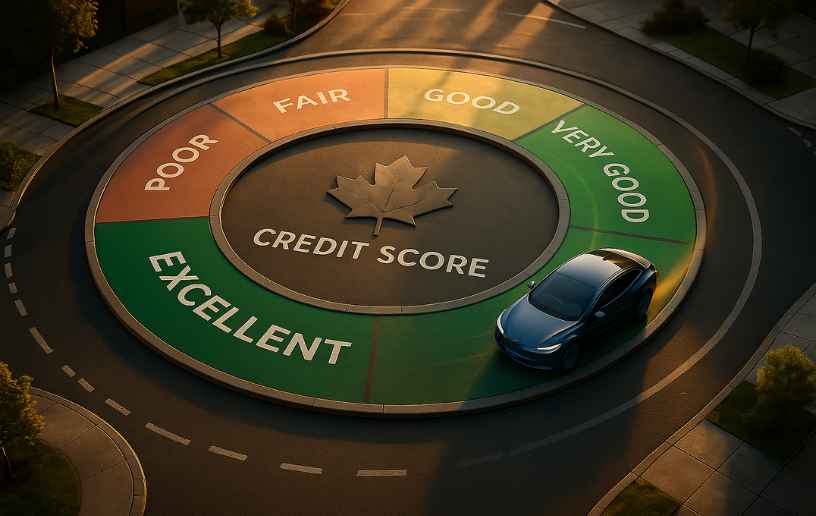
Credit remains one of the most influential factors in auto loan approval. While at the pre-approval stage, your credit profile was checked at that specific moment in time, any changes occurring afterward can alter how lenders assess risk.
New credit inquiries or recently opened accounts may signal increased borrowing activity, which can raise concerns about financial stability. Even if new credit is managed responsibly, additional obligations can affect affordability calculations. Late or missed payments that post to your credit report after pre-approval are especially impactful, as they suggest a change in payment behavior and can immediately lower lender confidence.
High utilization on credit cards or lines of credit is another common issue. From a lender’s perspective, these changes can shift an application from acceptable to higher risk, resulting in revised terms or a decline at the final approval stage.
Debt-to-Income Ratio Reassessment
Debt-to-income ratio is used by lenders to assess whether a borrower can realistically manage a new auto loan payment alongside existing financial obligations. While a pre-approval may be issued using estimated or partial debt information, the final review stage involves a much more thorough affordability assessment.
During this reassessment, lenders account for all confirmed monthly obligations, including credit cards, personal loans, student loans, lines of credit, and any co-signed debts that may not have been fully captured earlier. Obligations such as spousal or child support payments can also be considered if they impact disposable income. When these additional commitments are factored in, the borrower’s overall debt load may exceed the lender’s acceptable limits.
Even borrowers with solid credit scores can be declined if the full debt picture suggests the new loan would place too much strain on monthly cash flow. In these cases, the decision is driven by affordability rather than credit quality, highlighting why a reassessment at the final stage can lead to a different outcome than the initial pre-approval.
Vehicle-Related Factors
The vehicle itself plays a significant role in the final auto loan decision, and this is often underestimated by borrowers. While pre-approval focuses primarily on the borrower’s financial profile, final approval also evaluates the vehicle as collateral for the loan.
Lenders assess factors such as the vehicle’s age, mileage, and current market value to determine whether it meets their lending guidelines. If the vehicle falls outside acceptable parameters, for example due to high mileage or advanced age, it may be considered higher risk regardless of the borrower’s credit strength.
The loan-to-value ratio is recalculated once final pricing, taxes, and any add-ons are confirmed. If this ratio increases beyond lender limits, approval may be affected.
Documentation or Application Inconsistencies
Accurate and complete documentation is essential during the final stage of auto loan approval. Lenders rely on precise information to meet compliance requirements and assess risk, and even small inconsistencies can delay or prevent approval.
Common issues include missing or incomplete paperwork, outdated pay stubs or identification, and discrepancies between the information provided on the application and the supporting documents. Differences in reported income, employment dates, or residential history can raise red flags during verification. Identity and residency verification are particularly important in Canada, and errors in these areas may require additional review or lead to a decline if they cannot be resolved promptly.
Ensuring that all documents are current, complete, and aligned with the original application can significantly reduce the risk of a decline after pre-approval.
Conditional Requirements Not Met
Many auto loan pre-approvals in Canada are issued with specific conditions that must be satisfied before the lender will release funds. These conditions are mandatory requirements designed to reduce risk and ensure the loan structure is sound.
Common conditions include proof of full coverage vehicle insurance that meets lender standards, verification of the source of the down payment, and confirmation of the final trade-in value. Lenders may also request additional documents or clarifications if any part of the transaction changes between pre-approval and final review.
If one or more of these conditions is not met, or if the information provided cannot be verified, the lender may decline the loan even if the borrower’s credit and income appear strong.
Lender Policy Changes or Risk Reassessment
In some cases, the decision to decline a pre-approval is influenced by changes within the lending institution itself. Canadian lenders regularly update internal policies and automated risk models to reflect current market conditions, portfolio performance, and regulatory considerations.
Even after a pre-approval has been issued, a lender may reassess risk using refreshed data or revised scoring criteria. Updates to automated decision systems, adjustments in acceptable debt levels, or changes in interest rate strategy can all affect whether an application continues to meet approval thresholds. Broader economic factors, such as shifts in credit markets or funding costs, may also influence how conservatively lenders approach approvals.
When these internal changes occur, an application that previously appeared acceptable may no longer align with the lender’s updated guidelines.
What to Do If Your Loan Is Declined After Pre-Approval
- Pause all new credit activity to avoid additional hard inquiries that could lower your credit score.
- Request a detailed explanation from your lender to understand exactly why the loan was declined.
- Review your credit reports from both Equifax and TransUnion for errors, late payments, or newly reported accounts.
- Verify all financial documentation including income, employment, and residency to ensure it matches what was submitted.
- Avoid submitting multiple applications until the underlying issue is fully addressed.
- Identify and correct discrepancies in income, employment, or documentation before reapplying.
- Check your debt-to-income ratio and assess whether outstanding obligations need to be reduced.
- Maintain stable financial behavior—avoid large purchases, credit card balance spikes, or other changes that could impact lender assessment.
- Set a realistic timeline for reapplication allowing credit updates or other corrections to reflect accurately.
How to Improve Approval Chances After a Decline
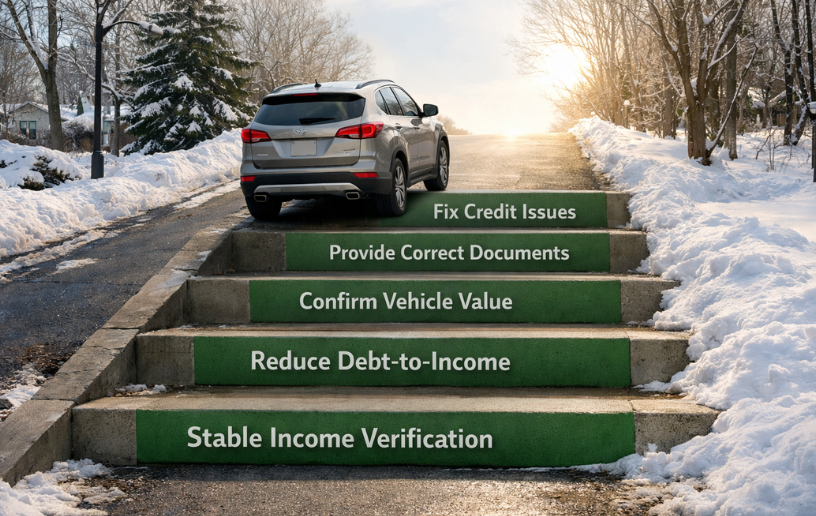
Improving your chances of getting approved after a declined car loan requires a strategic and methodical approach. Key steps include:
- Ensure stable income documentation by providing accurate and verifiable pay stubs, T4s, or notices of assessment.
- Confirm employment verification with consistent employment history, avoiding gaps or probationary periods when possible.
- Reduce outstanding debts to improve your debt-to-income ratio and lower perceived risk for lenders.
- Select a vehicle that meets lender guidelines, including age, mileage, value, and type, to prevent collateral-related issues.
- Maintain financial stability by avoiding new credit inquiries, large purchases, or spikes in credit utilization during the application process.
- Work with experienced financing partners who can help navigate lender requirements, identify potential red flags, and recommend lenders aligned with your profile.
- Prepare all documentation in advance, ensuring all forms, identification, and supporting paperwork are complete and up to date.
- Review credit reports and correct errors before reapplying to prevent declines based on outdated or inaccurate information.
- Explore multiple financing options, including different lenders or loan structures, to increase approval likelihood.
- Allow adequate time before reapplying so that any improvements to credit, income, or debt profiles are recognized in your application.
How Auto Lending Canada Can Help
At Auto Lending Canada, our goal is to empower Canadians through the auto financing process with transparency, guidance, and practical support. We help borrowers reduce surprises and improve approval outcomes by:
- Clarifying the difference between pre-approval and final approval, so clients understand what to expect at each stage.
- Identifying potential issues early, such as income verification gaps, documentation inconsistencies, or vehicle eligibility concerns.
- Preparing complete and accurate documentation to meet lender requirements efficiently and avoid delays.
- Exploring multiple financing options to find solutions that match both your vehicle choice and budget.
- Providing guidance without pressure, focusing on education and informed decision-making rather than pushing applications prematurely.
By working with Auto Lending Canada, borrowers gain confidence, clarity, and a higher likelihood of final approval, making the car buying process smoother and less stressful.
Conclusion
Declines after pre-approval are usually procedural rather than personal. They often result from verification processes, changes in lender policies, or updated financial information rather than any shortcomings on the part of the borrower.
By thoroughly preparing documentation, understanding lender requirements, and working with trusted financing partners like Auto Lending Canada, you can navigate the auto loan process with greater confidence and fewer surprises.
Strategic preparation, careful verification, and informed decision-making are the keys to converting a pre-approval into a smooth and successful loan experience, ensuring that your vehicle purchase proceeds with clarity and peace of mind.