Car Hauler Trailer Financing in Canada: Costs, Terms and How to Qualify
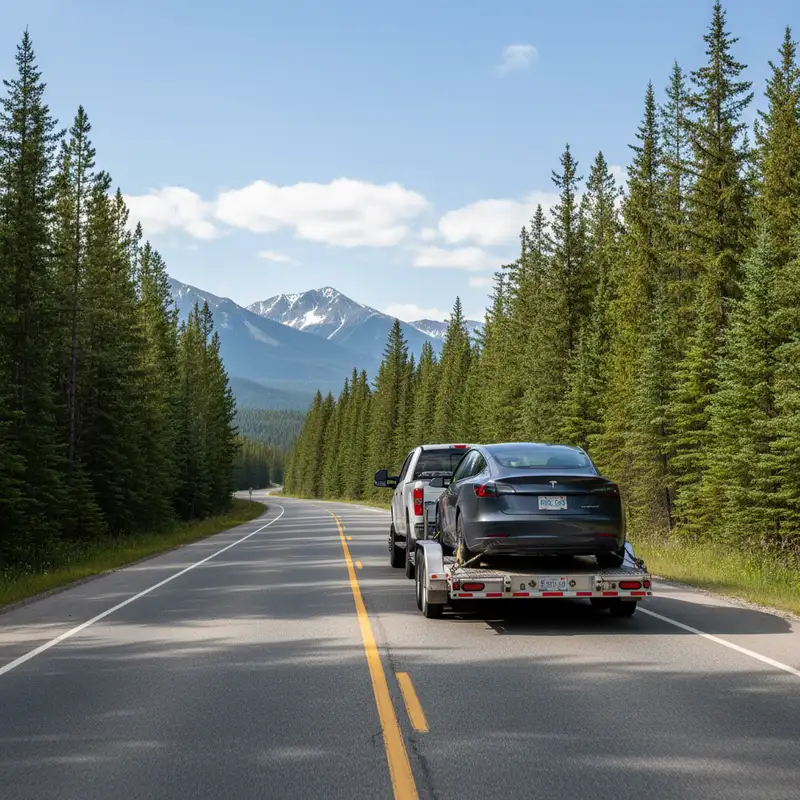
10 October 2026A car hauler trailer can pay for itself quickly. Maybe you move vehicles for a dealership or auction, run a small towing or transport side business, haul your race car to the track, or just want to bring home project cars without paying for a tow every time. Whatever the reason, most people don't want to drop several thousand dollars in cash on one. Financing spreads the cost out. Here's how car hauler financing works in Canada and how to get a deal that makes sense.
Already know what you want? Start your application here.
Types of car haulers
What you buy affects both the price and how lenders view the loan.
- Open steel car haulers. The most common and affordable option. Usually 16 to 20 feet with a wood or steel deck and ramps.
- Tilt-deck haulers. The deck tilts hydraulically or by gravity, so no ramps are needed. Handy for low cars and frequent loading.
- Aluminum haulers. Lighter and rust-resistant, which helps with Canadian winters and road salt, but they cost more up front.
- Enclosed car haulers. Protect the vehicle from weather and theft. These are the priciest and need a capable tow vehicle. Our enclosed trailer financing guide covers them in detail.
- Gooseneck and multi-car haulers. Built for commercial transport. Expect a higher price and stricter lender requirements.
What car hauler loans typically look like
Trailer loans work much like vehicle loans. You borrow the purchase price minus any down payment, and repay it over a fixed term with the trailer as security.
- Terms: Commonly 24 to 84 months, depending on the price and age of the trailer. Lower-priced trailers usually get shorter terms.
- Down payment: Ten to twenty percent is a solid target. It can help your rate and approval odds.
- Rates: Depend on your credit, income and the trailer. Recreational and personal-use loans often price a bit differently from commercial equipment loans.
- New versus used: Newer trailers are easier to finance. Older used units may need a bigger down payment.
For a rough idea, a $9,000 loan over 48 months at 10 percent works out to about $228 a month. Stretch it to 60 months and it drops to roughly $191, but you'll pay more interest over time.
Personal or business use?
This matters for how you apply. If the trailer is for personal hobbies, you'll typically apply as an individual with your personal income. If it's for a transport or towing business, a lender may want business financials, your business registration and proof of contracts or revenue. Business buyers should also talk to an accountant about deducting interest and depreciation.
What lenders look for
- Credit history. Stronger credit means better rates, but fair credit can still be approved, especially with money down.
- Income. Pay stubs, tax returns or business statements showing you can handle the payment.
- Existing debt. Lenders look at your total monthly obligations, including your tow vehicle payment.
- The trailer. Make, model, year, VIN and price. A bill of sale or dealer quote helps.
Don't forget the tow vehicle
A loaded car hauler can easily weigh 3,000 to 7,000 kg or more once you add the car on top. Before you buy, check:
- Your truck's towing capacity and payload, from the owner's manual or door sticker.
- Whether you need a brake controller (most haulers have electric brakes, and provincial rules require trailer brakes above certain weights).
- Your licence class. Heavier combinations can require an upgraded licence, depending on your province and setup.
If you need a bigger truck too, it can make sense to plan both purchases together. See our pickup truck financing guide.
Insurance and registration
In BC, trailers are registered and insured through ICBC. In Saskatchewan, it's SGI. In Alberta, you register through a registry agent and insure through a private insurer. Lenders usually require proof of insurance before funding. Also check whether your policy covers the vehicle you're hauling, since that's often separate.
Tips for a better deal
- Get your financing lined up first. Knowing your budget keeps you from overspending at the lot.
- Inspect used trailers carefully. Check the frame and welds for cracks, the deck for rot, axles and bearings, brakes, wiring and tires.
- Ask for the VIN. Run a lien check so you don't inherit someone else's debt.
- Pick a realistic term. Try not to finance a trailer longer than you expect to own it.
Common questions
Can I finance a car hauler with bad credit?
It's possible. A bigger down payment and steady income go a long way. Expect a higher rate at first.
Can I finance a private-sale trailer?
Some lenders allow it, usually with a bill of sale, VIN and lien search.
Can I bundle a trailer with a truck purchase?
Sometimes, if you buy both from the same dealer. Otherwise, they're financed separately.
Ready to haul?
Whether it's for weekend projects or a growing side business, Auto Lending Canada helps buyers across BC, Alberta and Saskatchewan finance car haulers and the trucks that pull them. Start your application here.