
Pickup Truck Financing in Canada: Loans, Terms, and How to Qualify
29 September 2026Financing a pickup truck in Canada is rarely the same as financing a compact sedan. Stickers are higher, insurance can jump, used values swing with mileage and trim, and lenders look harder at loan-to-value — especially on work trucks that already have kilometres on the clock. Whether you need a half-ton for a trade business in Alberta, a crew cab for family and weekend use in BC, or a practical used truck on the Prairies, understanding how truck loans differ helps you apply with realistic expectations.
This guide covers how pickup truck financing usually works in Canada, what lenders check, how work versus lifestyle use affects the file, and how to qualify without overstretching your budget in British Columbia, Alberta, or Saskatchewan.
Why pickup financing feels different
Pickups often sit at a higher price point than the average passenger car. That means a larger principal, more interest over the term, and tighter scrutiny on whether the truck’s market value supports the advance. Used trucks can hold value well in strong markets — or they can be priced aggressively after heavy work use. Lenders know both patterns.
Insurance and operating costs matter too. A higher ICBC or Alberta/Saskatchewan insurance class, fuel for a V8 or diesel, and tires sized for winter or worksite use all compete with the monthly payment. Approving the loan is only useful if the full ownership cost still fits.
Start your application here if you already know you want a truck — you can finish details after a lender reviews your file.
Work trucks versus lifestyle trucks
Lenders do not always ask how you will use the vehicle, but your story and the truck you choose still shape the deal:
- Work / trade use: Higher kilometres, tool boxes, and commercial parking are common in Alberta oilfield service, BC construction, and Saskatchewan agriculture-adjacent roles. Expect stricter caps on age and mileage for the advance.
- Lifestyle / family use: Crew cabs and lower-kilometre used trucks often look cleaner on paper. The trade-off is still price — lifestyle trims add cost without always adding lender comfort on LTV.
- Mixed use: Many buyers need both. Be honest about annual kilometres when you budget; underestimating wear leads to underwater loans later.
For a wider truck-focused overview, see our truck financing Canada guide.
What lenders check on a pickup file
Core underwriting looks familiar, with truck-specific twists:
- Credit and income: Score, payment history, and proof your current earnings cover the payment.
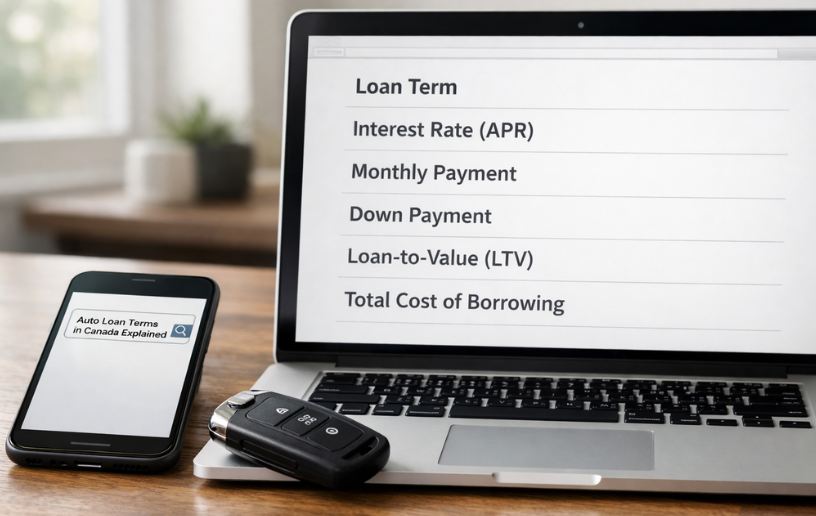
- Loan-to-value (LTV): How much of the truck’s appraised or book value the lender will fund. High asking prices on used pickups can force a larger down payment.
- Vehicle condition: Year, kilometres, accident history, and whether the truck was a work unit.
- Down payment: Cash or trade equity that closes the gap between price and what the lender will advance.
- Term length: Longer terms lower the monthly number but increase total interest and risk if the truck depreciates faster than you pay it down.
Rates still track credit. Our guide to car loan rates by credit score in Canada shows how pricing typically moves — truck loans follow the same score bands even when the vehicle is larger.
BC, Alberta, and Saskatchewan use cases
Across Auto Lending Canada’s provinces, pickup demand shows up in different ways. Alberta buyers often need something that handles Highway 2 corridor commuting and worksite access. BC buyers balance ICBC costs with mountain and coastal driving. Saskatchewan buyers may prioritize practical used trucks for rural and small-city routes. In every case, the lender cares more about your payment capacity and the truck’s value than about the province name — but insurance and fuel realities should still shape what you ask for.
Before you lock a payment, run a full budget. Our guide on how much car you can afford in Canada walks through a realistic monthly framework you can apply to trucks as well as cars.
When you are ready, follow how to apply for a car loan in Canada — complete truck details and honest income figures beat a rushed submission.
How to strengthen a pickup financing application
You cannot invent equity overnight, but you can make the file cleaner:
- Get a clear price and condition report on the truck before you apply.
- Know your Equifax and TransUnion scores.
- Plan a down payment large enough to hit a lender-friendly LTV on used pickups.
- Gather pay stubs and bank statements that show steady deposits.
- Avoid stretching term length just to hit a monthly number that ignores insurance and fuel.
What approval can look like
Strong-credit buyers with solid down payments often see cleaner rates and longer term options. Fair or challenged credit can still find specialty lenders, usually with higher rates, shorter or capped terms, and stricter rules on truck age and kilometres. Nobody can promise you will be approved. What you control is presenting a complete file and choosing a truck the lender’s advance can actually support.
Common mistakes that slow truck approvals
Buyers often lose time by shopping sticker price alone, then discovering the lender will not advance the full amount on a high-kilometre work truck. Others lock a long term to shrink the payment without pricing insurance first. A third pattern is applying at several dealers in one weekend, stacking hard inquiries without improving the underlying file. Slow down, confirm LTV and insurance, then submit a complete application once.
Ready to finance a pickup?
Auto Lending Canada helps drivers across British Columbia, Alberta, and Saskatchewan compare auto loan options — including pickup trucks for work and daily life. Start with a clear application and let lenders respond to your real numbers.