
How Much Car Can I Afford? A Realistic Budget Guide for Canadians
17 September 2026The number most people start with when car shopping is the monthly payment. "Can I afford $500 a month?" is the wrong question to lead with, though, because it ignores everything else a vehicle actually costs, and it's exactly how a lot of Canadians end up with a car they technically got approved for but genuinely can't afford to keep.
Start with total cost, not the payment
A car loan payment is only one line in your monthly vehicle budget. Insurance, fuel, maintenance, and parking (if you're paying for it) all sit alongside that payment, and in a lot of Canadian cities the non-loan costs add up to nearly as much as the financing itself. A $450 monthly payment on a vehicle that costs another $350 a month in insurance and gas is really a $800 monthly commitment, and budgeting around the smaller number is how people end up stretched thin.
A simple rule of thumb that actually works
A commonly used guideline: keep your total monthly vehicle costs, loan payment, insurance, and fuel combined, under roughly 15-20% of your gross monthly income. On a $5,000 monthly gross income, that puts your ceiling somewhere around $750-1,000 for everything related to the vehicle, not just the loan. If you already carry a mortgage or rent payment that eats a large share of your income, lean toward the lower end of that range rather than the higher one.
This isn't a hard rule any lender enforces, it's a budgeting guideline. Lenders will typically approve you for more than this if your overall debt-to-income ratio allows it. Whether you should take that approval is a separate question from whether you'll get it.
What actually determines your loan amount
Your income and existing debt
Lenders look at your gross income against your total monthly debt obligations, including the new car payment, generally wanting that combined figure to stay under 40-44% of gross income. A mortgage or existing car payment already in the picture shrinks how much room is left for a new loan.
Your credit profile
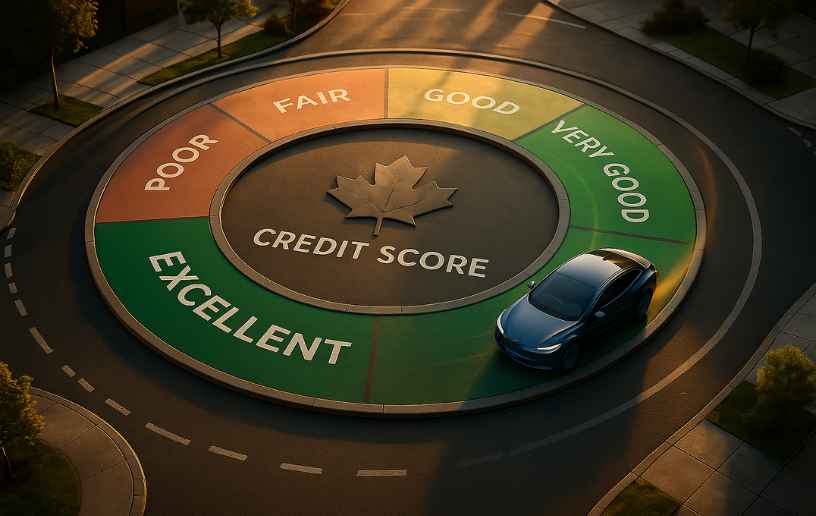
Credit score affects your rate more than your approval odds in most cases, but a stronger file also tends to open up better terms on loan length and down payment requirements. If you're working with a lower score, our bad credit car loans in Canada guide covers realistic rate expectations by credit tier.
Down payment size
More down means less financed, which lowers your monthly payment directly and can improve your rate. If you have a vehicle to trade in, get an honest read on what it's actually worth using our car trade-in value guide before you let a dealer set that number for you.
Run the actual numbers before you shop
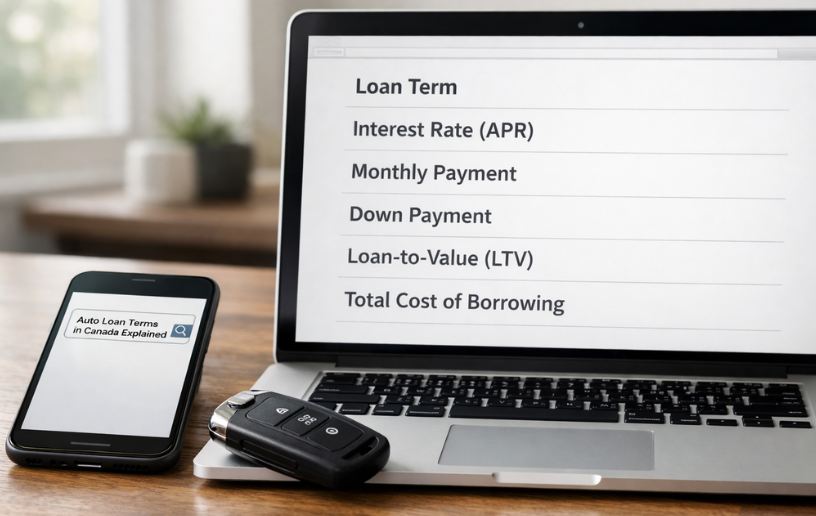
A car loan calculator turns an abstract monthly budget into a real vehicle price range. Plug in a realistic interest rate for your credit tier, a loan term you're comfortable with (shorter terms cost less overall even though the payment is higher), and your planned down payment, and you'll get a maximum vehicle price that fits your actual budget rather than the number a dealer suggests. Our car loan calculator is a good starting point for this exercise.
Longer loan terms are a trap disguised as affordability
Stretching a loan to 84 months makes almost any vehicle look affordable on a monthly basis, and that's exactly the problem. You'll pay meaningfully more in total interest over a longer term, and you risk being underwater, owing more than the car is worth, for a much larger chunk of the loan. If a vehicle only fits your budget at 84 months, it's a signal to look at a less expensive vehicle rather than a longer term.
Get pre-approved before you fall in love with a vehicle
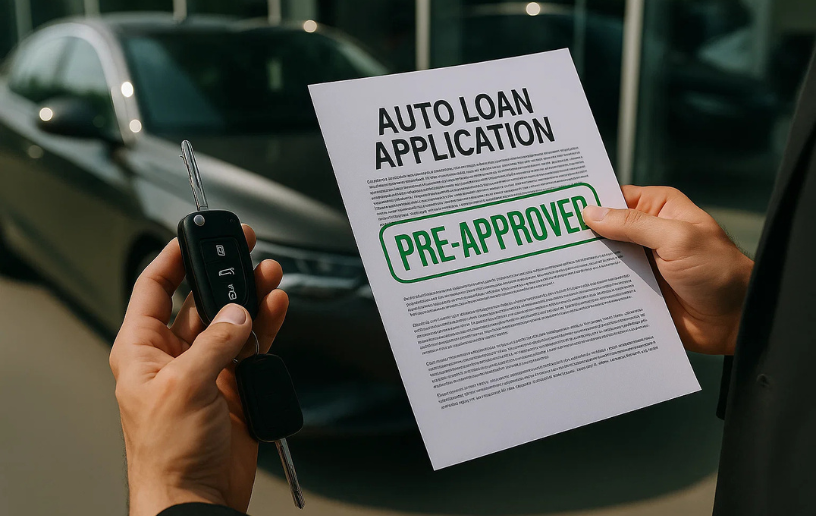
Pre-approval gives you a real number before you're standing on a lot getting talked into optional add-ons and extended warranties. You'll know your rate, your maximum loan amount, and roughly what monthly payment that translates to, which makes the whole shopping process faster and keeps you negotiating the vehicle price instead of the financing terms.
Next steps
What you can afford and what you can get approved for aren't always the same number, and it's worth knowing both before you start shopping. Budget for the full monthly cost of ownership, not just the loan payment, and let that number, not the sticker price, guide which vehicles you're actually looking at.
Auto Lending Canada serves drivers across BC, Alberta, and Saskatchewan. Start your application here to find out your real number before you start browsing listings.