
Car Loans After Divorce in Canada: Rebuilding Credit and Getting Approved
24 September 2026Separation rewrites your credit file, your income, and often your transportation needs. One household becomes two. A shared car may stay with your ex, or a joint loan may still list both of you while only one person drives. Lenders do not wait for the divorce decree to finish; they underwrite the person sitting in front of them today.
What actually changes for lenders
Marital status by itself rarely blocks an auto loan. What matters is individual income, individual credit, and remaining joint debt. Until a joint car loan or joint credit card is refinanced, paid off, or formally assumed, missed payments still hit both Equifax and TransUnion files.
Your qualifying income also drops from dual to single unless support payments or other documented streams fill the gap. That shift changes vehicle budget more than people expect. Re-run the numbers with a realistic payment before you shop.
Joint car loans after separation
A separation agreement that says your ex "will pay the car loan" does not remove you from the lender's contract. The lender was not a party to that agreement. Until the loan is refinanced into one name or paid out, both borrowers remain liable.
Practical paths:
- Refinance into the keeper's name alone (requires that person to qualify solo)
- Sell the vehicle, clear the lien, split any equity or shortfall per the agreement
- Keep the joint loan temporarily while both parties stay current, with a written plan and deadline
If you need a refresher on how joint structures differ from cosigning, read joint car loan vs. cosigner.
Credit repair while the dust settles
Pull both bureau reports early. Flag joint accounts. Dispute inaccuracies. Close or freeze joint revolving accounts you no longer control when the agreement allows it. Automate every payment that still carries your name.
Scores often dip during separation because utilization jumps, accounts age differently, or a payment slips during the chaos. That dip is recoverable with on-time history. It does not permanently bar you from auto financing, but it can push you into higher-rate lender tiers until the file stabilizes.
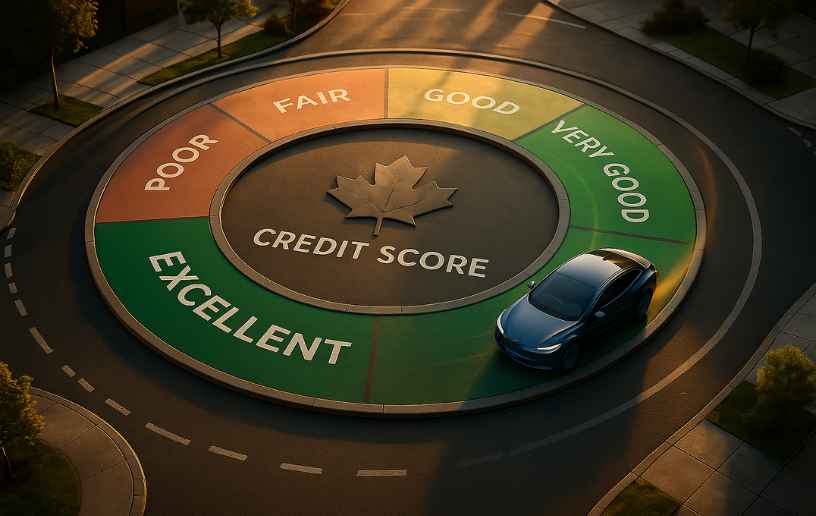
For score ranges lenders commonly reference, see car loan interest rates by credit score.
Income lenders may count
Employment income is straightforward. Many lenders also accept:
- Court-ordered or agreement-based child support with proof of consistent deposits
- Spousal support once it is ordered and regularly paid
- Canada Child Benefit statements and matching bank deposits
- Part-time or contract work with pay stubs and NOA support
Pending settlements and "my lawyer says I will get X" usually do not count. Bring the order or agreement plus three months of deposits. If support is irregular, underwriters will discount or ignore it.
Buying a replacement vehicle on one income
Right-size the car. Reliability and fuel cost beat status when you are rebuilding a household budget. A larger down payment from the property settlement, tax refund, or sale of other assets can offset a thinner credit profile.
Watch debt-to-income closely. New rent, legal fees on payment plans, and remaining joint obligations all compete with the car payment. Our breakdown of debt-to-income ratio for car loans shows how lenders stack those numbers.
Timing: mid-separation vs. after final order
You can apply while separation is in progress. Lenders care about current, verifiable finances. An interim agreement helps clarify support and who pays which debts, but it is not mandatory for every approval.
If your credit is still volatile and you can safely delay the purchase a few months, stabilizing payment history first often improves rate. If you need a car to keep employment, prioritize approval and payment fit over perfect rate shopping.
Documents that speed review
Have ready: government ID, proof of address, recent pay stubs or income statements, NOA, support order plus deposit history, CCB notice if relevant, and a clear explanation of any joint debts still open. Honesty beats omissions. Undisclosed joint liabilities surface on the bureau pull anyway.
Protecting yourself while a joint loan is still open
Set calendar reminders for every due date on joint accounts. Request online access or monthly statements so you see problems the same week they happen. If your ex stops paying, contact the lender quickly; documenting hardship and proposing a refinance or sale beats silent delinquency.
When you buy your next vehicle, tell the broker about open joint auto debt up front. Underwriters will see it on the bureau. Framing the plan (sale pending, refinance in progress, you remain current) prevents last-minute surprises that kill an otherwise workable approval.
Budget for insurance as a single-named driver. Rates can change when household composition changes. Build that premium into the same monthly number you use for the loan payment so the "affordable" car stays affordable after you leave the lot.
Choosing the next vehicle without repeating old mistakes
Separation spending can feel urgent. Urgency is how people accept dealer add-ons they do not need or terms they cannot explain. Decide your max payment before you visit a lot. Pre-qualify so negotiations start from numbers you already understand.
Skip stacking costly warranties and protection packages onto a fragile post-divorce budget unless you truly value them after reading the contract. For a clear take on financed extras, see financing dealer add-ons.
Moving forward
Post-divorce auto financing in Canada is about cleaning joint liability, documenting single-income reality, and choosing a payment you can sustain alone. Sort the existing car loan first when you can, then apply for the next vehicle with a complete income package.
Auto Lending Canada works with drivers in British Columbia, Alberta, and Saskatchewan who need practical approvals after major life changes. Start your application here.