
Getting a Car Loan With Student Loan Debt in Canada: How Lenders Count It
07 October 2026You finished school, you landed a job, and now you need a reliable way to get to it. The problem is the student debt that came with the diploma. Maybe it's a government student loan, a bank student line of credit, or both. You might be wondering whether that balance will stop a lender from approving you for a car.
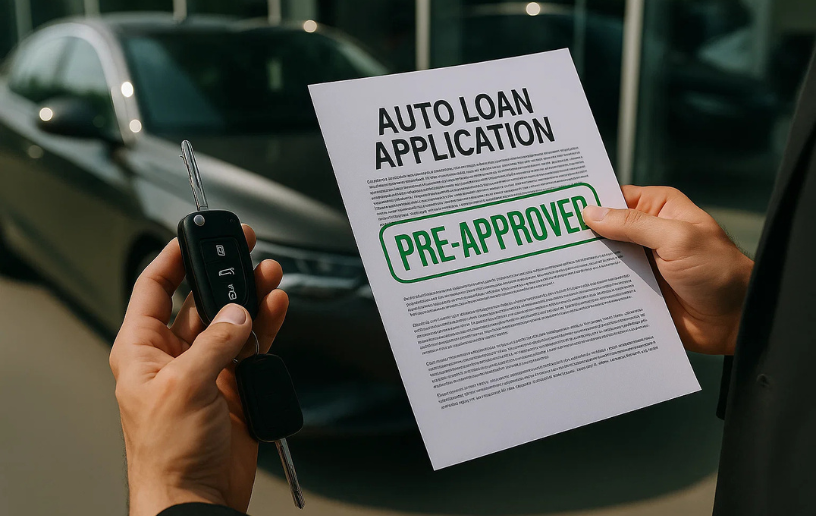
In most cases, it won't on its own. Lenders deal with recent grads all the time. What matters is how your student debt payment fits next to your income, and how you've handled credit so far. If you want to see where you stand before you read further, you can start a free application here.
How lenders look at student debt
A car lender isn't judging you for having student loans. They're doing math. The two numbers that matter most are:
- Your monthly student loan payment, which gets added to your other debt payments
- Your gross monthly income, which is what those payments are compared against
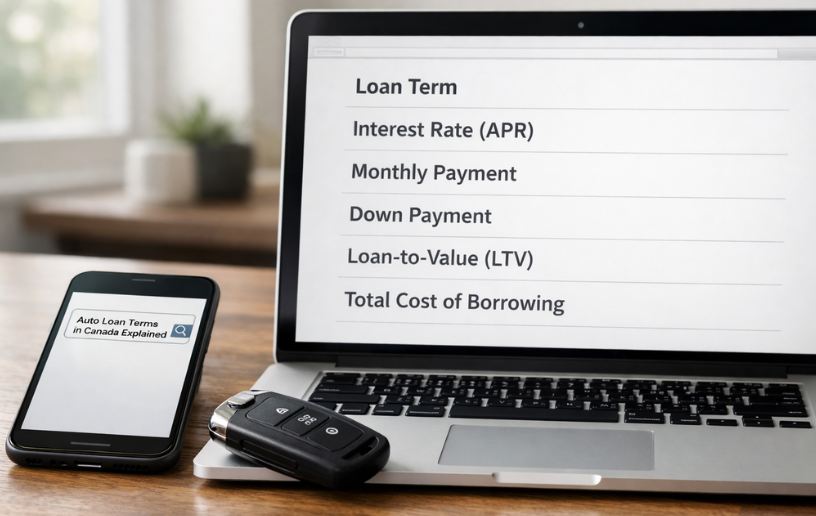
Together, those form your debt-to-income ratio. Lenders want to see that after rent, card minimums, any existing loans, your student loan payment, and the new car payment, you still have room to live. Our guide to the debt-to-income ratio for car loans in Canada explains how that's calculated and what ranges lenders tend to be comfortable with.
The total balance matters less than the monthly payment. A $30,000 student loan with a $300 monthly payment affects your approval far less than a $10,000 credit card balance with a $400 minimum.
Government student loans vs. student lines of credit
Not all student debt looks the same to a lender.
Government student loans
Canada Student Loans and provincial student loans usually have a structured repayment schedule and a known monthly payment. The federal portion no longer charges interest, which keeps payments more manageable. If you're within the six-month period after school before repayment starts, a lender may still ask what your payment will be once it begins, so have that number ready.
If you're on the Repayment Assistance Plan because your income is low, your required payment may be reduced or even zero for a period. Lenders handle that differently, so be upfront about it. Some will use your actual reduced payment, while others may estimate a standard payment instead.
Student lines of credit from a bank
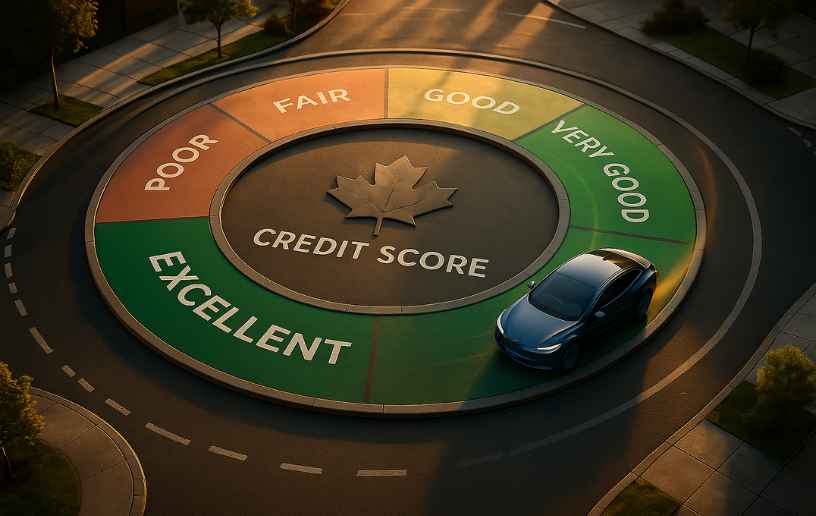
These report to the credit bureaus like any other line of credit. They often allow interest-only payments while you're in school or shortly after, then switch to principal and interest. Lenders look at the balance compared with the limit and at your payment history. A line of credit near its limit can pull your score down even if you've never missed a payment.
The upside: student debt can help your credit
If you've made your student loan or line of credit payments on time, that's positive history. For many recent grads, it's the main thing on their credit report besides a credit card. Steady payments show a lender you can handle a monthly obligation, which is exactly what they want to know.
If you're still early in building credit, our guide on how to build credit before your first car loan covers simple ways to strengthen your file over a few months.
What can hold you back
- Missed or late student loan payments. These can hurt, and defaulted government student loans can lead to collection action that damages your credit further.
- A new job with no history. If you've just started your first full-time role, some lenders want you past probation. A job letter stating your salary and that you're permanent can help.
- High card balances. Using most of your available credit limit is often a bigger red flag than the student loan itself.
- Stretching for too much car. A modest vehicle with a payment that fits easily is a far easier approval than a new SUV.
How to improve your chances
- Know your exact student loan payment. Log into your student loan account or check your bank statement so you can state it accurately.
- Check your credit reports. Pull both Equifax and TransUnion and confirm your student loans and cards are reported correctly.
- Pay down a card balance if you can. Getting a card well below its limit is one of the fastest ways to improve your score.
- Gather proof of income. Recent pay stubs and a job letter. If you work part-time or freelance alongside your main job, bring documents for that too.
- Save a small down payment. Even $1,000 to $2,000 lowers the amount you borrow and shows the lender you're committed.
- Pick a practical vehicle. A reliable used compact or hatchback keeps the payment manageable alongside your student debt.
- Consider a co-signer carefully. A parent with strong credit can help, but they're fully responsible if you miss payments.
Should you pay off student debt first?
Usually not, if you need the car now. Interest-free federal student loans are one of the cheapest forms of debt you'll ever carry, so throwing extra money at them before buying a car rarely makes sense. Paying down a high-interest credit card or a nearly maxed line of credit is a better use of spare cash, because it helps both your score and your debt ratio.
What you should avoid is taking on a car payment so large that it squeezes out your student loan payment. Missing those payments to keep up with a car would damage your credit on two fronts.
A realistic example
Say you earn $52,000 a year, about $4,330 a month before tax. Your rent is $1,400, your student loan payment is $250, and you have a $60 minimum on a credit card. That's $1,710 a month in obligations before a car. A $350 car payment brings you to around $2,060, or roughly 48% of your gross income. That's on the higher side, and some lenders may want a smaller payment or a down payment. Trimming the card balance and choosing a cheaper vehicle could bring that ratio down into a much more comfortable range.
Every lender calculates this a little differently, but running your own numbers this way tells you roughly how much car fits your budget. If you're buying your first vehicle, our first-time buyer car loan guide walks through the rest of the process.
Take the next step
Student debt is normal, and lenders see it every day. Know your payment, keep your other balances low, and choose a vehicle that fits comfortably beside what you already owe.
Auto Lending Canada helps recent grads and first-time buyers across British Columbia, Alberta and Saskatchewan find car financing that fits their budget. Applying is free and there's no obligation. Start your application here.