
First-Time Vehicle Buyer Guide: Loans, Credit, and Hidden Costs
30 December 2025Buying your first vehicle is always a major milestone. It is one of the times a person makes a large, multi year financial commitment while navigating unfamiliar terminology, variable provincial rules, and a fast moving retail environment. That combination creates risk, not because first time buyers are careless, but because the process often rewards speed over understanding.
In Canada, first time buyers frequently encounter higher insurance costs, limited credit history, and a greater chance of accepting terms they have not fully evaluated. The result is predictable. Most regret does not come from the vehicle itself. It comes from what was not explained clearly before the contract was signed. When buyers understand the true cost of ownership, the structure of financing, and the key contract provisions, the experience becomes far more stable and predictable.
This article outlines what first time vehicle buyers in Canada consistently say they wish they had known earlier. It also provides practical comparison frameworks so buyers can make informed decisions and reduce financial stress long after the purchase.
Smart Budgeting for Canadian Car Buyers
Affordability is often reduced to one question: Can I make the monthly payment. That is necessary, but not sufficient. A responsible affordability assessment requires distinguishing between payment comfort and total cost exposure.
Monthly Payment Affordability VS Total Cost Affordability
Monthly payment affordability reflects whether the payment fits into your current cash flow. Total cost affordability reflects the full financial impact of ownership over several years, including interest, insurance, and operating costs. A vehicle that appears affordable based on monthly payment can become expensive when the loan term is extended, interest accumulates, and ownership costs are included.
Insurance shock for first time buyers
Insurance is one of the most common budget surprises. First time policy holders and drivers with limited history may face materially higher premiums, and rates vary significantly based on location, vehicle category, theft risk, and claim history in the region. Obtaining insurance quotes for the exact make, model, and trim you are considering should be treated as a mandatory step before committing to any purchase.
Ownership costs Canadians frequently underestimate
A realistic budget includes recurring and seasonal costs that are easy to overlook during the shopping stage.
- Fuel: Driving patterns, winter idling, and regional fuel pricing all influence monthly fuel costs. Real world consumption often differs from published ratings.
- Maintenance and repairs: Routine service is unavoidable, along with wear and tear of items such as brakes and tires can be significant. An emergency fund for unexpected repairs is also prudent, especially for used vehicles.
- Winter tires: In much of Canada, winter tires are a safety requirement in practice and in some jurisdictions also in regulation. Many buyers underestimate the cost of tires, rims, installation, and seasonal storage.
- Registration and licensing: Provincial fees, inspections, and renewal requirements vary. These are predictable costs that should be included in the annual budget.
- Taxes and government fees: GST, HST, and provincial fees can add a meaningful amount to the out the door price and may influence financing needs.
- Subpoint in brief: Ownership cost is rarely one surprise expense. It is a set of smaller costs that accumulate over time.
Why a payment-only approach often leads to overextension
When buyers shop exclusively by monthly payment, they become vulnerable to term stretching, inflated financed amounts, and add ons that increase the balance without being evaluated objectively. The vehicle may fit the payment but strain the overall budget once insurance and operating costs are included.
Is My Credit Good Enough to Buy a Car in Canada?
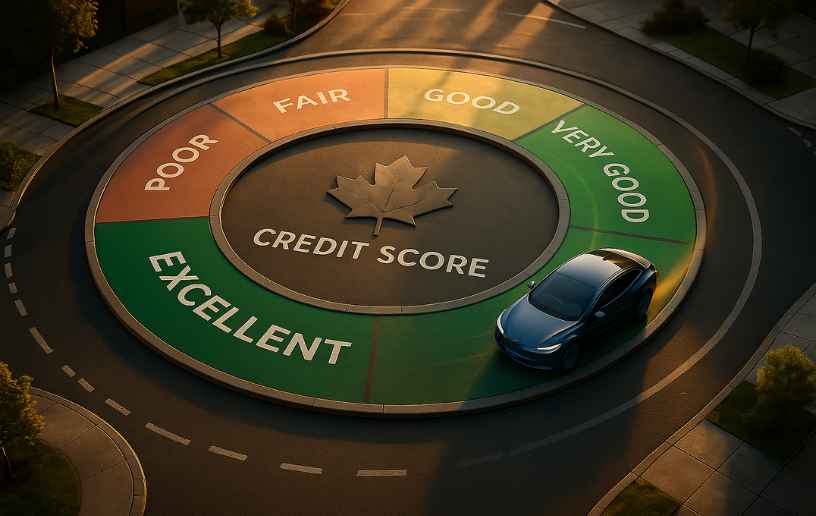
Many first time buyers assume they have poor credit because they have limited borrowing history. In practice, the more common issue is a thin credit file, not a negative one.
Thin File Vs Bad Credit
A thin file means there is limited credit history available to evaluate, such as a single credit card, a short term phone plan, or minimal reporting depth. Bad credit generally indicates missed payments, collections, high utilization, or repeated delinquencies. Thin files can still qualify for financing, but pricing may be higher because lenders have less evidence of consistent repayment behavior.
How Lenders Evaluate First Time Buyers
Lenders typically consider multiple indicators of stability and repayment capacity.
- Income stability: Consistent employment and predictable income strengthen an application.
- Debt obligations relative to income: Lenders assess whether the new payment is sustainable alongside rent, student loans, and revolving credit.
- Credit behavior: Even a short history can help if payments are on time and credit utilization is controlled.
- Residential and banking stability: Stable address history and consistent banking patterns often support underwriting decisions.
Co-signers: Benefits and Material Risks
A co-signer can improve approval odds and may reduce borrowing cost by adding a stronger credit profile to the application. However, it is a formal financial commitment. Missed payments and defaults affect both parties, and the co-signer can be pursued for the debt. If a co signer is used, responsibilities should be discussed explicitly, including contingency plans for income changes and payment disruptions.
Why approval does not automatically mean good terms
Approval indicates willingness to lend, not that the structure is optimal. The first auto loans can influence future credit trajectory. A well structured loan paid reliably can strengthen credit and improve future borrowing options. Conversely, a high cost or poorly matched loan can create long term strain and increase default risk.
What Is the Difference Between Interest Rate and APR
Confusion between interest rate and APR is a major driver of financing regret. Both matter, but they communicate different information.
Why Advertised Rates Can Be Misleading
Promotional rates often reflect best case borrower profiles, specific models, or limited term structures. They may not represent what most first time buyers will receive, and they do not necessarily account for additional costs embedded in the transaction.
What APR (Annual Percentage Rate) Captures
APR is intended to reflect the overall annual cost of borrowing, inclusive of interest and certain fees associated with financing. When comparing offers, APR can be more informative than the nominal interest rate because it better reflects the true cost of the loan structure. APR comparison is a risk management practice because it reduces the chance of selecting a loan that appears affordable monthly but is expensive over its full life.
How Amortization Influences Total Interest Cost
Auto loans are typically amortized, meaning each payment includes both principal and interest. Early payments often allocate more toward interest. Longer terms generally increase the total interest paid even when the monthly payment is lower. This is why buyers should evaluate total borrowing cost, not just the payment.
Why Does the Same Car Cost Different to Different Buyers?
Lender Tiers and Risk Pricing
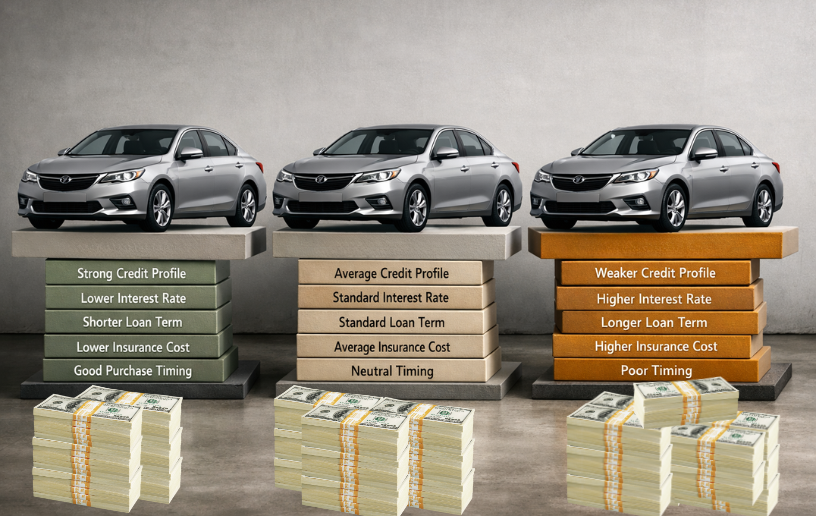
Borrowers are often placed into pricing tiers based on credit profile, income stability, and repayment history depth. First time buyers may be priced differently due to limited credit file depth.
Dealer Pricing and Markup Dynamics
Vehicle pricing varies by dealer, region, and inventory conditions. In some situations, a lower sticker price is balanced by profit on financing or add-ons. In others, market demand supports higher pricing.
Term Length Manipulation
Extending the term can reduce the monthly payment, which can make an offer appear more competitive. However, it typically increases total interest cost. Comparing payments without comparing term length can lead buyers to misunderstand the true cost.
Add-Ons Embedded Into The Financed Amount
Warranties and protection products can be financed into the loan. Some buyers value these products. Others do not realize they accepted them or did not evaluate them against alternatives. Either way, add-ons increase the loan balance and can increase total interest paid.
Transparency is more valuable than speed because it allows the buyer to control the decision rather than react to it.
Should I Buy New or Used as a First Time Buyer in Canada
Depreciation Vs Warranty Protection
New vehicles often depreciate faster in the early years, which can be a disadvantage for total value retention. However, they typically provide warranty coverage and fewer early repair surprises.
Used vehicles often cost less upfront and may depreciate more slowly from that point, but repair risk can be higher, particularly without documentation or inspection.
Used Vehicle Inspection Risk
Independent inspections reduce the probability of buying a vehicle with hidden mechanical issues. Service records also provide meaningful insight into prior maintenance behavior. Skipping inspection is a common error among first time buyers, often driven by time pressure.
Certified Pre Owned Considerations
Certified pre owned programs vary by manufacturer and dealer group. They can include standardized inspection and extended warranty coverage, but pricing is often higher than non certified used inventory. Buyers should review what is covered, what exclusions exist, and whether the price premium is justified by actual coverage.
Financing Differences between New and Used
New vehicles may qualify for promotional financing rates. Used vehicles often have higher rates because collateral age and valuation risk differ. This does not automatically make used vehicles more expensive overall, but it requires careful comparison using total borrowing cost.
What Parts of the Auto Loan Contract Do First Time Buyers Miss?
Contracts contain the terms that govern what happens when life changes. Many buyers skim contracts because they feel uncomfortable slowing down the process. A more professional approach is to treat contract review as a standard protection step.
Acceleration Clauses
These clauses can allow the lender to demand immediate repayment of the full balance in defined default scenarios. Understanding the definition of default is essential.
Prepayment Penalty Assumptions
Some buyers assume early payout is always penalized. The reality depends on whether the loan is structured as open or closed and the specific lender policy. This should be confirmed in writing before signing.
Late Fee Stacking and Payment Handling Rules
Fees and interest implications can compound if payments are missed, especially if there are multiple fee categories. The contract will define how payments are applied and what fees can be charged.
Collateral and Default Language
The vehicle is collateral for the loan. The contract defines lender rights if the borrower defaults and can include obligations related to insurance coverage and loss events.
For a deeper understanding of how auto loan agreements work, reviewing the contract line by line is essential. Many costly surprises can be avoided simply by knowing how to interpret key clauses before signing. Our detailed guide breaks down every critical section in clear, practical terms designed for Canadian borrowers. Read our blog, How to Read Auto Loan Contracts to Avoid Getting Cheated, to protect yourself and make confident, informed financing decisions.
Can I Pay Off My Car Loan Early Without Penalties?
Paying off a car loan early can be a smart financial move, especially for first-time buyers who expect their income to grow over time, but it only works smoothly if the loan structure supports that plan.
In Canada, the flexibility to repay early largely depends on whether the loan is open or closed. Open loans typically allow borrowers to make extra payments or pay off the full balance ahead of schedule without restrictive conditions, while closed loans can come with specific rules, limitations, or cost implications that are not always obvious upfront.
What makes this more complex is that definitions, terms, and repayment practices vary by lender and by product, even within the same province. This is why buyers should never rely on assumptions or second-hand advice and instead request written clarification on key points such as the ability to make lump-sum payments, apply additional principal-only contributions, and understand exactly how the payout amount is calculated at any given time.
Provincial norms and lender policies can differ, but the contract and official lender disclosure should always be treated as the definitive reference. Clarity before signing matters because if you plan to use bonuses, tax refunds, or future income increases to reduce your loan faster, choosing the right structure from the start ensures your strategy is rewarded rather than penalized, turning early repayment into a financial advantage instead of a costly surprise.
How Do I Compare Multiple Loan Offers Properly
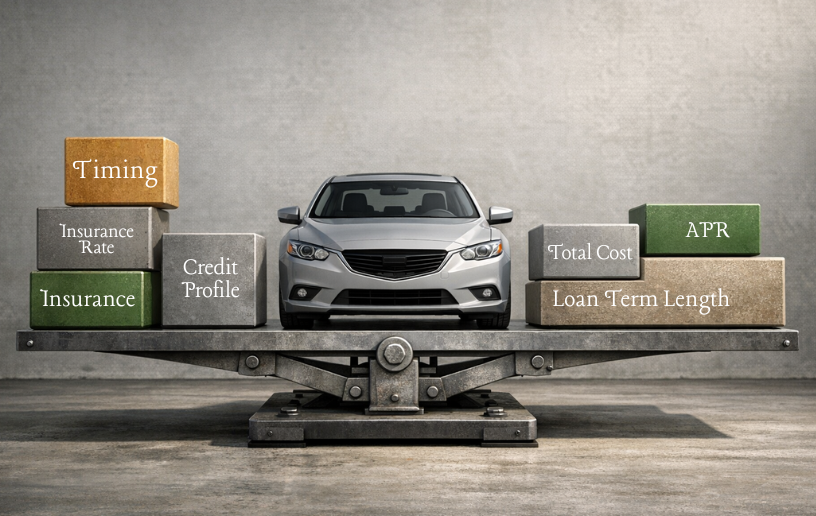
A disciplined comparison process is one of the strongest protections a first-time buyer can apply when evaluating auto loan offers. Without structure, differences in presentation can make offers appear similar when they are not. A consistent, side-by-side approach brings clarity and allows better decisions to surface naturally rather than through pressure.
Side by Side Comparison Checklist
- Vehicle price and taxes included: Confirm all amounts being financed.
- Term length: Compare months directly. Longer term generally increases total interest cost.
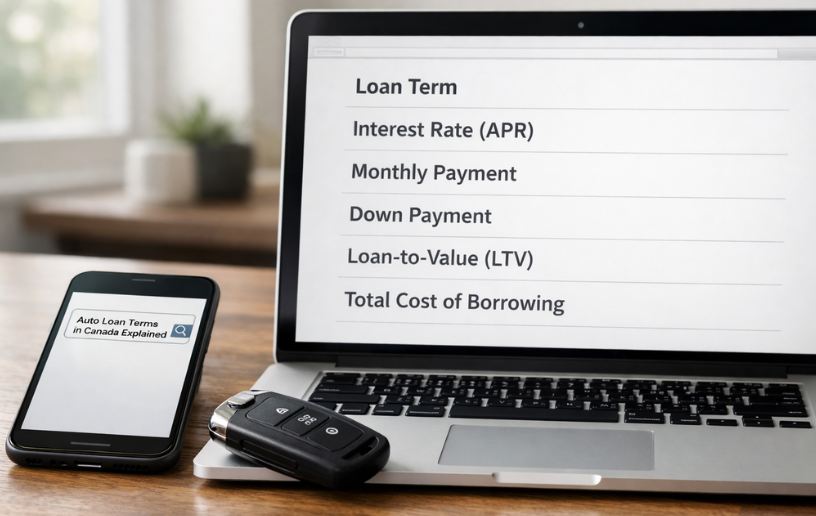
- Interest rate and APR: Request both and clarify what fees are included.
- Payment amount and frequency: Weekly or biweekly structures should be converted to monthly equivalents for clear comparison.
- Total cost of borrowing: This reveals how expensive the financing is over time.
- Total amount paid: Principal plus total interest, over the full term.
- Add-Ons: List each add on, whether it is optional, and its cost.
- Early payout rules: Confirm open or closed structure and payout calculation.
- Insurance requirements: Identify any mandatory coverage tied to the loan.
- Written disclosures: Ensure key promises are documented.
Importance of Written Clarification
Written confirmation protects the buyer, supports accurate comparisons, and significantly reduces the risk of misunderstandings or disputes later. Clear documentation ensures that what was discussed verbally is reflected in the final agreement.
Auto Lending Canada focuses on helping first-time buyers understand the structure they are choosing, which plays a central role in reducing regret and creating confident, well-informed ownership decisions.
A Guide From Experienced Buyers To First Time Buyers
- Experienced buyers focus on the process, not shortcuts, knowing that strong decisions are built on understanding rather than speed.
- They advise asking better, more specific questions instead of chasing faster approvals that may hide long-term costs.
- A clear, well-informed decision consistently proves to be more valuable than a quick one made under pressure.
- Financing should be treated as long-term planning, not a one-time transaction.
- The loan structure should align with expected life changes, income growth, and future financial goals.
- Clarity is prioritized over convenience, because convenience fades quickly while clarity continues to protect you over time.
- When financing aligns with understanding, vehicle ownership becomes stable, predictable, and low stress.
Conclusion
A first vehicle purchase in Canada is both a practical decision and a multi year financial commitment. The most common regrets are not about the vehicle choice. They are about gaps in explanation, incomplete cost evaluation, and contract terms that were not reviewed carefully.
When buyers understand affordability beyond the payment, know how credit structure affects terms, compare APR and total borrowing cost, and review contract provisions with confidence, they significantly reduce the probability of financial strain. In that context, financing becomes a planning tool rather than a pressure point.
The most reliable path to a positive first purchase experience is informed decision making supported by transparent guidance. Auto Lending Canada aims to prioritize clarity and education, so buyers are better positioned to choose terms that support long term financial health and enjoy ownership with confidence.