
Using Foreign Credit History for a Car Loan in Canada
24 September 2026You built a solid credit history in another country. Then you moved to Canada and discovered that Equifax and TransUnion do not simply import that file. For most car loans, overseas credit is invisible to Canadian underwriters. That does not mean you cannot finance a vehicle — it means you need a Canadian plan: SIN or equivalent ID path, local trade lines, income proof, and often a larger down payment.
Here is what usually happens with foreign credit history on a Canadian auto loan, what rarely transfers, and which alternatives actually move the needle for newcomers and other recent arrivals.
Can overseas credit help?
Sometimes, in a limited way. A few banks and specialty programs have international credit or bank-reference processes for specific countries, often tied to customers who already bank with a global institution. Those programs are the exception, not the rule, and they still require Canadian identity, income, and residency pieces.
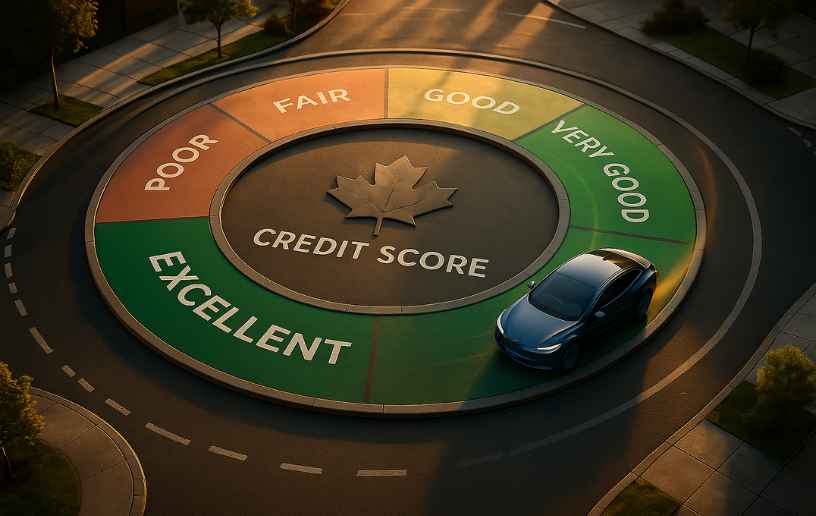
Most auto lenders pull Equifax, TransUnion, or both. If you have no Canadian trade lines, you look like a thin-file or no-file borrower regardless of a strong score abroad. Letters from foreign banks, printed overseas credit reports, and translated statements rarely replace a Canadian bureau file on a standard auto application.
If you are early in settlement, pair this article with our broader guide on car financing for newcomers in Canada. Work-permit holders should also read car loans for work-permit and temporary residents, because permit timing affects approvals separately from credit history.
Why Canadian bureaus do not "see" foreign files
Credit reporting is national infrastructure. Your Canadian lenders report to Canadian bureaus. Your lenders abroad reported to theirs. Without a formal data-sharing arrangement that your specific lender uses, the overseas file stays overseas.
That is why time in Canada matters. A secured credit card, a cellphone plan reported to the bureaus, a retail card used lightly and paid in full, or an authorized-user slot on a partner's long-standing account can start building a local footprint. On-time Canadian payments over several months usually help more than a thick folder of foreign documents.
What to build instead
Focus on pieces Canadian auto lenders can underwrite:
- SIN (or the correct ID path for your status) and government photo ID
- Canadian bank account with payroll or benefit deposits
- Proof of income: pay stubs, employment letter, NOA when available
- Proof of address in BC, Alberta, or Saskatchewan
- Any Canadian credit trade lines you already have
- A down payment large enough to reduce lender risk
Thin-file and newcomer-friendly auto lenders exist. They price for limited bureau depth by leaning harder on income, down payment, and vehicle choice. That can mean a higher rate than a long Canadian prime file would get — which is still often better than waiting years to buy a car you need for work.
Down payment, co-applicants, and pre-approval
A larger down payment is one of the strongest levers when foreign credit does not transfer. It lowers the amount financed and can open programs that thin-file borrowers otherwise miss. Joint applications with a spouse or partner who has established Canadian credit can also widen options; both parties share responsibility for the loan.
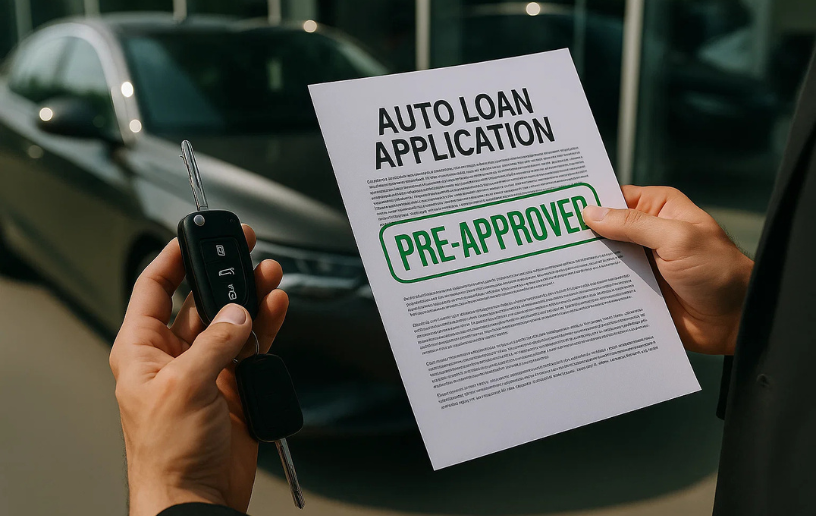
Before you visit multiple dealerships, consider a pre-approval path that limits unnecessary hard pulls. Our guide to a pre-approved car loan in Canada explains how that process usually works.
If your Canadian file is thin or bruised rather than empty, also review bad credit car loans in Canada for how specialty lenders approach non-prime pricing.
Practical steps in your first year
Open a Canadian bank account early. Ask your bank whether any international customer credit program applies to you — some do for specific corridors, many do not. Keep utilization low. Pay every Canadian bill on time. Avoid stacking dealer hard inquiries while you compare offers.
Bring organized paperwork to the auto application: status documents, SIN confirmation, employment letter, pay stubs, bank statements, and proof of down payment funds. Clear files get decisions faster than thick foreign credit PDFs that no underwriter can score.
There is no guaranteed approval for newcomers or for people with strong foreign credit. Approval still depends on Canadian-verifiable income, credit depth, vehicle, and down payment together.
Vehicle and insurance realities
Thin-file financing pairs best with mainstream used vehicles that have strong wholesale demand and clean history reports. Exotic imports, branded titles, and private-sale deals with incomplete paperwork add friction when the bureau file is already light.
Get insurance quotes early in BC, Alberta, or Saskatchewan. Newcomers sometimes face higher premiums until they establish a Canadian driving record, and that monthly cost belongs in the affordability math beside the loan payment. A cheaper car with affordable insurance beats a stretched loan plus a painful policy.
What not to waste time on
Do not delay a needed vehicle for years waiting for a foreign score to "convert." In most cases it will not. Do not pay random services that promise to transplant overseas credit into Equifax or TransUnion overnight. Stick to building Canadian trade lines the normal way and documenting income cleanly.
Next step
Foreign credit history rarely carries over cleanly into a Canadian car loan. Build a local file, document income, and use down payment and lender choice to bridge the thin-file gap. A broker network that regularly places newcomer and thin-file deals can help you compare real options instead of guessing at one dealership desk.
Auto Lending Canada serves drivers in British Columbia, Alberta, and Saskatchewan. Start your application here.