
Same-Day and Instant Car Loan Approval in Canada: How the Process Actually Works
29 August 2026Search "instant car loan approval canada" and you'll turn up plenty of lenders promising a decision in minutes. That part is often true. What the marketing pages don't spell out is what actually happens between the moment you hit submit and the moment money moves to a dealership. Same-day car loan approval is a realistic outcome for a lot of applicants in Canada, but the speed comes from a specific chain of automated checks, document handling, and coordination, not from a single button that skips underwriting entirely.
This post walks through what happens behind the scenes during a fast online car loan application, where the real time savings come from, and what tends to slow things down even when a lender advertises same-day turnaround.
What "Instant" Actually Refers To
When lenders talk about instant or fast auto loan approval, they're almost always describing the initial decisioning step: the automated system that reviews your application and returns a preliminary result. It's quick because it's largely software-driven. A soft credit pull, a check against your stated income and debts, a risk score that tells the lender roughly what kind of terms you'd qualify for. That result can land in your inbox in under an hour, sometimes in a few minutes.
What happens next is where the timeline stretches or compresses depending on your situation. Verifying the details you gave them, confirming your identity, getting a signed contract in place, all of that still has to happen before a vehicle purchase actually gets funded. None of it is a formality. It's the part of the process that protects both the lender and you from a loan that doesn't match your real financial picture. We won't rehash the full pre-approval-versus-final-approval distinction here since our guide to pre-approved car loans in Canada already covers that ground.
Automated Initial Decisioning
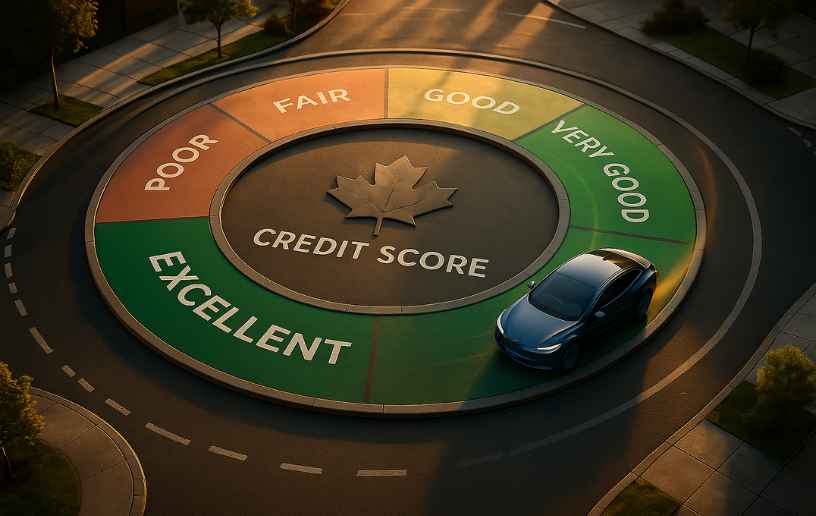
Most Canadian online lenders and brokers run applications through an automated scoring engine the moment they land. That engine pulls a soft credit check, cross-references the income and employment details you entered, and applies internal risk rules to sort applicants into rough tiers. It isn't evaluating whether you, specifically, will make every payment. It's estimating probability based on patterns across thousands of past borrowers with similar profiles.
No human is reading your file line by line at this stage, which is exactly why it's fast. It's also why the result is preliminary rather than final. The automated step is quick because it's shallow. Deeper verification still has to happen, and that's where document handling comes in.
Verifying Income and Identity Without Losing the Speed Advantage
Once the initial decision comes back favorable, a lender or broker needs to confirm that what you told them lines up with reality: your identity, your income, sometimes your residence and employment. Canadian lenders handle this a few different ways.
Digital income verification is the biggest speed factor. Instead of waiting for a physical pay stub to get mailed or faxed somewhere, many lenders now accept uploaded pay stubs, bank statements, or a direct read-only connection to your bank account through a secure verification service. Government-issued ID usually gets confirmed through a photo upload paired with a quick liveness check rather than an in-person visit. Employment often gets confirmed with a quick call, an automated request to your employer, or by cross-referencing recent direct deposits in your bank statements.
None of this is unique to "instant" lenders. It's standard underwriting; what's changed is the format. A borrower with digital pay stubs ready, a recently issued ID, and clean bank statements can get through verification the same day, sometimes within a couple of hours. Someone who's self-employed, paid in cash, or between jobs will usually take longer. Not because the lender is being difficult. Income that doesn't arrive through predictable payroll deposits genuinely takes more effort to confirm.
Document Upload and E-Signing
The paperwork side of a fast car loan application has been mostly digitized. Instead of printing and scanning, applicants upload documents through a secure portal or mobile app, and contracts get finalized through e-signature platforms rather than in-person meetings. This has probably done more to shrink loan timelines over the past decade than any change to underwriting itself.
Knowing what you'll be asked for before you start removes one of the more common bottlenecks. Lenders in Canada generally need proof of identity, proof of income, proof of residence, and details about the vehicle being financed, though the exact list varies by lender and by how the loan is structured. We've laid out the full list in our post on the documents needed to apply for an auto loan in Canada, and having those ready before you apply, rather than scrambling for them after a lender asks, is one of the biggest levers you have over how fast your file moves.
Once documents are verified and terms are agreed to, e-signing the loan contract usually takes a few minutes on a phone or laptop. This step rarely causes delays on its own. It's almost always waiting on the verification stage ahead of it.
Where a Broker Fits Into the Timeline
Not every fast application goes straight to a single lender. In Canada, a good chunk of auto financing, especially for applicants with less-than-perfect credit, runs through a broker who submits your application to multiple lenders at once. That can actually speed things up rather than slow them down, since it removes the need to reapply separately if your first choice doesn't come back with workable terms.
A broker's value here has less to do with technology and more to do with knowing which lenders tend to move fast on a given profile, and which ones will want extra documentation before committing to a number. If you're not familiar with how that arrangement works, our explainer on what a car loan broker does in Canada covers the mechanics. For speed specifically, a broker who has your documents in hand upfront can shop your file to several lenders in parallel instead of you doing it one at a time yourself.
How Dealership Coordination Affects Total Time-to-Funding
Loan approval and funding are two different milestones, and the gap between them often comes down to the dealership rather than the lender. Once your loan is approved and signed, the lender still needs a bill of sale or purchase agreement from the dealership, confirmation of the vehicle's details like VIN and price and any add-ons, and sometimes proof of insurance before releasing funds.
If you've already picked a vehicle and the dealership is used to working with outside financing, this can happen the same afternoon. If you're still shopping around, or the dealership's finance office is slow to send paperwork back, your loan might sit fully approved for days while funding waits on that last piece. This is one of the more overlooked parts of "instant" approval: the lender's side of things might genuinely wrap up quickly, while total time-to-funding still depends on how organized the dealership transaction is.
What Actually Slows Things Down
In practice, the same handful of issues account for most of the delays on applications that could otherwise have closed same-day.
An incomplete application is the most common one: a missing field, an unclear answer, an income figure that doesn't match what shows up on a pay stub later. Income that's hard to verify quickly, like multiple part-time jobs, recent self-employment, or irregular deposits, adds time too, because the lender has to piece together a clearer picture instead of confirming one predictable number. Outdated or mismatched documents, an ID about to expire, a bank statement that doesn't cover a recent enough period, will usually bounce back a request for something newer. And gaps in communication, not responding quickly to a document request, being unreachable when a lender calls to verify employment, can stall a file that would otherwise have gone through in hours.
A lot of this is avoidable with a bit of prep. We've gone through the more common missteps in mistakes Canadians make when applying for car financing, worth a read before you submit anything.
Getting the Fastest Realistic Turnaround
There's no way to guarantee same-day approval. It depends on your credit profile, your income situation, and factors outside your control, like how much volume a lender is dealing with that week. But there are concrete things that consistently shorten the process for applicants who do them.
Gather your documents before you apply, not after. Having a recent pay stub, government ID, and proof of address ready to upload means verification can start the moment you submit instead of waiting on you to dig them up. Check that the income and employment details on your application match exactly what your documents show. Small mismatches are one of the more common reasons a file gets kicked back for a second look. Keep your phone reachable and check your email or portal messages during the process, since plenty of "delays" are really just applications sitting there waiting on a reply. And if your income is unconventional, self-employed, contract-based, a recent job change, mention it upfront and have extra supporting documents ready rather than letting the lender discover it partway through verification.
None of this turns a complicated financial situation into a simple one overnight. What it does is make sure the lender is spending time processing your file instead of waiting on you.
If you're ready to see where you stand, you can start your application with Auto Lending Canada and get a fast, straightforward decision without any guesswork about what's needed: apply here to get started.