
Is It Better to Pay Cash or Finance a Car in Canada?
15 September 2026You have the cash sitting in savings. The car costs $28,000. Do you write the cheque and walk away debt-free, or finance it and keep that money working somewhere else? Every finance manager will tell you financing is smarter. Every frugal uncle will tell you cash is king. Neither one is right for everybody, and the actual answer depends on math most people never bother running before they decide.
The case for paying cash
Paying cash is straightforward in a way financing never is. You hand over the money, you own the car outright, and there is no lender, no lien, no monthly payment hanging over your budget for the next five years. If your car gets totaled next year, you are not stuck owing more than it is worth, which is a real risk with financed vehicles in the early years of a loan when depreciation outpaces what you have paid down.
Cash also gives you leverage at the negotiating table. A seller, private or dealer, generally prefers a clean cash transaction over one that depends on financing approval coming through. And there is a psychological argument too: some people genuinely sleep better without any debt on the books, and that is worth something even if it does not show up on a spreadsheet.
The case for financing anyway
Here is the part that surprises people who assume cash is automatically the smarter move: financing can come out ahead in dollar terms, even when you have the cash sitting there. The logic depends entirely on the gap between your car loan interest rate and what that same money could reasonably earn if left invested instead of spent.
Say you have $28,000 saved and qualify for a car loan at 6.5 percent over 60 months. If you finance the car instead and put that $28,000 into an investment account earning even a conservative 5 percent annually, the math starts getting interesting. You are paying roughly 6.5 percent to borrow while earning 5 percent on the money you kept, which sounds like financing loses. But look closer: interest on a declining loan balance is not the same as a flat rate charged on the full amount forever, since you only pay interest on what you still owe, and that balance shrinks every month. Run the actual numbers side by side rather than comparing headline rates, and the gap is often much smaller than it first appears, sometimes small enough that keeping your cash liquid for emergencies, other investments, or simply flexibility wins out.
The bigger point is this: the interest rate spread between borrowing and investing is rarely as one-sided as either side of the argument likes to pretend. It depends on your actual loan rate, your actual expected return, and your tax situation, not a generic rule of thumb repeated in personal finance articles.
What the spread actually looks like in practice
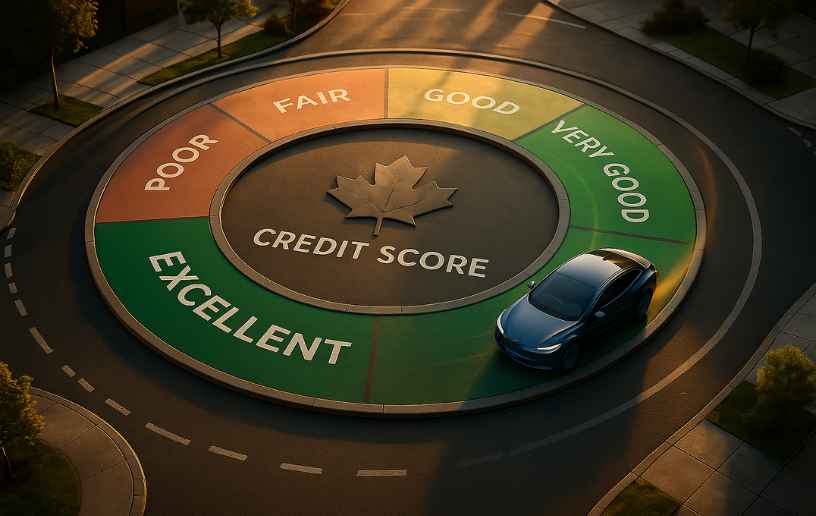
If your car loan rate is 4 to 6 percent, which is realistic for buyers with strong credit right now, and you would otherwise invest that cash in an RRSP, TFSA, or even just a high-interest savings account earning 3 to 4 percent, the case for financing weakens considerably. You are essentially paying more to borrow than you would earn keeping the cash, so paying cash wins on pure math in that scenario.
If your credit qualifies you for a genuinely low promotional rate, sometimes as low as 0 to 3 percent on new vehicles through manufacturer financing, and you have investment options that could reasonably return more than that over the loan term, financing can pull ahead. This is the scenario dealership finance managers love to point to, and it is legitimate, but it only applies if you actually invest the difference rather than spend it on something else. The math falls apart entirely if freeing up your cash just means it disappears into everyday spending instead of an account that is actually growing.
Liquidity is worth more than people give it credit for
Dumping your entire savings cushion into a car purchase, even to avoid interest entirely, leaves you exposed if a job loss, medical expense, or home repair hits in the following year. Financing a portion of the purchase and keeping a real emergency fund intact is often the more resilient choice even when the interest math technically favours cash, because the cost of being caught without any liquid savings can be far higher than a few hundred dollars in loan interest.
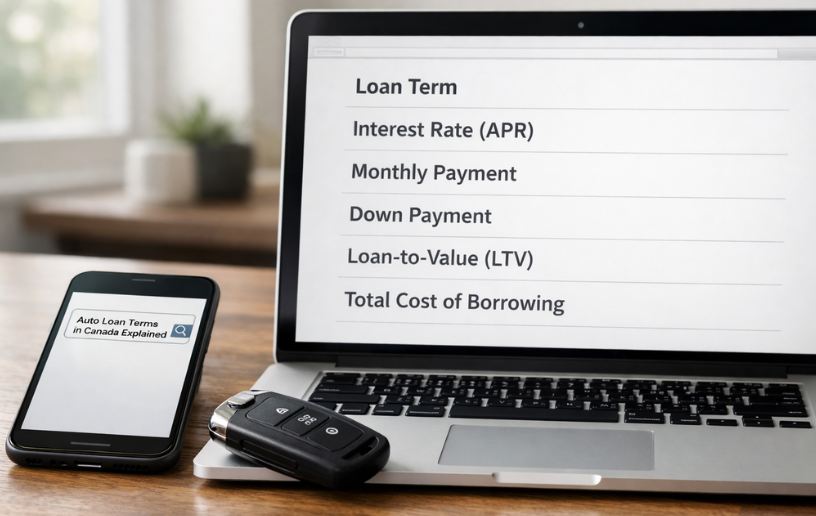
A middle path works for a lot of buyers: put down a meaningful amount, enough to keep the loan-to-value ratio healthy and avoid the higher rates that come with a smaller down payment, while keeping the rest of your savings liquid rather than fully depleted either way.
Credit building is a real, if secondary, factor
Financing a vehicle and making consistent on-time payments builds your credit history, which matters if you plan to apply for a mortgage or other financing down the road. Paying cash skips this entirely, since there is no loan reporting to the credit bureaus. This is not a reason to finance a car you would rather pay cash for, but it is worth weighing if you are early in building credit, for instance as a newcomer to Canada or someone recovering from a rough credit history.
What actually determines the right answer for you
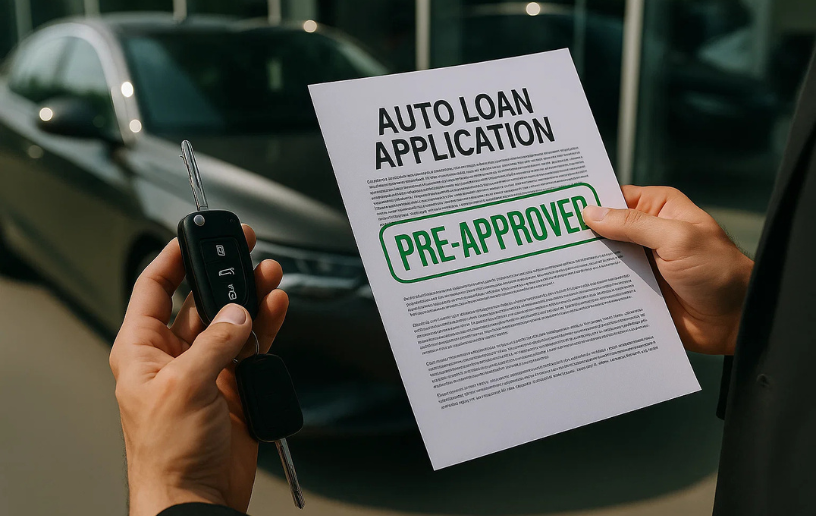
Start with the rate you would actually qualify for. If you do not know, getting pre-approved tells you the real number instead of a guess, and it costs nothing to find out. Compare that rate honestly against what you would otherwise do with the cash, not an optimistic assumption about market returns that may not hold. Factor in how much of an emergency cushion you would have left either way, since a technically better return on paper is not worth much if it leaves you one bad month away from real financial stress.
If you are financing regardless of the cash question, term length changes the math further. Our breakdown of the hidden cost of 84-month car loans covers why a longer term to lower your payment often costs meaningfully more in total interest, which changes whether financing still beats paying cash once you actually run the full comparison.
The honest bottom line
There is no universal right answer here, and anyone who tells you cash always wins or financing always wins is skipping the actual math for a talking point. Pull your real numbers: the rate you qualify for, what your cash would otherwise earn or protect against, and how much liquidity you actually need to feel financially secure. Whichever choice fits those numbers, and your own tolerance for carrying debt, is the right one for you specifically, not the one that sounds smartest in a comment section.
Auto Lending Canada helps drivers across British Columbia, Alberta, and Saskatchewan see their real financing rate before deciding whether cash or a loan makes more sense for their situation. Start your application here to compare your actual numbers.