
How to Tell If Refinancing Your Car Loan Is Actually Worth It
16 September 2026Refinancing a car loan sounds like an easy win. Rates dropped since you bought, your credit improved, or you just want a lower payment, so you call around, find a smaller number, and sign. Most people stop there. They never actually run the math on whether the new loan costs less than the old one once fees, remaining term, and the interest you have already paid are factored in. Sometimes refinancing saves real money. Sometimes it just spreads the same debt over more months and quietly costs you more. Here is how to tell the difference before you apply.
What refinancing changes and what it does not
Refinancing replaces your current car loan with a new one, usually from a different lender, ideally at a lower rate or with better terms. It does not erase the money you have already paid. It does not change how much the car is actually worth. What it changes is the remaining balance, the interest rate applied to that balance, and often the number of months left to pay it off. Those three variables together determine whether refinancing helps you or just feels like it does.
If you are new to the concept entirely, our breakdown of how car loan refinancing works in Canada covers the mechanics in more depth. This piece assumes you already understand the basic process and want to know how to actually decide if it is worth doing.
The break-even math most people skip
Every refinance has some kind of cost attached to it, even if no one calls it a fee outright. There can be a discharge fee from your current lender, an administration or origination fee from the new one, and sometimes a small gap while both loans technically overlap. Add those up first. Then figure out your actual monthly savings: new payment subtracted from old payment. Divide the total cost of refinancing by that monthly savings, and you get your break-even point in months.
Say refinancing costs you 250 dollars in fees and drops your payment from 480 to 410 dollars a month, a savings of 70 dollars. That is a break-even point of roughly 3.6 months. If you plan to keep the car and the loan for longer than that, you come out ahead. If you are thinking about trading the car in within the next few months anyway, the fees may eat most or all of the benefit.
Where the math gets tricked by a lower payment
This is the part that catches people off guard. A lower monthly payment does not automatically mean you are paying less overall. If refinancing also resets your loan back out to a longer term, say from 36 months remaining to a fresh 60-month loan, your payment drops, but you are now paying interest across a longer stretch of time. Run both numbers: the total interest remaining on your current loan if you kept it as is, against the total interest you would pay across the full new term. Compare those two totals directly rather than just comparing the monthly payment, because the monthly number is the one most likely to mislead you.
A rough way to sanity check this yourself: multiply your current monthly payment by the number of months left on the loan, and do the same for the new loan and its full term. Whichever total is lower is actually cheaper, regardless of which one felt smaller when you signed.
A worked example
Imagine you are two years into a 60-month loan on a 24,000 dollar vehicle at 8.5 percent, with 36 months and roughly 14,200 dollars left to pay. Rates have since dropped, and you qualify for a refinance at 6 percent. Refinanced over the remaining 36 months, your payment drops from about 445 dollars to about 432 dollars, a modest but real saving of around 13 dollars a month, or roughly 470 dollars in total interest saved across the remaining term after accounting for a 150 dollar refinance fee.
Now change one variable: instead of keeping the term at 36 months, you refinance into a new 60-month loan to shrink the payment further. Your monthly payment might drop to around 275 dollars, which looks great on paper, but you are now paying interest for 24 extra months you would not have paid otherwise. Depending on the numbers, that can easily wipe out the rate improvement and leave you paying more in total interest than if you had just kept the original loan. Same lower rate, completely different outcome, purely because of the term.
Check for negative equity before you refinance
If you owe more on the car than it is currently worth, refinancing gets more complicated, and in some cases it is not really an option until that gap closes. Lenders are cautious about refinancing a loan where the collateral is worth less than the balance, since it increases their risk if the loan defaults. If this applies to your situation, our guide on negative equity and what to do about it walks through your realistic options before you approach a lender about refinancing.
What actually moves the needle on your new rate
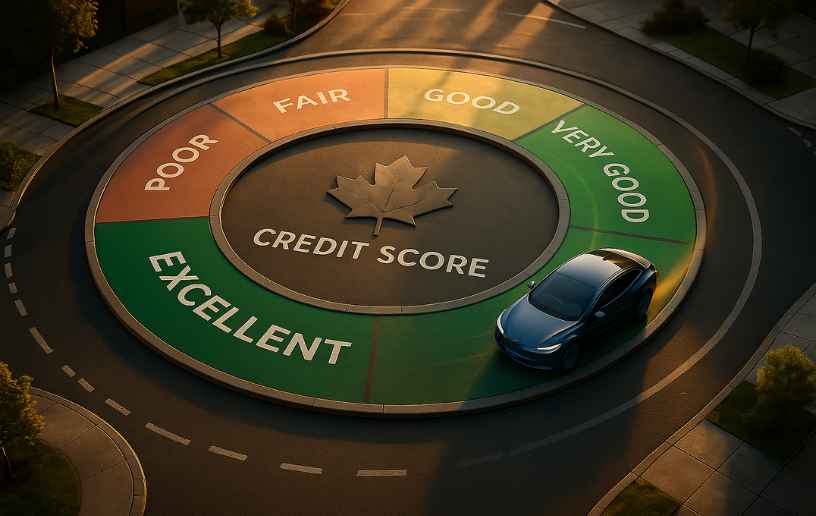
The gap between your old rate and your new rate is the single biggest factor in whether refinancing pays off, more than any fee or term adjustment. That gap is driven by your credit score today versus when you first financed, how much of the loan you have already paid down, and where general rates sit right now. It is worth checking where car loan rates actually stand in 2026 before assuming a refinance will beat your current terms, since rate environments shift and what counted as a good rate eighteen months ago might be close to average today.
If your credit score climbed significantly since you financed, whether from a year of on-time payments, paying down other debt, or simply time, that alone can be worth checking into even if broader rates have not moved much. Lenders price risk individually, and a stronger credit profile can unlock a meaningfully better rate on its own.
When refinancing clearly makes sense
Refinancing tends to pay off when your credit has genuinely improved since your original loan, when you plan to keep the vehicle and the loan for well past the break-even point, and when you keep the remaining term the same or shorter rather than resetting the clock. It also makes sense if your original loan came from dealer financing at a rate padded above what you could get shopping independently, which happens more often than buyers realize.
It tends to fall short when the fees eat most of the savings, when it stretches your term out significantly, or when you are already within a year or two of paying the car off entirely, since there is simply not much runway left for the new rate to make a meaningful difference.
The bottom line
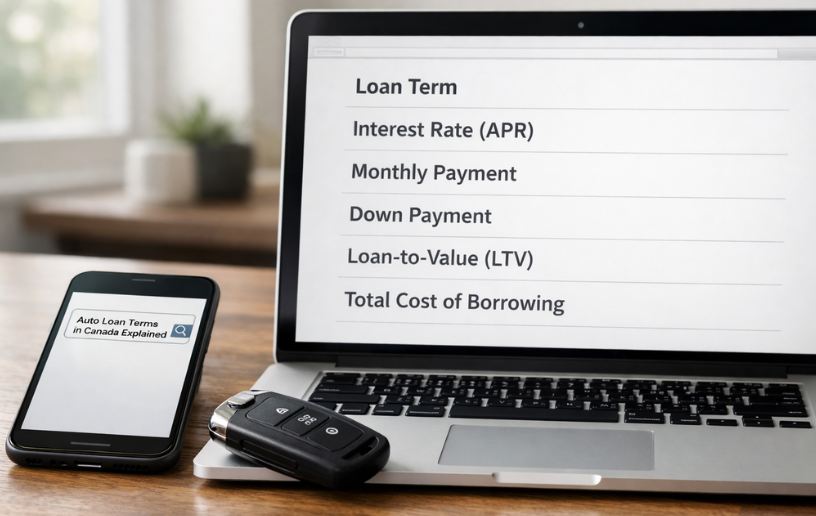
Refinancing is a math problem before it is anything else. Pull your actual numbers, not estimates: current balance, current rate, months remaining, the rate and term you would actually qualify for today, and every fee attached to making the switch. Run the total interest comparison, not just the monthly payment comparison. If the math genuinely favours refinancing once all of that is accounted for, it is a smart move. If it only looks good because the monthly number shrank while the term quietly grew, it usually is not.
Auto Lending Canada works with drivers across British Columbia, Alberta, and Saskatchewan to find financing terms that actually make sense for their situation, whether that is a first loan or a refinance. Start your application here to see your real numbers.