
You Just Paid Off Your Car Loan. Here's What to Do Next
14 September 2026The last payment clears, the loan balance hits zero, and then... nothing happens. No confetti, no automatic paperwork showing up in the mail for most people, just a car that's finally, fully yours. It's a strange anticlimax after years of payments, and it's exactly when a few things get overlooked. Here's what actually needs to happen next, and a few things worth thinking about before you decide what to do with the payment you just got back.
Confirm the lien is actually released
Paying off the loan and having the lien removed are two different steps, and the gap between them is where problems hide. Your lender registered a lien against the vehicle through your province's personal property registry when you financed it, and that registration doesn't disappear automatically the moment your balance hits zero. Call or check your online account and ask specifically for confirmation the lien has been discharged, not just that the balance is paid. Some lenders handle this within days, others take a few weeks, and a small number require you to request it directly.
Keep whatever confirmation they send, whether that's a discharge statement, a paid-in-full letter, or an update to your provincial vehicle record. You may not need it for years, but the day you go to sell or trade the car, a buyer or their lender will likely want proof the lien is gone, and digging through old email from years ago is a lot harder than filing one document now.
Update your insurance
Most auto loans require you to list the lender as a loss payee on your policy, which means if the car were written off, the insurance payout went to them first. Once the loan's paid off, call your insurer and have that removed. It won't necessarily lower your premium since your coverage needs haven't changed just because the loan is gone, but it's worth reviewing at the same time whether you still want the same level of collision and comprehensive coverage on a car that's now fully paid off, particularly if it's older or worth less than it used to be.
Get the actual ownership documents in order
Depending on your province, your vehicle registration or ownership document may still reference the lender in some way while the loan was active. Once it's paid off and the lien discharged, check that your provincial record reflects clean, unencumbered ownership in your name only. This matters more than it seems if you ever plan to sell privately, since a buyer's lien search should come back clean, and if it doesn't because of a step that never got processed, you'll be the one stuck sorting it out later.
Expect a small credit score dip, and don't panic about it
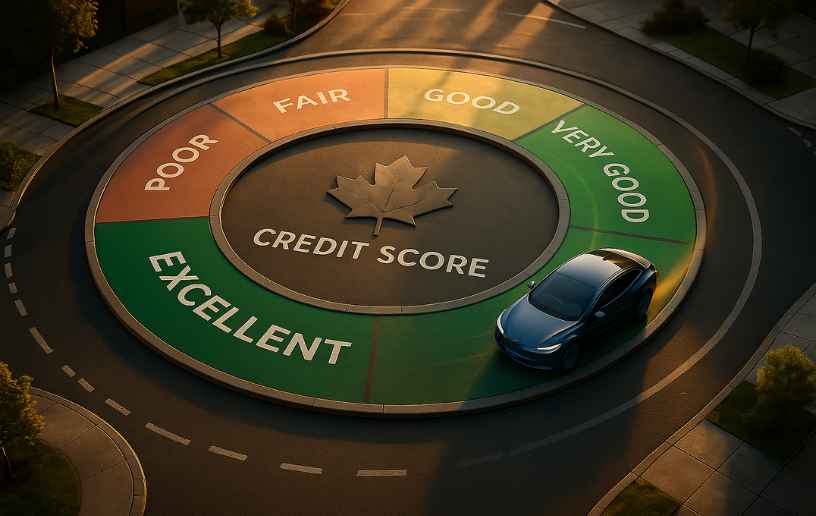
This surprises a lot of people. Paying off an installment loan in good standing can cause a temporary drop in your credit score, sometimes 10 to 20 points, occasionally more. It's not a penalty for paying off debt. It usually comes down to a couple of factors: your credit mix narrows slightly if the car loan was your only installment account, and the average age of your accounts can shift depending on how long you'd had it relative to other credit. Neither of these reflects anything you did wrong, and the dip is typically temporary, recovering within a few months as your other accounts continue reporting normally. We go into the mechanics of how car loans affect your score in both directions in our guide on how your car loan can make or break your credit score.
Decide what happens to the payment you just freed up
This is the part worth actually sitting down and thinking about instead of letting the money quietly absorb into everyday spending. A car payment that's disappeared from your monthly budget is real money, often $400 to $700 a month depending on what you were financing, and where it goes next says a lot about what you're prioritizing.
A few common, sensible places for it: an emergency fund if you don't already have three to six months of expenses set aside, higher-interest debt if you're carrying any, a head start on saving toward your next vehicle's down payment, or straight into retirement or investment contributions if your other bases are covered. There's no universally right answer here, but there is a wrong one: letting it quietly vanish into daily spending without ever deciding on purpose where it should go.
Think about maintenance differently now
With a loan, a lot of people mentally lump their car payment and their maintenance costs together as "the cost of the car." Once the loan's gone, maintenance is the whole bill, and it's worth budgeting for it directly rather than assuming a paid-off car is a free car. Setting aside even a portion of your old payment, say a third of it, into a dedicated repair and maintenance fund means a surprise brake job or a timing belt doesn't feel like a crisis when it eventually comes up.
If you're already thinking about your next vehicle
Paying off a loan is also a natural point to start thinking ahead, even if you're not buying anything soon. Your current vehicle now represents equity you fully own, which matters if you eventually trade it in or sell it toward your next purchase. Knowing roughly what it's worth today, rather than guessing later, puts you in a stronger position whenever that time comes. And if the reason you paid it off was to get out of a loan that wasn't working for you rather than simply reaching the end of the term, it's worth understanding the different routes people take to exit a loan early in our guide to exiting a car loan in Canada, and the tradeoffs of paying it down faster in the first place in our piece on smart ways to pay off a car loan early.
The short version
Confirm the lien is discharged, update your insurance, make sure your provincial ownership record is clean, don't be alarmed by a small credit dip, and put real thought into where that freed-up payment goes instead of letting it disappear. Paying off a car loan is one of the more satisfying financial milestones most people hit, and a few hours of follow-up is what actually locks in the benefit.
Whenever you're ready for your next vehicle, whether that's years out or sooner than expected, Auto Lending Canada works with buyers across BC, Alberta, and Saskatchewan to structure financing that fits your actual budget, not just what a dealer's payment calculator suggests. Start your application here whenever that time comes.