SUV Financing in Canada: Rates, Requirements & How to Get Approved (2026)
26 August 2026SUVs now account for more than half of new vehicle sales in Canada. More cargo room, a higher seating position, better traction in snow and rain than a typical sedan. The appeal is obvious. Paying for one is a different story. Higher price points, different depreciation patterns, and insurance costs that shift a lot by trim and drivetrain all feed into how lenders actually structure an SUV loan. This guide covers how SUV financing works across Canada, what moves your rate and approval odds, and how to shop it properly whether you're buying new, buying used, or refinancing a loan you already have.
Why SUV Financing Isn't Quite Like a Sedan Loan
An auto loan is an auto loan in the basic sense: you borrow a principal, pay it back over a set term, interest accrues along the way. A few things about SUVs still change the math a lender runs.
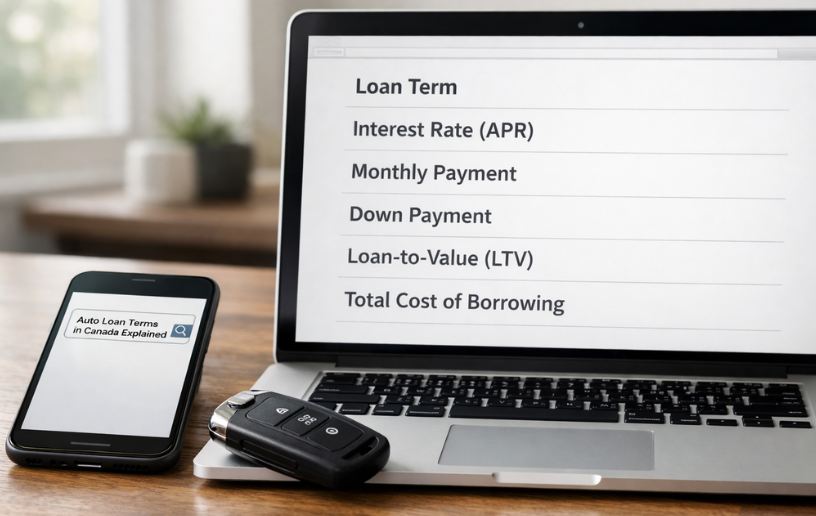
Price is the obvious one. The average SUV in Canada costs more than the average sedan, and that gap widens fast once you get into three-row or luxury trims. A bigger loan means more total interest over the life of the loan, and it's what pushes some buyers toward a longer term just to keep the monthly payment livable. Lenders watch loan-to-value ratio closely here, meaning how much you're borrowing against what the vehicle is actually worth. A high price tag paired with a small down payment can affect both your approval odds and the rate you're offered.
Resale value matters too. Some SUVs hold their value well. Others, particularly certain three-row and luxury models, depreciate faster than their first owners expect. Since the vehicle itself is the collateral, lenders sometimes weigh its expected resale trajectory into how they price the risk. If you're still deciding between models, our roundup of SUV options under $35,000 is a decent place to start weighing price against long-term value.
Then there's insurance. Larger SUVs and higher trims often cost noticeably more to insure than a comparable sedan. That's not baked into your loan payment, but it should be part of your budget before you sign anything. A higher insurance bill eats into how much loan payment you can actually afford each month, even if the loan terms themselves look fine on paper.
How Loan Amounts, Down Payments, and Terms Actually Work
SUV financing in Canada follows the same basic structure as any vehicle loan. It's just scaled up.
Loan amount
Your loan amount is the vehicle price, plus taxes, fees, and anything else you're rolling in, minus your down payment and trade-in value. Because SUVs carry a higher sticker price on average, the loan amount, and the total interest that comes with it, tends to run larger than it would for a compact sedan financed over the same term.
Down payment
A bigger down payment lowers your loan-to-value ratio, which can help both your approval odds and your rate. There's no fixed minimum required in Canada, but 10 to 20 percent down is a common benchmark for SUVs, partly to offset that higher purchase price and partly to get ahead of the depreciation that hits hardest in the first year or two.
Term length
SUV loan terms in Canada typically run 24 to 84 months, with a lot of buyers landing somewhere between 60 and 72. A longer term lowers the monthly payment, sure, but it also means more interest paid overall and a longer window where you could owe more than the vehicle is worth. Run your own numbers through our car loan calculator before locking in a term. It shows how the length actually moves your total cost, not just the payment on the sticker.
New vs. Used SUV Financing
Buying new off the lot and buying used change several parts of the loan, not just the price.
New SUV financing sometimes comes with manufacturer promotional rates on select models, plus a full factory warranty for most or all of the loan term. The tradeoff is a higher purchase price and the steepest depreciation hit happening in year one, right after you've bought it.
Used SUV financing usually means a smaller loan and less depreciation risk, but rates tend to run higher than new-vehicle promos, and lenders look more closely at the vehicle's age, mileage, and condition. Some lenders cap the age or mileage they'll finance at all, so confirm that early if you already have a specific used SUV in mind. Running costs matter here too. Our guide to hybrid SUV models covers a segment where used pricing has gotten more competitive as more hybrid trims hit the resale market.
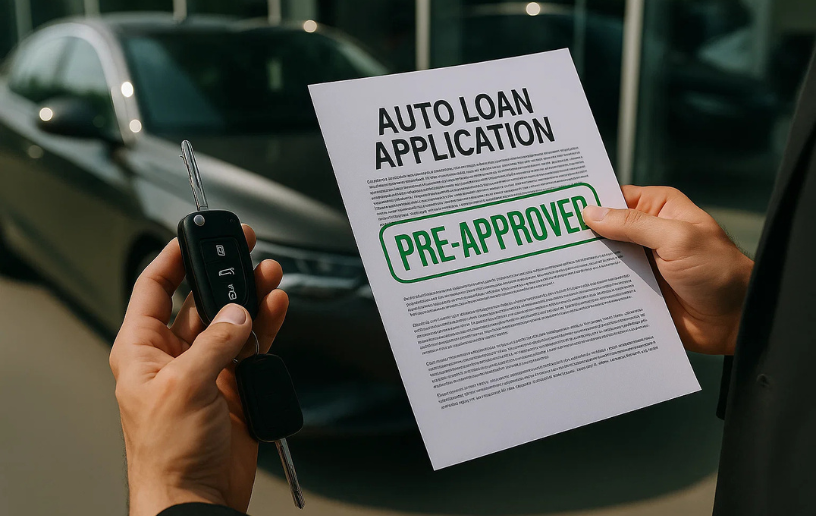
Either way, getting pre-approved before you shop gives you an actual budget and a stronger negotiating position, at a new-car dealership or in front of a used SUV listing.
How Credit Score Affects SUV Loan Approval and Rate
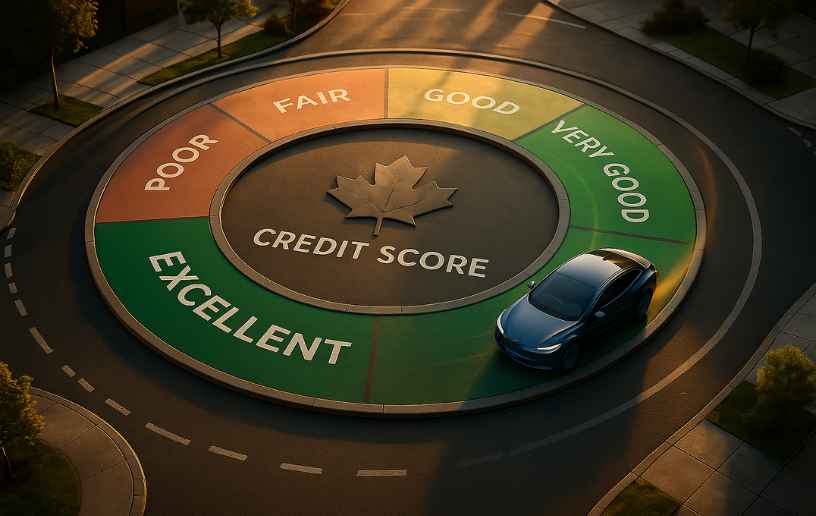
Credit score is one of the biggest levers in both whether you get approved and what rate lands on the contract. Higher score, generally lower rate. That's the pattern, because a strong credit history reads as lower risk to a lender. Buyers with strong credit tend to see the most competitive SUV financing rates and have the widest pick of lenders.
A lower score doesn't rule SUV financing out. Plenty of lenders across Canada work with a range of credit profiles, though the rate offered is usually higher to offset that risk, and the down payment or term structure may end up looking different. Being upfront about your credit situation and comparing more than one offer matters more than people expect, since approval and pricing can vary a lot between lenders for the exact same applicant.
Loan size makes this more pronounced. Because SUVs often cost more than sedans to begin with, a larger loan is more sensitive to rate differences driven by credit. Even a small rate gap turns into real money over a bigger loan. Before you go shopping for a specific vehicle, it's worth figuring out what payment actually fits your budget. Our piece on how much car you can afford walks through that math.
How ALC's Brokerage Model Works for SUV Financing
Auto Lending Canada isn't a bank. We don't lend our own money. We work as a brokerage: you apply once, and we submit that application to a network of lenders (banks, credit unions, specialty auto lenders) instead of you applying separately at each one and racking up multiple hard credit checks.
That matters for SUVs specifically because lenders don't all price the same vehicle the same way. One lender might be sharpest on a used SUV with moderate mileage. Another might come in stronger on a new three-row model. Rather than guessing which bank to walk into, we compare offers across our lender network and bring you the ones that actually fit your situation, whether that's a new SUV, a used one, or refinancing a loan you already have.
We work with buyers across Canada, with our deepest lender relationships and market knowledge in British Columbia, Alberta, and Saskatchewan. Approval and final rate come down to individual factors: credit history, income, the specific vehicle, and the lender's own criteria on the day you apply. We can't promise a specific rate or guarantee approval before reviewing an actual application, and any broker who tells you otherwise is worth being skeptical of.
Getting Pre-Approved for an SUV Loan
If you're planning to buy or refinance an SUV, get pre-approved before you start shopping. It gives you a real budget, signals to dealers that you're a serious buyer, and lets you weigh the dealer's financing offer against what our lender network can put together, instead of negotiating price and rate in the same breath.
The application takes a few minutes and doesn't commit you to anything. Get pre-approved for SUV financing with Auto Lending Canada and see what our lender network can offer for your situation.