Car Loans in Saskatchewan: Rates, SGI Insurance & How to Get Approved (2026)
14 September 2026Saskatchewan doesn't get talked about much in the national car-buying conversation, and that's honestly a little unfair, because the province runs a genuinely different insurance and tax system than most of the country, and both of those things change your loan math before you even get to interest rates. If you're shopping for financing in Regina, Saskatoon, or one of the smaller centres in between, here's what actually applies to you.
SGI Changes the Insurance Conversation Entirely
Saskatchewan is one of only a few provinces where basic auto insurance runs through a public insurer, in this case SGI (Saskatchewan Government Insurance), rather than a competitive private market. That means you don't shop around for your basic liability coverage the way an Ontario or Alberta driver would. Rates are set provincially and tied to your vehicle class and driving record rather than which company you happen to pick.
Two things follow from that. First, budgeting your total monthly vehicle cost is more predictable here than in provinces with wide private-market variance, since you're not gambling on which insurer quotes you well. Second, SGI premiums still need to be part of your monthly math alongside your loan payment, not an afterthought you discover after you've already signed for a vehicle at the edge of your budget.
PST Applies, But the Rate Is Lower Than BC's
Saskatchewan charges 6% PST on vehicle purchases, on top of the 5% federal GST. That's a real cost to factor into your loan amount (rolling tax into financing rather than paying it upfront increases both your monthly payment and your total interest), but it's meaningfully lower than what buyers in BC pay on higher-value vehicles under that province's tiered surtax system. If you're comparing notes with a friend in Vancouver about total ownership cost, this is one of the places where Saskatchewan comes out ahead.
What Car Loan Rates Look Like in Saskatchewan Right Now
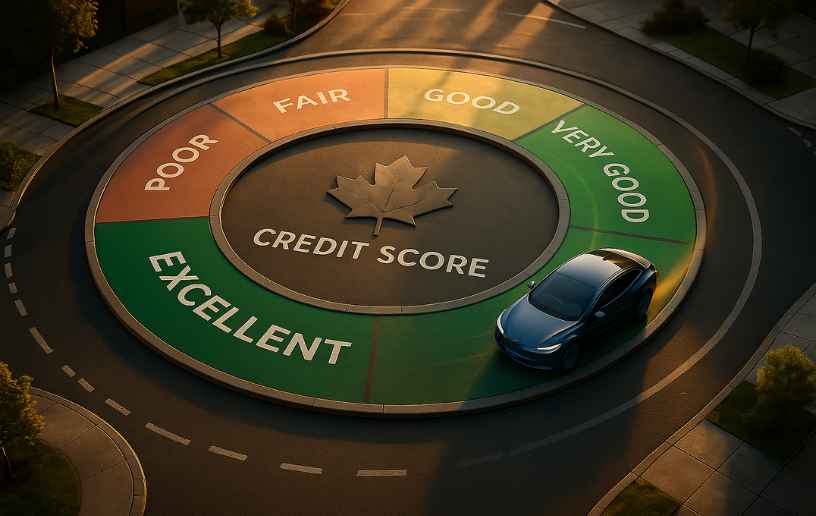
Auto financing rates here track closely with the rest of the Prairies, generally landing between 6.5% and 19.99% APR depending almost entirely on credit profile. A buyer with strong credit and stable income typically sees rates in the high single digits on newer vehicles. Someone rebuilding credit, or financing an older used vehicle with a smaller down payment, should expect a rate in the middle-to-upper part of that range, which reflects the added risk the lender is taking on, not a judgment on the applicant.
Term length is worth thinking through carefully before you sign. A longer term lowers the monthly hit but stretches out interest payments for years past the point the vehicle has any meaningful trade-in value. Our breakdown of the hidden cost of 84-month car loans walks through the actual numbers if you're weighing a longer term to hit a specific monthly payment target.
What Lenders Want to See
Approval in Saskatchewan comes down to the same core factors as anywhere else in the country: income stability, existing debt load, and credit history, roughly in that order of practical importance to most lenders. A steady job with a year or more of tenure carries real weight, even against a mediocre credit score, because it tells a lender you're likely to keep making payments. If your credit history is the rough part of your application, our guide to bad credit car loans in Canada covers what specifically helps and what doesn't.
Documentation is straightforward: government ID, proof of Saskatchewan residency, your two most recent pay stubs (or two years of Notices of Assessment if you're self-employed), and a void cheque for pre-authorized payments. If you're trading in a vehicle, bring the registration and any payout information for a loan still owing on it.
A Note on Down Payments
A down payment isn't strictly required by most lenders here, but it does real work for your application. It lowers your loan amount, which lowers your monthly payment and the total interest you'll pay, and it also signals to a lender that you have some financial cushion built in, which can help nudge a marginal application toward approval. We go into more detail on how much makes sense in our guide on car loan down payments in Canada.
Regina and Saskatoon: Similar Fundamentals, Different Scale
Regina and Saskatoon both have solid dealership networks for their size, though neither matches the sheer volume of choice you'd find in a market like Calgary or the Lower Mainland. That's less of an issue than it sounds, because getting pre-approved online before you shop means you're not relying on a specific dealership's finance office to get you a workable rate. You already know your number, and you're just shopping for the right vehicle at the right price to fit inside it.
Smaller centres across the province, from Moose Jaw to Prince Albert, follow the same rules and generally see similar rates, since national and provincial lenders don't vary pricing by city size the way local dealership add-ons or fees sometimes do.
Winter Is a Real Factor Here Too
Saskatchewan winters are long and genuinely cold, colder on average than Calgary's chinook-interrupted stretches, which pushes a lot of buyers toward AWD trucks and SUVs regardless of whether they need the extra capability day to day. That preference shows up in financing amounts, since AWD trims carry a price premium over front-wheel-drive equivalents. It's worth deciding upfront whether you actually need it for your commute and driving conditions, rather than defaulting to it because it feels safer, since that premium adds up over a five-year loan.
Getting Started
A car loan in Saskatchewan comes down to income, credit, and paperwork, same as everywhere else, with SGI's public insurance model and a 6% PST rate as the two details specific to this province worth building into your budget from day one. Get your documents together, know your SGI estimate, and get pre-approved before you start shopping so you're negotiating vehicle price alone instead of price and financing terms tangled together.
Auto Lending Canada serves drivers across British Columbia, Alberta, and Saskatchewan, including applicants with bad credit, no credit, or a bankruptcy in their past. Start your application here and find out what you actually qualify for.