
Car Financing for Permanent Residents in Canada
24 September 2026Permanent residency puts you on firmer ground for car financing in Canada than a temporary work permit, but it is not the same as citizenship in every lender's eyes. Most auto lenders will finance PR card holders who have a SIN, verifiable income, and a Canadian credit footprint. The details that trip people up are usually thin credit history, short Canadian residency, and incomplete proof of status — not the PR card itself.
This guide focuses on permanent residents specifically: how PR status compares to citizens and work-permit holders, what documents lenders want, and how to build a file that clears underwriting in British Columbia, Alberta, or Saskatchewan.
PR vs. citizen vs. work permit
Canadian citizens with long credit histories are the baseline most bank rate sheets assume. Permanent residents are typically eligible for the same auto loan products once identity, SIN, and income check out. The practical difference is often length of Canadian credit and how long you have lived at your current address — not a formal PR penalty.
Work-permit and temporary-resident files are a different lane. Lenders care about permit expiry, remaining time in Canada, and whether income continues after the current authorization. Permanent residency removes that countdown for most programs. If you are still on a work permit, see our separate guide on car loans for work-permit and temporary residents.
Newcomers who just landed as PRs often look like thin-file borrowers even with strong overseas careers. That overlap is real, but the newcomers guide covers settlement-stage issues more broadly. Read car financing for newcomers in Canada if you are still in the first year of building Canadian credit. This post stays on PR status itself.
What lenders need from a permanent resident
Expect a standard identity and income package, plus clear proof of status:
- Permanent Resident card (valid) or confirmation of permanent residence plus government photo ID
- Social Insurance Number
- Proof of Canadian address (utility bill, lease, or bank statement)
- Employment letter, recent pay stubs, and often a Notice of Assessment
- Bank statements showing payroll deposits
- Driver's licence for the province where you will register the vehicle (BC, Alberta, or Saskatchewan)
Some lenders accept a PR card that is close to expiry if renewal is underway; others want unexpired status in hand. Bring both the card and any IRCC renewal receipt if you are mid-process. Do not assume a passport alone is enough for the residency piece.
SIN, credit build, and residency proof
Your SIN lets employers and lenders report and verify cleanly. Without Canadian credit trade lines, though, you may still land in thin-file or alternative-lending pricing even as a PR. Open a Canadian bank account, keep utilization low on any credit card you hold, and avoid stacking hard inquiries while you shop rates.
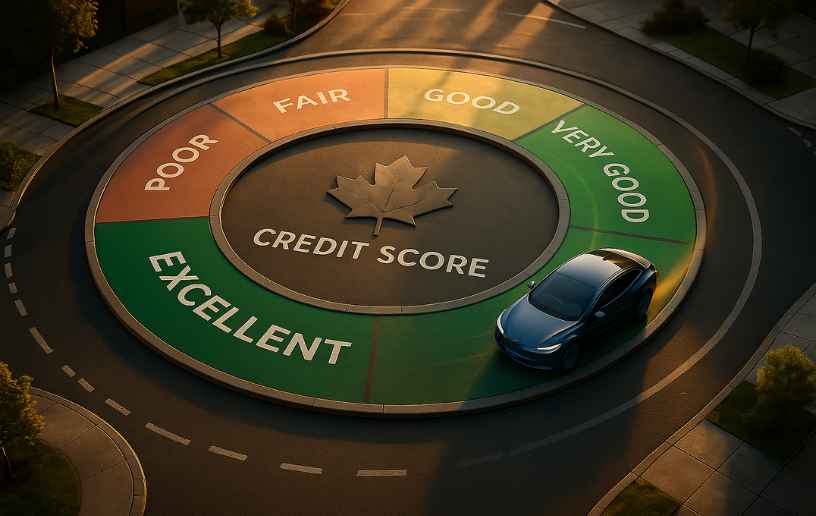
Credit scores in Canada come from Equifax and TransUnion. Overseas scores do not transfer automatically. A few years of on-time Canadian payments usually matters more than a letter from a foreign bank. Rate shops still follow score bands; see car loan rates by credit score in Canada for how pricing typically tiers.
Residency proof is boring paperwork that saves deals. Matching name, address, and ID across every document reduces underwriting friction. If you moved provinces recently (for example, Ontario to Alberta), update your licence and insurance plan before you take delivery.
Income and employment for PR applicants
Steady Canadian employment with pay stubs and an employment letter is the cleanest path. Contract, gig, or commission income is financeable too, but expect averaging and extra documents. Self-employed PRs should bring NOAs and business bank statements.
Joint applications with a spouse or partner who already has deeper Canadian credit can improve options. Both parties share responsibility for the loan, so agree on the budget first.
When you are ready to submit, a soft-pull pre-check through a broker network beats walking into one dealership and taking whatever single lender they prefer. Our walkthrough on how to apply for a car loan in Canada covers the usual steps and timing.
Vehicle choice and down payment
A realistic down payment helps thin-file PR applicants more than almost any other lever. It lowers the amount financed and can open lender programs that require minimum borrower equity. Reliable used vehicles with clean history are often easier to place than stretching for a maxed-out new build on a short Canadian credit file.
Keep the term sensible. Longer terms drop the payment but raise interest cost and negative-equity risk if you need to sell early. Insurance quotes in BC, Alberta, and Saskatchewan can change the total monthly picture as much as the loan rate, so get numbers before you sign.
Common snags — and how to avoid them
Expired or nearly expired PR cards without renewal proof. Names that do not match across IRCC documents, bank accounts, and pay stubs. Applying with no Canadian trade lines and no down payment. Shopping five dealerships in one weekend and collecting hard pulls. Each of those is fixable with a short pause and cleaner paperwork.
There is no guaranteed approval for permanent residents or anyone else. Approval still depends on income, credit, vehicle, and down payment together. A lender network that understands PR files can still find options a single bank branch may not.
Next step
Permanent residency is a strong foundation for auto financing in Canada. Pair a valid PR card and SIN with verifiable income, start building Canadian credit if your file is thin, and apply with documents that match end to end.
Auto Lending Canada serves drivers in British Columbia, Alberta, and Saskatchewan. Start your application here.