Car Loan After Repossession in Canada: How to Get Approved Again
31 August 2026Losing a vehicle to repossession is one of the more stressful things that can happen to your finances. Beyond the hassle of suddenly having no car, it raises a string of practical questions. What happens to the loan balance you still owe? How badly does this hit your credit? And when, realistically, can you get approved for another car loan?
The short answer: repossession is a setback, not a permanent ban from financing. Lenders in Canada work with people who've been through a repo every day. But getting back to "approved" means understanding what actually happened to your credit file, what lenders look for afterward, and what you can do in the meantime to put yourself in a stronger position.
What Happens After a Repossession
When a lender repossesses a vehicle, whether it's handed back voluntarily or a tow truck shows up, that's usually just the first step, not the end of the story. If you're unclear on how repossessions get triggered and what notice you're entitled to beforehand, our post on whether your car can be repossessed without notice in Canada covers the rules in more detail.
Once the lender has the vehicle, they sell it, usually at auction, and apply the proceeds to what you owe. Auction prices tend to run below retail value, so there's often a gap left between what the car sold for and what was still owing on the loan, plus repossession costs, storage fees, and sometimes legal fees on top. That leftover amount is called a deficiency balance, and you're still legally responsible for it. The lender can pursue collections, send it to a collection agency, or in some provinces take you to court over it.
Here's the part people tend to miss: paying off the deficiency balance, or at least settling it, matters just as much for your next loan as the repossession itself. A lender running a credit check will see an outstanding collection account sitting there, and that's often a bigger red flag than the repo entry on its own.
How a Repossession Shows Up on Your Credit Report
In Canada, a repossession gets reported to Equifax and TransUnion as a derogatory mark on the account, usually flagged as "repossession" or something similar, along with the missed payments that led up to it. If a deficiency balance ends up in collections, that becomes its own separate entry.
Repossessions stay on your credit report for six to seven years from the date of last activity on the account, depending on the province and the bureau. That's a long time on paper, but it doesn't mean you're locked out of financing for the whole stretch. Credit scoring weighs recent behaviour more heavily than old history. A repo from four years ago that's since been paid off, sitting next to two years of on-time payments elsewhere, reads very differently to a lender than a repo from four months ago with an unpaid collection still attached.
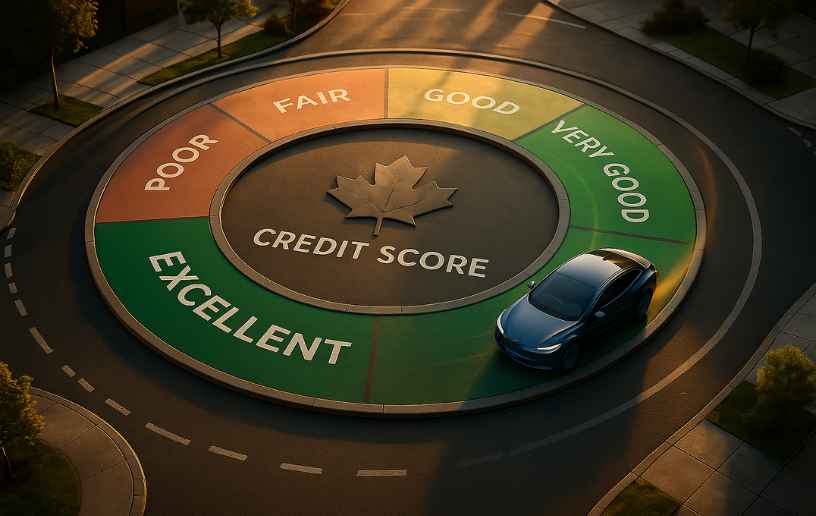
If you want a clearer sense of where your score needs to land for reasonable loan terms, what counts as a good credit score in Canada is worth a read.
How Long Should You Wait Before Applying Again?
There's no official waiting period set by law. It comes down to what individual lenders are comfortable with, and that varies quite a bit.
Prime lenders (banks, credit unions) usually want the repo well behind you, often a year or more, along with a cleaned-up file and no other delinquencies since. Subprime and bad-credit lenders, who specialize in higher-risk approvals, will often consider applicants within months of a repossession, sometimes even while a deficiency balance is still being paid down, provided you can show steady income and a reasonable down payment.
In practice, most people find they can get approved somewhere between three and twelve months after a repossession, though terms at the early end of that range tend to be less favourable: higher interest rates, larger required down payments, sometimes a co-signer requirement. Waiting longer and using that time to rebuild generally gets you better terms. If your situation involves bad credit more broadly rather than just a repossession, our guide to bad credit car loans in Canada covers what lenders in that space typically require.
Steps to Rebuild and Improve Your Approval Odds
None of this happens overnight. But there are concrete things you can do in the meantime.
Deal With the Deficiency Balance First
If there's still a balance owing from the repossession, address it before you shop for a new loan. Paying it off outright is ideal. If that's not realistic, negotiate a settlement or a payment plan and get it in writing. An open, unpaid collection account is one of the fastest ways to get declined, no matter how good the rest of your file looks.
Get a Secured Credit Card
A secured credit card, where you put down a deposit that becomes your credit limit, is one of the more reliable ways to start rebuilding. Use it for small purchases, pay it off in full every month, and let a few months of on-time payments accumulate. It won't undo the repo, but it starts building a newer, more positive pattern that lenders can actually see.
Make Every Payment On Time, Everywhere
Obvious advice, but it's the single biggest factor in your credit score. Rent, phone bills, credit cards, any loans you still have — payment history carries more weight than almost anything else in how your score gets calculated. Even a couple of missed payments during this stretch can undo months of progress.
Save Toward a Larger Down Payment
A bigger down payment lowers what the lender has to finance, which lowers their risk, and that matters a lot when your history includes a repossession. It also puts you in a better equity position from day one, so you're less likely to end up owing more than the car is worth if something goes sideways again. Even an extra $1,000 to $2,000 beyond what's required can change the terms you're offered.
Consider a Co-Signer
If a family member or close friend with solid credit is willing to co-sign, it can open the door to better rates and more lender options. It's a serious commitment for both people, since the co-signer is fully liable if you miss payments, so this only makes sense with someone you trust and a clear conversation about what's actually at stake.
Work With a Lender That Understands Your Situation
Not all lenders treat repossessions the same way. Some specialize in rebuilding credit and structure loans specifically to help borrowers re-establish themselves, often reporting payments to the credit bureaus so a well-managed loan actively helps your score. Our piece on rebuilding your credit with a car loan in Canada goes into how that process works.
What to Expect From Your Next Loan
Being upfront here: your next auto loan after a repossession probably won't come with prime rates. Expect a higher interest rate than someone with clean credit would get, and expect most lenders to ask for a down payment, sometimes 10 to 20 percent of the vehicle's value depending on the lender and how recent the repo was. Loan terms may be shorter, and the list of approved vehicles narrower, since lenders financing higher-risk borrowers often stick to newer, lower-mileage vehicles that hold their value better.
None of that is permanent, though. A car loan handled responsibly after a repossession is one of the more effective ways to rebuild credit, because it demonstrates exactly the behaviour scoring models reward: consistent, on-time payments over a real stretch of time. Plenty of borrowers refinance into better terms twelve to eighteen months in, once their file shows a track record again.
There's no shortcut around the timeline, and any lender promising guaranteed approval regardless of your situation isn't being straight with you. What's realistic is steady progress: settle what's owed, build a few months of positive payment history, save what you can toward a down payment, and approach lenders who work specifically with borrowers rebuilding after a setback like this.
If you're ready to see where you stand, check your rate with Auto Lending Canada and find out what a pre-approval could look like for your situation. It costs nothing to check, and it'll give you a clearer picture of what to expect before you start shopping.