Car Loan Vancouver: 2026 Rates, Requirements & How to Get Approved
22 August 2026If you have shopped for a vehicle in the Lower Mainland lately, you already know the math works differently here than in a lot of the country. A car loan in Vancouver has to compete with some of the highest rent and housing costs in Canada, so lenders look closely at how much room is actually left in your budget before they say yes. Whether you are eyeing a reliable used sedan in Burnaby or a new SUV off a lot in Richmond, understanding how BC lenders evaluate applications, and how rates and terms tend to shake out here in 2026, puts you in a stronger position before you sign anything.
This guide sticks to the Vancouver and Lower Mainland market specifically: what local lenders actually check, what rates and terms tend to look like for BC residents right now, and how working with a broker instead of a single bank can change your options. For the bigger-picture provincial rules around contracts, cooling-off periods, and consumer protections, our guide to car loans in British Columbia covers that ground in more depth. Here, we're staying close to home.
Why Vancouver Car Financing Looks a Little Different
Auto lenders don't just look at your credit score on its own. They look at debt-to-income ratio, and in a city where the average one-bedroom rent runs well above the national number, that ratio can get tight fast. A buyer in Winnipeg or Halifax with the same income as a Vancouver buyer often has more breathing room on paper, simply because their fixed costs are lower. That doesn't mean Vancouver car financing is harder to get. It means lenders here pay closer attention to your total monthly obligations, not just the loan payment itself.
Vehicle prices add another wrinkle. Between higher demand, dealer markups in a competitive market, and BC's Provincial Sales Tax structure, the out-the-door price on a vehicle here can run noticeably higher than the sticker suggests. Lenders factor that in too, which is part of why getting pre-approved before you start shopping matters more here than in a lot of other markets. Our guide to getting pre-approved for a car loan walks through that process if you want to go deeper before applying.
What Vancouver Lenders Actually Look At
Every lender weighs things a little differently, but for a car loan in Vancouver you can expect most of them to check the same core items: income, credit, residency, and how much you're putting down.
Income comes first. Lenders want to see steady, verifiable income, whether that's pay stubs, a Notice of Assessment, or bank statements if you're self-employed. Gig work and contract income are common in Vancouver, and most lenders can work with it, but expect them to ask for a longer income history to smooth out the month-to-month swings.
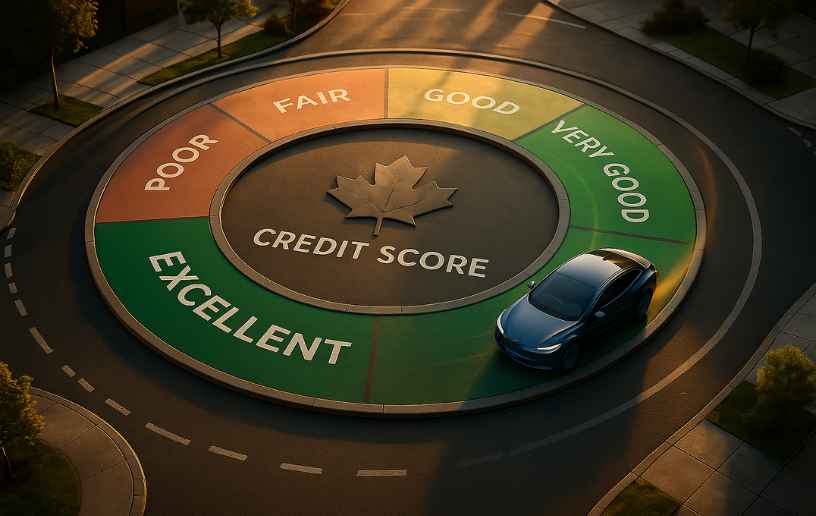
Credit history matters, though maybe not in the way people assume. A higher score generally opens the door to lower rates and more flexible terms, but a thin or bumpy credit file doesn't automatically shut you out. It usually just means a different set of lenders becomes relevant, often with a slightly higher rate to offset the added risk. This is one of the areas where shopping around actually pays off, since approval criteria vary a lot from one lender to the next.
Residency and identification come up too. BC-based lenders want proof you live in the province, such as a driver's license, utility bill, or lease agreement, along with standard ID. Newcomers to Canada or recent transplants from other provinces can still qualify, though the pool of lenders comfortable with limited Canadian credit history is narrower.
And then there's the down payment. A larger one lowers your monthly payment and can improve the rate you're offered, since it reduces the lender's exposure if the vehicle's value drops faster than the loan balance. It isn't always required, but it almost always helps your position. We break down how much makes sense in different situations in our piece on car loan down payments in Canada.
Typical Rates and Terms for BC Car Loans in 2026
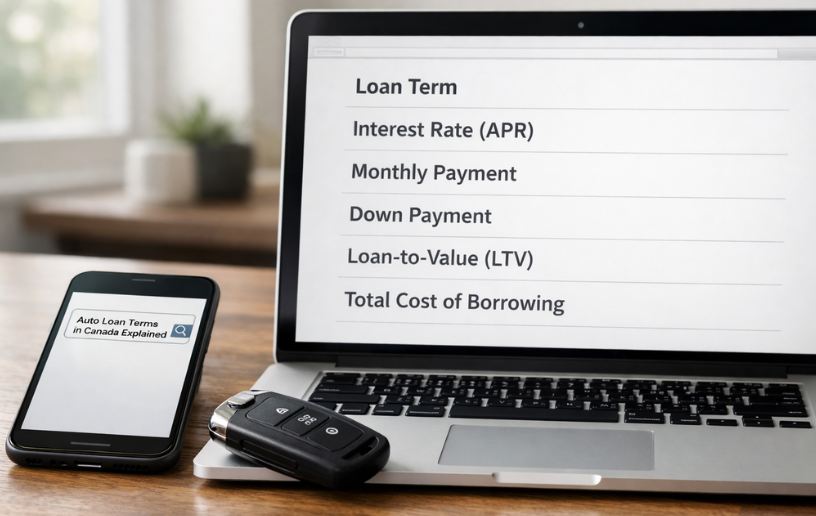
Rates on a Vancouver car loan move with the Bank of Canada's overnight rate and each lender's own appetite for risk, so there's no single number that applies to everyone. Buyers with strong credit and stable income tend to land toward the lower end of the market's rate range. Those with limited or damaged credit see higher rates that reflect the added risk to the lender. Loan terms commonly run anywhere from 24 months up to 84 months, and longer terms lower the monthly payment but increase the total interest paid over the life of the loan.
New vehicles usually qualify for somewhat better rates than used ones, partly because they hold their collateral value more predictably. Still, plenty of Vancouver buyers land solid terms on a well-chosen used vehicle, especially when the loan-to-value ratio is reasonable and the vehicle has a clean history. Rate ranges shift with the broader interest rate environment, so the most reliable way to know what BC car loan approval actually looks like for your situation is to apply and compare real offers rather than lean on averages you find online.
Buying Privately Adds Its Own Set of Considerations
Vancouver's used car market has no shortage of private sale listings, and financing one works a bit differently than financing through a dealership. Lenders will usually want a bill of sale, a vehicle history report, and sometimes an independent inspection before they release funds, since there's no dealer standing behind the transaction. It's entirely financeable, it just takes a bit more documentation on your end. If that's the route you're considering, our guide to financing a private sale vehicle in Canada lays out what to expect and how to prepare.
How a Brokerage Model Helps Vancouver Buyers
This is where the local market dynamics really matter. Vancouver has dozens of lenders active in auto financing: banks, credit unions, and lenders that specialize in near-prime or subprime credit. Walk into a single branch and you only see what that one lender feels like offering you that day, based on its current criteria and appetite for risk.
Auto Lending Canada works differently. As a brokerage, we submit your application to a network of lenders across the country and let them compete for your business, instead of sending you to negotiate with one institution on your own. For a Vancouver buyer, that can mean the difference between a single offer and several offers to compare side by side, with different rates, terms, and down payment requirements. It doesn't change what your credit file or income shows. It does mean more of the market gets a chance to make you an offer instead of just one.
This matters most for buyers who fall outside the "excellent credit, full-time salaried job" profile: newcomers to Canada, self-employed residents, people rebuilding credit after a rough stretch, or anyone who's been turned down before. A single lender's no doesn't mean the whole market says no. It often just means that particular lender's criteria didn't fit your file that day.
How to Apply for a Car Loan in Vancouver, Step by Step
The process is more straightforward than most first-time applicants expect.
Start by gathering your documents: proof of income, ID, proof of BC residency, and details on any existing debts. If you already have a vehicle picked out, have the listing or dealer quote on hand, though you don't need one to get pre-approved.
Next, submit an application. This gives lenders the information they need to generate real offers instead of rough estimates, and a soft pre-approval typically won't dent your credit the way multiple hard inquiries at different dealerships can.
Once offers come back, compare the full picture. Look past the interest rate to the term length, any fees, and the total cost over the life of the loan. A lower monthly payment stretched over a longer term can end up costing more overall, so it's worth doing that math before deciding.
From there, you finalize the paperwork. Funds typically get released to the dealer or private seller within a few business days, depending on the lender and how quickly the documentation comes together.
If you're ready to see what BC lenders are currently offering for your situation, you can apply with Auto Lending Canada and compare pre-approval offers from multiple lenders without committing to any single one upfront.
The Bottom Line for Vancouver Buyers
Getting a car loan in Vancouver comes down to the same fundamentals as anywhere else: income, credit, and a manageable debt load, just filtered through a market where cost of living puts extra weight on the numbers. Know what lenders are checking. Be realistic about the total vehicle cost, tax included. And compare more than one offer before you commit. Those habits tend to separate buyers who end up with a loan that actually fits their budget from those who end up stretched thin. Auto financing is rarely one-size-fits-all, and in a market as varied as Vancouver's, having real options on the table is worth the extra ten minutes it takes to compare them.