What Percent of Your Income Should a Car Payment Be in Canada?
25 September 2026One of the first questions Canadians ask before shopping for a car is simple: what percent of my income should the payment be? There is no single rule that every lender or budget coach uses, but a practical range shows up again and again — roughly 10 to 15 percent of take-home pay for the car payment alone, with the rest of your transport costs stacked on top.
Treat that range as a starting point, not a hard law. Debt-to-income, insurance, fuel, and your other bills matter just as much as the percentage on the loan.
Take-home pay vs. gross income
Always run the percentage against take-home pay, not the gross number on your offer letter. Taxes, benefits, and deductions shrink what actually hits your account. A payment that looks fine against gross income can feel tight once rent, groceries, and existing debt are paid.
If your income is commission, overtime, or seasonal, average a normal stretch of months rather than using your best cheque. Auto Lending Canada works with drivers across British Columbia, Alberta, and Saskatchewan who need a payment that survives a quieter month. Start your application here when you are ready to see loan structures that match a realistic budget.
Why 10–15% is a useful guide
The 10–15% band leaves room for insurance, fuel, maintenance, and parking. Drivers who push past 20% of take-home on the loan alone often feel squeezed as soon as a repair bill or insurance renewal lands.
Some households can go a bit higher if other debts are low, housing is inexpensive, or they share one vehicle. Others need to stay under 10% because of childcare, student loans, or high city insurance. Your number should reflect your full month, not a blog average.
For a broader affordability walkthrough, use our realistic car budget guide for Canadians.
Debt-to-income still rules the lender side
Even if your payment sits inside a comfortable percent of income, lenders look at debt-to-income (DTI): all major monthly debts divided by gross income. Credit cards, lines of credit, student loans, and other auto or mortgage payments all count.
A clean DTI with a slightly higher car payment can fund more easily than a low car payment stacked on maxed revolving debt. Our post on debt-to-income ratio and car loans in Canada explains how underwriters usually weigh that number.
Paying down revolving balances before you apply often helps more than stretching the car term to drop the payment by thirty dollars.
Insurance, fuel, and the "all-in" transport percent
A useful habit is to budget an all-in transport share of take-home — loan plus insurance plus fuel plus average maintenance. In many Canadian cities, that all-in figure lands well above the loan-only percentage, especially for new drivers or high-insurance postal codes.
Winter tires, parking, and bridge or transit add-ons for mixed commuting also belong in the math. If the all-in number crowds out savings and essentials, size down the vehicle or increase the down payment before you fall in love with a trim level.
How credit and rate change the percentage
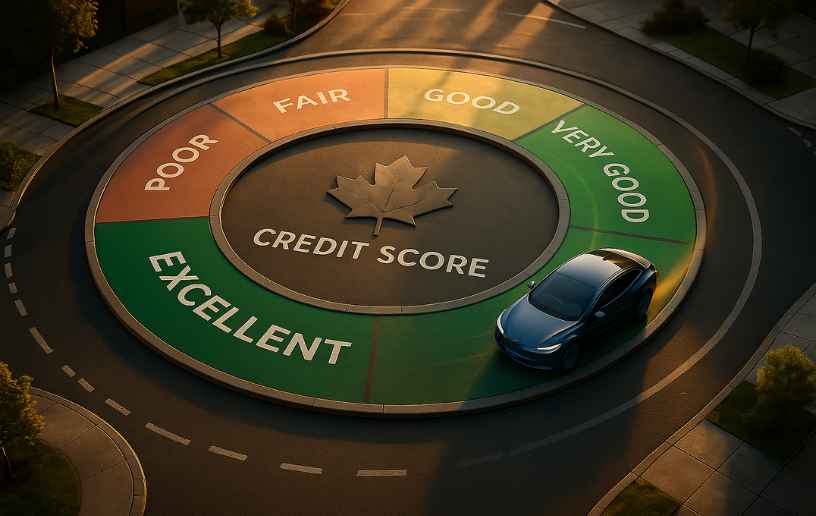
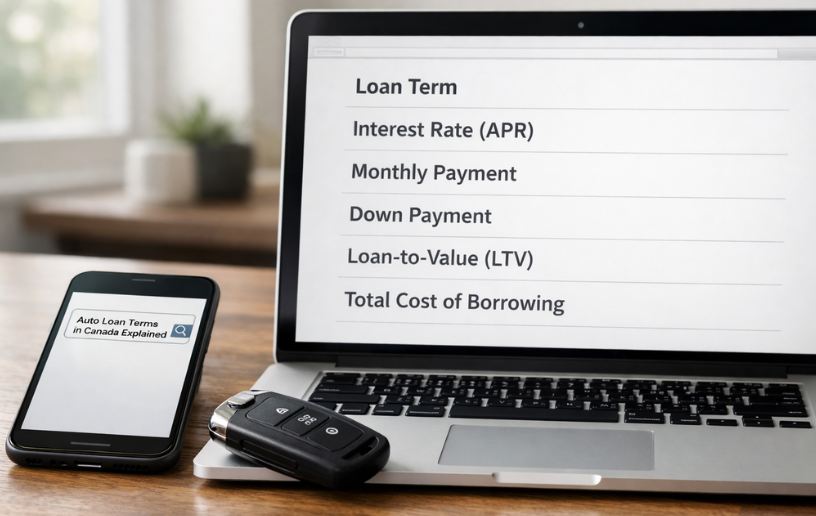
Two shoppers with the same income can face very different payments on the same car because of rate. Credit score, term length, and down payment all move the monthly number. A longer term lowers the payment percentage today but raises total interest and keeps you in the loan longer.
See how score bands usually affect pricing in car loan rates by credit score in Canada. If you are considering zero down, remember that a higher financed amount pushes the payment percentage up even when the sticker price looks manageable — details in our note on no down payment car loans in Canada.
A simple way to run your own numbers
- Write down monthly take-home pay (average if variable)
- Multiply by 0.10 and 0.15 for a payment range
- Add realistic insurance and fuel quotes for the vehicle class you want
- List other minimum debt payments and check DTI comfort
- Only then shop inventory that fits the all-in budget
If the range feels tight, a smaller vehicle, a larger down payment, or a co-applicant with stable income are the usual levers — not hoping the dealer "makes the payment work" with a longer term alone.
Variable income and the percentage trap
Commission, tips, overtime, and gig income make percentage math slippery. If you use a high month as the base, the payment percent looks fine until a slow stretch arrives. Build the 10–15% range on averaged take-home, then keep an emergency buffer equal to at least one or two payments.
Couples should decide whether the percentage is against one income or combined household take-home. Lender DTI may use combined figures on a joint application, but your kitchen-table budget should still feel safe if one income dips.
Next step
Aim for a car payment around 10–15% of take-home as a practical guide, then stress-test it against DTI, insurance, and fuel. Comfortable beats clever. When the budget is clear, apply with a lender network that can match structure to your file.
Auto Lending Canada serves drivers in British Columbia, Alberta, and Saskatchewan. Start your application here.