
Car Title Loans in Canada: How They Work and What They Actually Cost
14 September 2026If you own your car outright, or close to it, and need cash fast, a car title loan probably showed up somewhere in your search results promising same-day money with no credit check. Before you sign anything, it helps to understand exactly what you are agreeing to, because a title loan works very differently from a standard auto loan or a refinance, and the differences matter a lot to your wallet and to whether you keep your vehicle.
What a Car Title Loan Actually Is
A car title loan is a short-term loan secured by the title of a vehicle you already own, usually free and clear or with very little owing on it. You hand over your vehicle's title, or the lender registers a lien against it, in exchange for a lump sum, typically a fraction of the vehicle's appraised value, often somewhere between 25% and 50%. Unlike a purchase loan, you are not buying anything. You are borrowing against an asset you already have, and the vehicle itself is the collateral that backs the loan.
Most title loans in Canada run for a few weeks to a few months, though some lenders offer longer installment structures instead. Approval is usually fast, sometimes within a day, because the lender is underwriting the car's value more than it is underwriting you.
How Lenders Value Your Vehicle
A title loan lender typically starts with a wholesale or auction-based valuation rather than the retail price you would see listed for a similar vehicle privately. That distinction matters, because it usually means the loan amount offered is lower than what you might expect based on classified listings for the same year and model. Mileage, condition, and whether the vehicle is fully paid off all factor into the number. If there is still a balance owing on your existing auto loan, most title lenders will only advance against the equity above that balance, if they will lend at all, since the vehicle needs to serve as clean collateral for the new loan.
This is also where borrowers sometimes get a less favourable number than they expected walking in, since the appraisal is designed to protect the lender's ability to recover the loan amount through resale if the vehicle is repossessed, not to reflect what the car is actually worth to you.
Why the Cost Is the Real Story
The appeal of a title loan is speed and minimal documentation. The cost is where things get serious. Title loans in Canada frequently carry annual percentage rates well above what a bad-credit auto loan or even a typical subprime purchase loan would charge, and many are structured with biweekly or monthly fees that translate into a very high effective rate once you annualize them. A lender advertising "no credit check" is often signalling that the rate reflects the collateral risk rather than your ability to repay, which shifts real risk onto you if your income changes even briefly.
Roll the loan over past its term, which happens often when the original payoff date arrives and the borrower cannot cover it in full, and the fees compound. That is the mechanism that turns a loan meant to bridge a short cash gap into a long-running, expensive obligation that costs several times the original amount borrowed by the time it is paid off.
What Happens If You Fall Behind
Because the loan is secured by your vehicle's title, missing payments puts the car itself at risk, not just your credit score. A lender can repossess the vehicle under the terms of most title loan agreements, and losing your only vehicle over a missed payment on a loan meant to solve a temporary cash problem is the outcome most financial counsellors warn borrowers about. Some lenders also charge repossession and storage fees on top of the outstanding balance, which can leave you owing money even after the car is gone. If repossession does happen, whether through a title loan or a standard auto loan, our guide on getting approved for a car loan after repossession covers what your options look like afterward.
Regulation Varies by Province
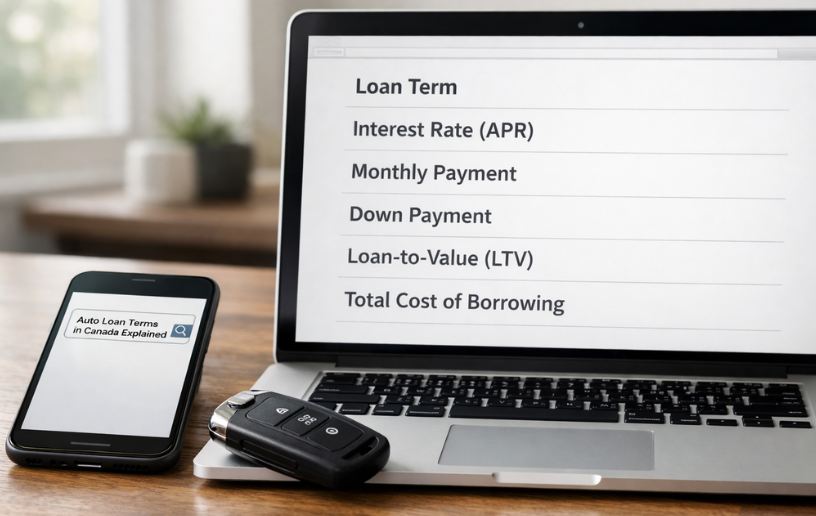
Consumer protection rules around title loans differ across BC, Alberta, and Saskatchewan, including caps on fees, disclosure requirements, and cooling-off periods in some cases. Rules also change over time, so if you are considering a title loan, check your province's current consumer protection office listing before signing rather than relying on a summary in the lender's own paperwork. Read every page of the contract, specifically the total cost of borrowing expressed as an annual rate, not just the biweekly or monthly fee, since that is the number that actually tells you what you are paying.
Is a Title Loan Ever the Right Call?
There are narrow situations where a title loan is genuinely the fastest available option, a true short-term emergency where the amount needed is small, the payoff date is realistic, and every cheaper alternative has already been ruled out. Even then, treat the payoff date as firm rather than aspirational, and have a specific plan for the money that will retire the loan on schedule. Where title loans tend to go wrong is when they are used to cover an ongoing shortfall rather than a one-time gap, since the fee structure is not built for that kind of repeated use.
Better Options Worth Checking First
If you already have an auto loan and just need to lower your payment or free up cash flow, refinancing your existing loan is usually a cheaper path than taking out a separate title loan against the same vehicle. It replaces your current loan with a new one, ideally at a better rate or a restructured term, rather than stacking a second high-cost loan on top of what you are already paying. Our guide to refinancing your auto loan in Canada walks through when that math actually works in your favour.
If your car is paid off and you are looking at financing a different vehicle rather than borrowing against your current one, a standard auto loan through a lender that reports to Equifax and TransUnion also builds your credit file over time, something a title loan generally does not do for you. And if the offer you are looking at is being marketed with urgency, no credit check, or guaranteed approval language, it is worth reading our breakdown of auto loan scams to watch out for in Canada before you commit to anything.
Questions Worth Asking Before You Sign
Ask for the total cost of borrowing as an annual percentage rate in writing, not just the payment amount. Ask exactly what happens if you are a few days late, and what the rollover terms and fees look like if you cannot pay in full on the due date. Ask whether the loan is reported to the credit bureaus, since many title loans are not, which means on-time payments will not help your score even though missed ones and repossession will still hurt your standing with that lender and with collections agencies. If a lender is reluctant to answer any of these clearly, that reluctance is itself useful information.
The Bottom Line
A car title loan can get you cash quickly, but it is one of the more expensive ways to borrow against a vehicle you already own, and it puts that vehicle directly at risk if your circumstances change. Before signing one, it is worth ruling out a refinance, a personal loan, or a conventional auto loan first, since all three are usually cheaper paths to the same cash. Auto Lending Canada works with buyers and owners across BC, Alberta, and Saskatchewan to find financing that fits an actual budget, not just an urgent one. Start your application here to see real options before you consider a title loan.