
In-House Financing at Car Dealerships in Canada: How It Works and When It Costs You More
14 September 2026Walk onto almost any used car lot advertising "in-house financing" or "buy here, pay here," and the pitch sounds simple: no bank, no waiting, drive away today regardless of your credit. Sometimes that pitch is genuinely useful, especially if a conventional lender has turned you down. Often, though, it is also the most expensive way to finance the same vehicle. Here is how in-house dealer financing actually works, and how to tell whether a specific offer is a fair deal or a costly one.
What "In-House Financing" Actually Means
With conventional financing, a dealer submits your application to a bank, credit union, or auto finance company, and that outside lender approves the loan, sets the rate, and owns the debt. With in-house financing, the dealership itself is the lender. There is no third party approving or declining the application; the dealer decides, funds the loan from its own capital or a line of credit, and collects the payments directly, often weekly or biweekly rather than monthly.
This structure is common at independent used car lots that specialize in buyers with damaged credit, no credit history, or a recent bankruptcy or consumer proposal, situations where a conventional lender might decline or offer only a marginal approval. Because the dealer is taking on all the risk itself rather than passing it to a bank, it prices that risk into the deal in ways that are not always obvious from the sticker price alone.
Why Dealers Offer It
In-house financing lets a dealership sell to a much wider range of buyers than it could reach through conventional lenders alone, and it earns money two ways instead of one: on the markup built into the vehicle's price, and on the financing itself. Some lots also install GPS trackers or payment-linked starter interrupt devices on financed vehicles, disclosed in the contract, that allow the dealer to locate or immobilize the car if payments lapse. That is a direct result of the dealer carrying the full credit risk itself rather than a bank sharing it.
Where the Real Cost Shows Up
The advertised flexibility of in-house financing usually comes with a higher total cost than a conventional loan for a comparable vehicle and credit profile, and it can show up in more than one place at once. The interest rate itself, or its equivalent expressed as a markup on the sale price, tends to run well above what a bank or credit union would charge for a similar borrower. The vehicle price itself can also run higher than the same car would cost through a straightforward cash or bank-financed sale, since the dealer is pricing in the risk of the loan alongside the risk of the vehicle's future value. And weekly or biweekly payment schedules, while framed as more manageable, can make it harder to track exactly how much total interest you are paying over the life of the loan compared to a clean monthly statement.
The Credit-Building Gap
One of the most overlooked differences is that many in-house financing arrangements are never reported to Equifax or TransUnion at all. A conventional auto loan, even a subprime one, is usually one of the more effective tools for rebuilding damaged credit, since on-time payments get reported monthly for years. If an in-house loan is not reported, you can make every payment on time for the full term and see no benefit to your credit file whatsoever, which defeats one of the main reasons a buyer with credit problems might choose vehicle financing over other options in the first place. Ask directly whether payments are reported to both bureaus before signing, and get the answer in writing if the dealer hesitates.
How It Compares to a Pre-Approved Loan
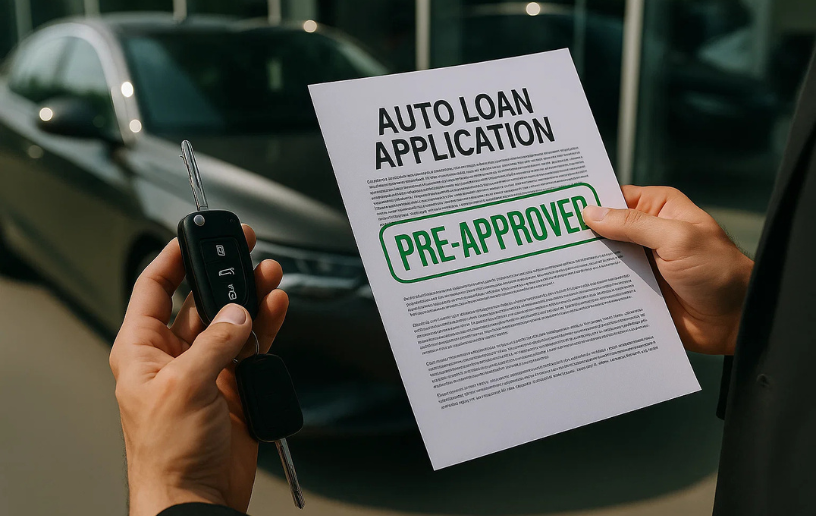
The strongest position you can be in walking onto any lot, in-house financing or otherwise, is already holding a pre-approval from an outside lender. That gives you a real number to compare against whatever the dealer proposes, and it means you are negotiating the price of the vehicle rather than the price and the financing terms tangled together, which tends to work in the dealer's favour rather than yours. Our guide on how to compare two car loan offers covers exactly what to line up side by side, whether one of the offers is in-house or conventional.
If your credit has taken a hit and you are worried a bank will simply decline you outright, it is worth checking that assumption before accepting in-house terms by default. Our guide on car loans for bad credit in Canada covers what actually moves approval odds with subprime lenders who do report to the credit bureaus and typically price risk more competitively than a dealer financing itself.
When In-House Financing Makes Sense Anyway
There are situations where in-house financing is genuinely the most realistic option, particularly for buyers who have been declined elsewhere, have no established credit history at all, or need a vehicle immediately and cannot wait through a longer approval process. If that is your situation, the goal shifts from avoiding in-house financing altogether to negotiating it carefully: ask for the total cost of the loan in writing, confirm whether payments are reported to the credit bureaus, and treat the arrangement as a bridge to refinance out of once your credit or income situation improves, rather than a loan you plan to carry for its full original term.
How to Spot a Fair In-House Offer From an Expensive One
Not all in-house financing is priced the same way, and the range between lots can be surprisingly wide. A fair offer will typically put its total cost in writing without hesitation, quote a rate or markup that is high relative to prime lending but still within a reasonable subprime range, and let you walk away to compare elsewhere without pressure. A less fair one leans on urgency, vague verbal payment quotes instead of a written schedule, and discourages you from taking a written offer home to think it over. If a dealer will not let you leave with a copy of the proposed contract for even a day, treat that reluctance as useful information about how confident they are in the deal holding up to scrutiny.
It also helps to separate the vehicle negotiation from the financing negotiation mentally, even if the dealer prefers to discuss them together. Agree on a price for the vehicle first, based on its market value independent of financing, and only then evaluate the in-house terms on their own merits against that fixed price.
Questions to Ask Before You Sign
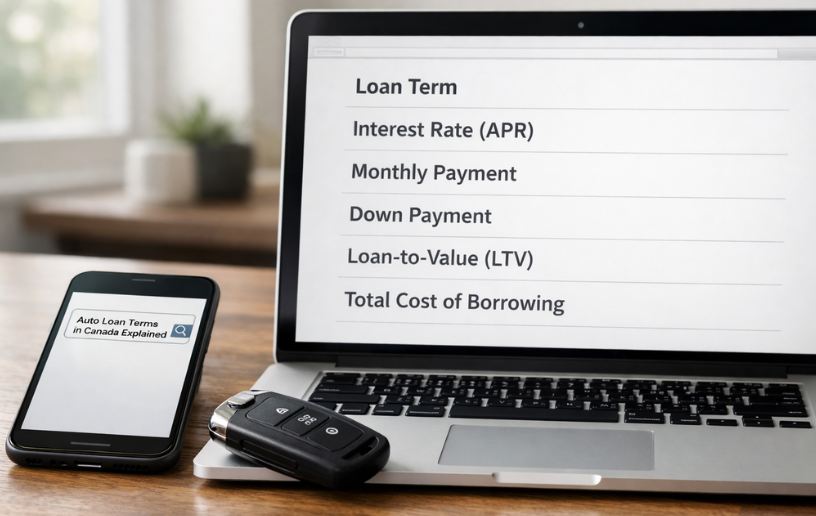
Get the total cost of financing and the effective annual rate in writing, not just the weekly payment figure. Ask whether payments are reported to Equifax and TransUnion. Ask whether a starter interrupt device or GPS tracker is installed, and what triggers it. And ask what the payout process looks like if you want to refinance elsewhere in a year, since some in-house contracts include early payout penalties that a conventional lender would not.
Weekly Payments and Why They Can Hide the Real Picture
In-house lots often structure payments weekly or biweekly rather than monthly, framed as easier to budget around a typical pay schedule. That can be genuinely convenient, but it also makes the total cost harder to see at a glance, since a $95 weekly payment sounds smaller than the equivalent $412 monthly figure even though the math is identical. Always convert whatever payment frequency you are quoted into a monthly and an annual total before comparing it against a conventional loan, rather than judging affordability off the smallest recurring number on the page.
The Bottom Line
In-house financing at a car dealership can be a genuine solution when conventional lenders have said no, but it is rarely the cheapest option available, and it sometimes will not help your credit at all even if you pay perfectly. Before accepting a dealer's own financing by default, see what you actually qualify for elsewhere. Auto Lending Canada works with buyers across the credit spectrum in BC, Alberta, and Saskatchewan, including people who have been turned down before. Start your application here to compare a real offer against whatever a dealer's lot is proposing.