Thinking of Co-Signing a Car Loan? Read This First
02 February 2026Canada’s auto market continues to accelerate in 2026, with average new vehicle prices reaching approximately $50,200, reflecting an 8% increase year over year, according to industry reports. At the same time, auto loan volumes are up roughly 12% annually, fueled by EV incentives and delayed purchasing activity following recent economic uncertainty.
Despite this growth, access to financing remains uneven. New immigrants, students, and self-employed or gig workers often face approval barriers due to limited or non-traditional credit histories, even when income is sufficient.
This is where co-signing becomes a common solution. A co-signer agrees to guarantee the loan, if the primary borrower is unable to meet repayment terms. In practice, co-signing can significantly improve approval odds and reduce interest rates, often lowering them from the 8% range to the 5% range.
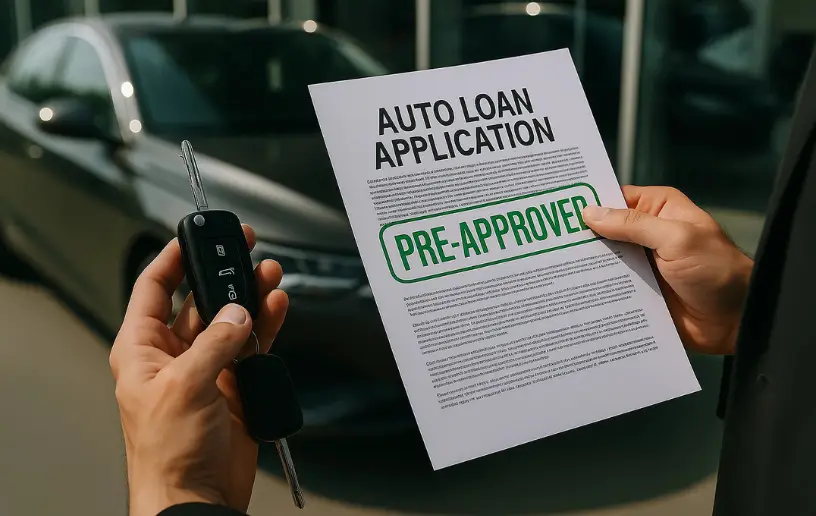
Before you ask someone to co-sign, see where you stand. Get a fast, pre approval with Auto Lending Canada and understand your approval odds.
Who Needs a Co-Signer in Canada’s 2026 Auto Market?
In Canada’s current lending environment, co-signers become essential when applicants demonstrate income stability but fall short on credit strength or history. This gap is common under tightened B-20 guidelines, which emphasize debt service ratios around 44% and robust credit profiles.
Common Borrower Profiles
- Low or no credit history: About 1 in 4 younger Canadians, particularly recent graduates, maintain shallow credit files, limiting solo approvals.
- New immigrants: Entrants via Express Entry or similar programs often arrive with strong global earnings but no Canadian credit footprint.
- Self-employed and gig workers: Rideshare operators, freelancers, and contractors encounter heightened review due to income variability.
- Credit rebuilding borrowers: Individuals recovering from prior delinquencies, collections, or consumer proposals frequently require support.
Lender Requirements in 2026
Major banks and credit unions prioritize:
- Credit scores exceeding 600 (Equifax/TransUnion benchmarks).
- Debt-to-income ratios below approximately 40%.
- Verifiable employment or consistent income records (e.g., T4s or NOAs).
Impact Example: A strong co-signer can reduce rates from 8% to 5.5%, yielding thousands in savings over a typical 60-84 month term. This structure suits urgent needs but demands careful risk assessment for all parties.
How Co-Signing Works: Step-by-Step Process in Canada
Co-signing a car loan is a legally binding financial commitment, not an informal favor. While digital tools have streamlined approvals across Canada in 2026, liability remains fully shared between the borrower and the co-signer.
1. Borrower Pre-Qualification
The primary borrower begins by comparing lenders, including major banks and credit unions.
- Soft credit checks only, with no impact on credit scores
- Lenders provide estimated rates, loan limits, and confirm whether a co-signer is required
- This step helps limit unnecessary hard credit inquiries later
Get pre-approved now and take the guesswork out of financing. Enjoy a smoother, faster, and stress-free car buying experience.
2. Co-Signer Added to the Application
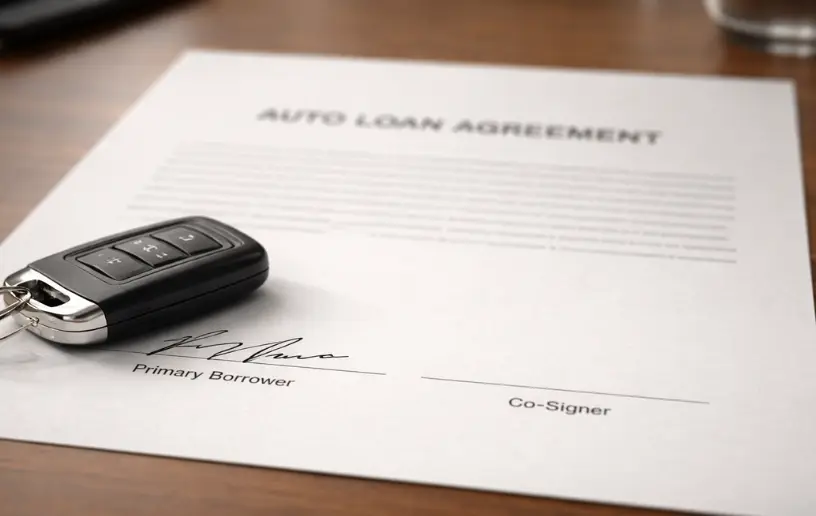
Once a co-signer is introduced, the application becomes formal and binding.
Required documentation typically includes:
- Social Insurance Number (SIN)
- Proof of income (recent pay stubs or employment letter)
- Tax documents (most recent two years of T4s or Notices of Assessment)
At this stage:
- Hard credit inquiries are conducted on both parties
- Credit scores may decline 5–10 points temporarily
- Co-signers should plan timing carefully, especially if applying for other credit
3. Joint Credit Review and Approval
The lender evaluates the combined financial profile, focusing on:
- Credit scores from Equifax or TransUnion (generally 600+ preferred)
- Debt-to-income ratios (typically under 40%)
- Income stability and employment consistency
Approval decisions are often issued within 24–48 hours, depending on the lender.
4. Loan Execution and Registration
Loan documents are executed using PIPEDA-compliant e-signatures. Provincial requirements may apply:
- Notarization in Quebec and British Columbia
- Vehicle registration through provincial authorities
While vehicle ownership may list only the borrower, the financial responsibility is shared equally.
5. Funds Disbursement and Repayment
Upon completion:
- The lender pays the dealer directly
- The borrower takes delivery of the vehicle
- The first payment is typically due within 30 days
Any late or missed payment is reported immediately to both credit profiles.
The Hidden Risks Co-Signers Face

Many Canadians agree to co-sign a car loan believing they are providing temporary support or acting as a secondary safety net. In reality, lenders treat co-signers as equal borrowers under the loan agreement. From a legal and credit perspective, there is no distinction between the primary borrower and the co-signer.
Any missed or late payment is reported on both credit profiles and can remain visible for six to seven years, affecting future borrowing capacity.
Full Financial Liability for the Loan Balance
When a borrower fails to make payments, the lender is not required to pursue them first. Instead, the lender may hold the co-signer fully responsible for the outstanding balance.
- The auto loan immediately becomes the co-signer’s obligation
- Collection agencies may contact the co-signer directly
- Wage garnishment is permitted in many provinces, reaching up to 50% of disposable income.
- In advanced cases, tax refunds or bank accounts may be subject to enforcement actions
Credit damage from co-signed loans can be both severe and rapid.
- A single 30-day missed payment can reduce a strong credit score by 100 points or more
- Late payments are reported to Equifax and TransUnion
- Negative entries can affect eligibility for mortgages, renewals, lines of credit, and business financing
While credit reports do eventually recover, the impact often lasts far longer than borrowers expect.
Legal Exposure and Provincial Differences
Legal consequences vary across Canada, but all provinces impose serious obligations on co-signers.
- In common-law provinces, lenders can pursue either party for the full amount owed
- Legal action may proceed through small claims court, subject to provincial limits and procedures.
- Court costs, interest, and legal fees can substantially increase total losses
Additional Risk Consideration: Electric Vehicle Loans
Co-signing EV loans introduces additional complexity.
- Battery degradation or failure outside warranty periods can significantly reduce resale value
- Repair costs may exceed insurance or remaining vehicle equity
- Repossession often fails to eliminate the remaining loan balance
Co-signing a car loan means accepting full financial, credit, and legal responsibility for the debt. In 2026’s economic environment, these risks are amplified by depreciation, longer loan terms, and stricter lender enforcement.
Borrower Responsibilities To Protect Co-Signer at All Costs
When someone agrees to co-sign your car loan, they are placing their credit, income, and financial future at risk on your behalf. This responsibility should be treated with the same seriousness as housing or essential living expenses.
Make Payments a Top Financial Priority
- Set up automatic withdrawals from a dedicated bank account
- Ensure sufficient funds are always available before the due date
- Treat the payment with the same priority as rent or a mortgage
Budget Realistically and Conservatively
- Allocate approximately 15–20% of take-home income for vehicle payments and insurance combined
- Account for rising insurance premiums, fuel, maintenance, and seasonal expenses
- Avoid stretching finances based on bonuses or variable income
Communicate Early and Transparently
- Inform your co-signer immediately about income disruptions, employment changes, or extended leaves such as parental or medical leave
- Do not wait for a missed payment to start the conversation
- Share monthly payment confirmations when possible
Maintain Proper Insurance Coverage at All Times
- Carry mandatory full-coverage insurance as required by the lender
- Maintain gap insurance, especially during the first years of the loan when depreciation is steep
- Review coverage annually to ensure it reflects current vehicle value
Use Shared Monitoring Tools
- Use budgeting or monitoring apps that allow shared visibility of payment activity
- Use of tools that help both parties track obligations without micromanagement
Pros and Cons: Is Co-Signing Worth It?
The value of co-signing depends on who you are in the transaction. The risks and rewards are not shared equally. This table clearly separates the impact on the borrower, the co-signer, and the overall arrangement.
| Aspect | Pros | Cons |
| Borrower Impact | Enables access to auto financing that may otherwise be unavailable | Requires strict payment discipline with little tolerance for income disruption |
| Co-Signer Impact | Allows meaningful financial support for a family member or dependent | Creates full legal and financial liability for the loan |
| Credit Profile Effects | On-time payments can strengthen both parties’ credit histories | Late payments or defaults damage both credit profiles for years |
| Financial Risk Exposure | Improved loan terms can reduce total interest paid over the loan term | Vehicle depreciation can leave balances higher than resale value |
| Relationship Dynamics | Successful repayment can reinforce trust between both parties | Financial stress can permanently strain or damage personal relationships |
Alternatives to Co-Signing: Smarter Paths in 2026
Co-signing introduces unnecessary risk for guarantors. Independent financing options provide viable alternatives, leveraging secured assets, credit-building tools, fintech innovations, and government support tailored to Canada's 2026 market.
Secured Loans
Credit unions offer savings-backed loans at competitive rates around 6.9%. Applicants deposit collateral equal to the loan amount, reducing lender risk and enabling approvals for those with limited credit histories.
Credit-Building Tools
Secured credit cards report positive activity to Equifax, establishing a credit file within months. Rent-reporting services further support profiles by converting housing payments into tradeline data.
Fintech Solutions
Platforms provide buy-now-pay-later (BNPL) options for used vehicles, often at 0-10% effective rates. Peer-to-peer lending services supports loans exceeding $20,000, bypassing traditional bank underwriting.
Tips for Safe Co-Signing Success
If proceeding with co-signing, prioritize rigorous due diligence and protective measures to minimize exposure.
- Examine the Borrower Thoroughly: Check three months of bank statements and confirm employment insurance eligibility to assess repayment capacity.
- Negotiate Protective Clauses: Secure a release provision after 12-24 consecutive on-time payments; establish joint payment tracking protocols.
- Monitor Credit: Conduct annual credit bureau reviews for both parties.
- Plan the Exit Strategy: Pursue solo refinancing after 24 months of flawless payments; consider vehicle sale if depreciation accelerates (no capital gains tax applies to personal-use vehicles).
- EV-Specific Caution: Verify battery health and warranty coverage prior to finalizing, as post-purchase failures may complicate claims.
Conclusion: Co-Sign Smartly or Walk Away
Co-signing a car loan can make vehicle ownership possible in Canada’s high-cost 2026 auto market, particularly for borrowers with limited credit history. However, with approximately one in four co-signed loans experiencing repayment issues, the decision carries substantial financial and credit risk.
Before agreeing to co-sign, protect your own financial foundation first. The only safe rule is simple: never co-sign a loan unless you are fully prepared to repay it on your own, without hesitation or hardship. Credit strength, income stability, and long-term borrowing goals should always take priority over emotional obligation.
Take time to run the numbers using reputable tools, review federal consumer guidance through the Financial Consumer Agency of Canada, and consult a qualified financial advisor if needed. A measured decision today can prevent years of financial consequences tomorrow.
Get pre-approved with Auto Lending Canada to understand rates, affordability, and lender fit, before committing to a co-signer or a dealership visit.
Frequently Asked Questions
1. Does co-signing appear as my debt on credit reports?
Yes. Co-signed loans appear as active obligations on your credit file and are treated the same as personally originated loans.
2. Can a co-signer be removed later?
Often yes, but only after a sustained history of on-time payments, typically 24 months or more and subject to lender approval through refinancing.
3. What if the vehicle is repossessed?
Repossession does not automatically eliminate the debt. If the sale proceeds do not cover the outstanding balance, the co-signer remains responsible for the shortfall.
4. Can I co-sign for someone who lives in another province?
Yes, but enforcement follows the loan agreement and provincial laws, which can complicate legal and collection processes.
5. Is co-signing safer with a shorter loan term?
Generally, yes. Shorter terms reduce exposure to depreciation, income changes, and economic shifts.
6. What happens if the borrower declares bankruptcy?
You remain fully liable for the auto loan. The debt does not disappear with the borrower’s discharge and continues to be enforced against the co-signer.