Voluntary Surrender in Canada: What Happens to Your Loan Balance
14 September 2026If you're staring down a car payment you can no longer make, voluntary surrender might already be on your mind as the less painful option. It usually is, in the sense that it's calmer than a tow truck showing up unannounced. But calmer isn't the same as free, and a lot of people surrender a vehicle without understanding what happens to the debt afterward.
Here's what voluntary surrender actually means in Canada, how it differs from a forced repossession, and what it does and doesn't fix.
What voluntary surrender actually is
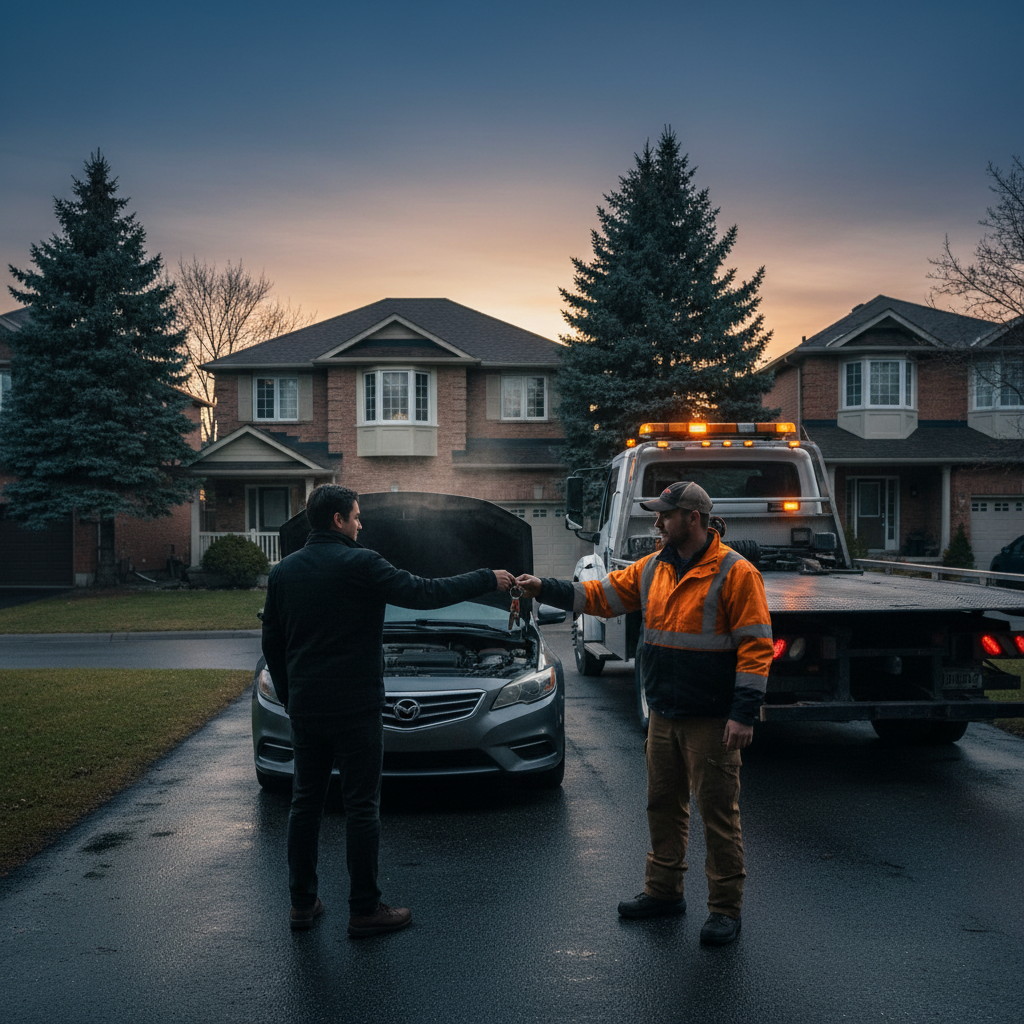
Voluntary surrender means returning a financed vehicle to the lender yourself, before they send someone to take it. You call the lender, arrange a time and place, and hand over the car and the keys. That's the entire mechanical difference from a repossession: who initiates it and how it physically happens.
What it doesn't mean is that the loan disappears. The lender still sells the vehicle, usually at auction, and applies whatever it sells for against your remaining balance. If the vehicle sells for less than what you owe, which is common since auction prices run below retail, you're still on the hook for the difference. That's called a deficiency balance, and lenders can and do pursue it.
How it compares to a forced repossession
The financial outcome between voluntary surrender and forced repossession is often closer than people expect. Both end with the lender taking the car, selling it, and coming after you for any shortfall. Both get reported to the credit bureaus as a serious negative event. Neither one erases the debt.
Where they differ is mostly in the details around them. Surrendering yourself usually avoids repossession fees, which can run several hundred dollars and get added to what you owe. It also skips the stress of a repo agent showing up at your home or workplace, sometimes without warning. Our breakdown of whether your car can be repossessed without notice in Canada covers how little warning lenders are actually required to give in most provinces, which is part of why some borrowers choose to surrender first rather than wait it out.
Credit-wise, the two aren't identical either, though the difference is smaller than people hope. Some lenders record a voluntary surrender slightly differently than an involuntary repossession, and it may read marginally better to a future lender reviewing your file. It is not, however, treated as a neutral or minor event by any stretch. Expect it to sit on your credit report for years either way.
What happens to the leftover balance
This is the part people miss most often. Say you owe $19,000 on the loan when you surrender the vehicle. The lender sells it at auction for $12,500, and deducts repossession and auction fees, another $1,200. You're now responsible for $7,700, the deficiency balance, even though you no longer have the car.
Lenders can pursue that balance through collections, and in some cases through the courts, depending on the province and the size of the debt. It doesn't vanish just because the vehicle is gone. If you're in this position, talking to the lender directly about a repayment plan for the deficiency, before it goes to collections, is almost always a better outcome than ignoring it.
When surrendering actually makes sense
Voluntary surrender is worth considering when the payment genuinely doesn't fit your budget anymore and there's no realistic path to catching up. If you've already tried a payment deferral or hardship arrangement with your lender and the numbers still don't work, surrendering the vehicle stops the bleeding of a payment you can't sustain, even though it doesn't erase what's already owed.
It can also make sense if you're already several payments behind and repossession looks inevitable regardless. In that case, surrendering proactively at least avoids the added repossession fee and lets you have a say in the timing, rather than finding a tow truck in your driveway on a Tuesday morning.
Alternatives worth ruling out first
Before surrendering, it's worth checking whether cheaper options exist. Refinancing into a lower payment is one, covered in our guide to refinancing your auto loan in Canada, and it's a genuine fix if the issue is the rate or term rather than the vehicle itself. Selling the car privately is another, particularly if you're not underwater on the loan; you keep more control over the sale price than an auction gives you, and you avoid the deficiency balance problem entirely if the sale covers what you owe.
If you are underwater, meaning the car is worth less than you owe, it's worth understanding how negative equity works before deciding between selling and surrendering, since the math changes depending on how far underwater you actually are.
A licensed, non-profit credit counsellor is also worth a call if the car payment is one piece of a larger debt problem rather than the whole issue. They can look at your full financial picture and help you figure out whether surrendering the car actually solves anything, or just shifts the pressure somewhere else.
What to do if you decide to surrender
Call the lender directly rather than waiting for them to reach out. Ask for the surrender process in writing, including what fees apply, how the sale proceeds will be calculated, and what happens to any deficiency balance. Remove your personal belongings from the vehicle before handing it over, and get a receipt or written confirmation of the surrender date and vehicle condition. Keep every piece of paperwork. If a dispute comes up later about fees or the sale price, documentation is what protects you.
The bottom line
Voluntary surrender is a reasonable option when a car payment has become genuinely unworkable, but it isn't a clean exit. You'll likely still owe money after the car is gone, and your credit takes a real hit either way. Before you get there, it's worth ruling out refinancing, a hardship arrangement, or a private sale, since all three tend to cost less in the long run than starting the surrender process.
If your current loan payment doesn't fit your budget anymore, Auto Lending Canada works with buyers across BC, Alberta, and Saskatchewan to structure financing that actually matches what you can afford. Start your application here to see what a more sustainable loan could look like.