
What Does OAC Mean When Financing a Car in Canada?
14 September 2026If you've ever seen a car ad flash a monthly payment or an interest rate with three small letters tacked onto the end, "OAC", you've run into one of the most common pieces of financing shorthand in the industry. It looks like fine print you can skip past. It isn't. OAC changes what that advertised number actually means for you, and understanding it before you walk into a dealership saves you from comparing an offer that was never really on the table for your specific situation.
What OAC Actually Stands For
OAC means "on approved credit." It's a disclaimer that the rate, term, or payment being advertised is only available to applicants who qualify for the lender's best tier, typically buyers with strong, well-established credit and stable income. Everyone else gets a different number, sometimes a meaningfully different one.
Lenders and dealers include this disclaimer because advertising a single "starting at" rate without it would be misleading. Not everyone qualifies for the lowest advertised rate, the same way not every credit card applicant qualifies for a 0% introductory offer. OAC is the plain acknowledgment of that gap, not an attempt to hide it.
Why the Advertised Rate Isn't Necessarily Your Rate
A lender sets its lowest OAC rate around the applicant profile that carries the least risk: strong credit score, low debt-to-income ratio, stable employment history, and often a reasonable down payment. That applicant exists, but they're not the average applicant, and the rate is built specifically around them.
Credit Score and Rate Tiers
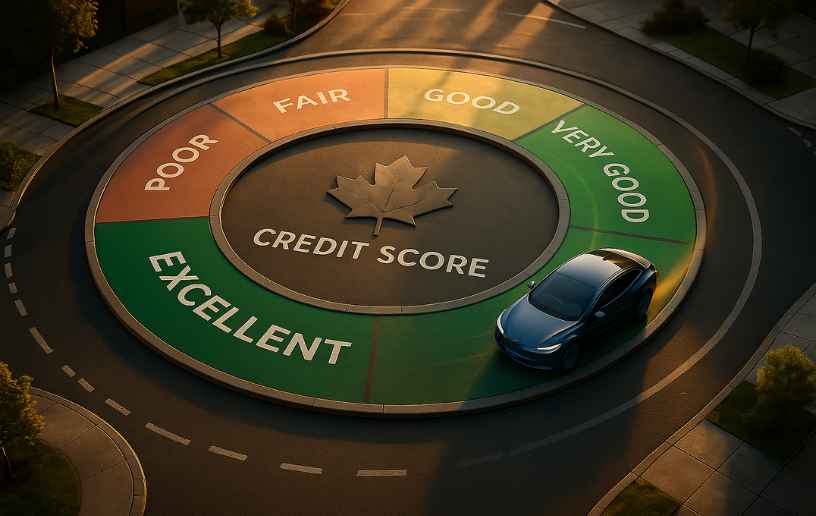
This is usually the single biggest lever. As a rough guide, buyers in the mid-700s and up are the most likely to see something close to the advertised OAC rate. Buyers with good credit in the 660-759 range typically land a bit higher but still within a reasonable band. Fair credit, roughly 560-659, usually moves into a noticeably higher tier, and anything below that, or a thin file with little credit history at all, sits higher still. These bands shift with the Bank of Canada's policy rate and each lender's own risk appetite, so treat them as a general shape rather than fixed numbers.
Income and Debt Load
A strong credit score paired with a heavy existing debt load doesn't automatically get the best rate either. Lenders look at your debt-to-income ratio alongside your score, and a thin margin between income and obligations can push your rate up even with decent credit. Our guide on debt-to-income ratio and car loan approval covers how lenders actually weigh this.
Down Payment and Term
Putting more down lowers what you're financing relative to the vehicle's value, which reduces the lender's exposure and can move your rate closer to the advertised OAC number. Term length matters too. Shorter terms often carry a better rate than stretching payments out over 72 or 84 months.
Is OAC a Bait-and-Switch Tactic?
Not inherently, though it can feel that way if you walk in expecting the advertised number and leave with something higher. The disclaimer exists precisely because rates vary by applicant, and no honest lender can promise a specific rate before actually reviewing your credit and income. Treat "OAC" as a signal to ask directly what rate range you'd realistically qualify for, rather than assuming the advertised figure applies to you automatically. Where it does get predatory is when a dealer or lender refuses to give you any real number until you're deep into paperwork. A legitimate lender will walk you through your likely rate range early, before you've committed to anything.
Where Else You'll Run Into OAC
Interest rates aren't the only place this disclaimer shows up. Manufacturer promotions advertising 0% financing, waived first payments, or a specific low monthly payment almost always carry an OAC tag too, since those offers are built around a specific credit tier, often an even narrower one than a standard advertised rate. A 0% financing promotion in particular tends to be reserved for the strongest applicants, and buyers who don't qualify are sometimes offered a cash rebate instead as a substitute. Lease ads carry the same disclaimer for the same reason: the advertised monthly payment assumes an applicant at the top of the lender's approval tiers.
What OAC Doesn't Mean
A few things worth clearing up, since the term gets misread in both directions. OAC doesn't mean you've been rejected if you don't get the advertised rate, it means your rate is priced for your actual risk profile instead of the best-case one. It also isn't permanent. If your credit improves or your income situation changes, refinancing into a better rate down the line is a normal part of managing a car loan, not an exception. And it isn't specific to bad credit either. Even a solid applicant with good, but not top-tier, credit can land a rate above the OAC-advertised number simply because that number is calibrated to the very top of the approval range, not the middle of it.
How to Find Out Your Real Number Before You Shop
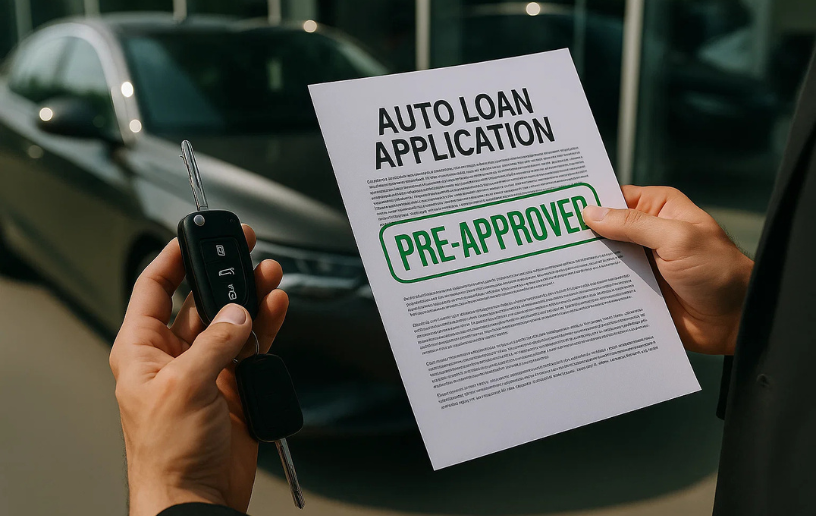
The only way to know what rate actually applies to you, OAC or otherwise, is to get pre-approved before you're standing in a dealership finance office. Pre-approval gives you a real rate range and payment estimate based on your actual credit and income, not the best-case scenario used in an ad. It also means you're comparing a dealer's in-house financing against a number you already have in hand, rather than negotiating blind. Our breakdown of pre-approval versus final approval covers what each step actually locks in and what can still change between them.
Once you have paperwork in front of you, whether that's a pre-approval or a dealer's financing offer, read it carefully before signing. Our guide on how to read an auto loan contract walks through the specific line items worth double-checking, including where a rate that started as "OAC" actually landed on your paperwork.
If Your Credit Isn't in the Top Tier
Not qualifying for the lowest OAC rate doesn't mean financing isn't realistic. Subprime and near-prime lenders in Canada work specifically with buyers outside the top credit tier, at rates that reflect the added risk but are still workable for most budgets. Our guide on car loans for bad credit in Canada covers what actually improves your odds and your rate if you're not the buyer an OAC ad is built around.
The Bottom Line
OAC just means the advertised rate assumes a best-case applicant profile, not that the number is fake or that you've been misled. What matters is knowing where you actually stand before you commit to anything, which means getting pre-approved and asking direct questions about your real rate range rather than anchoring on an ad.
Auto Lending Canada works with buyers across BC, Alberta, and Saskatchewan across the credit spectrum to find out what rate you'd actually qualify for, not just what's advertised. Start your application here to get a real number instead of a best-case one.