
Getting a Car Loan After Late Payments in Canada: What Lenders Look For
05 October 2026A few late payments on your credit report can feel like they wreck everything, especially when you need a vehicle. They do lower your score, and they make some lenders more cautious. But late payments are one of the most common reasons Canadians apply with less-than-perfect credit, and lenders see them every day. What matters most is how late, how recent, and what you have done since.
This guide explains how late payments show up on your credit file, how car lenders read them, and what you can do to get approved for a car loan anyway.
Start your application here if you want a lender to look at your file now. It takes a few minutes, and you can add details as you go.
How late payments are reported in Canada
Lenders generally report a payment as late to Equifax and TransUnion once it is 30 days or more past due. A payment that is a few days late usually costs you a fee but does not show up on your credit report, though it is still worth avoiding.
Canadian credit reports use a rating system for each account. A letter shows the type of account, such as R for revolving credit like credit cards and I for instalment loans like car loans. The number shows how the account is being paid:
- 1: paid as agreed, within 30 days.
- 2: 30 to 59 days late.
- 3: 60 to 89 days late.
- 4: 90 to 119 days late.
- 5: 120 days or more late.
- 9: written off as bad debt or sent to collections.
So an R2 on a credit card from two years ago looks very different to a lender than an I5 on a car loan from last month. Late payment history generally stays on your report for around six years, depending on the bureau and your province, but its effect on your score fades as it gets older. If you are not sure what lenders see, our explainer on Equifax versus TransUnion for auto loans covers how each bureau reports.
How car lenders read late payments
Car lenders do not just look at whether you have late payments. They look at the pattern:
- Recency. Lates in the last six to twelve months matter much more than ones from three or four years ago.
- Severity. One 30-day late is a minor mark. Repeated 90-day lates or accounts sent to collections are a bigger concern.
- Which account. A late car or auto loan payment worries a car lender more than a late phone bill, because it is the same kind of debt you are asking for.
- The story. A short cluster of lates during a job loss, illness, or separation, followed by on-time payments, is easy to understand. Ongoing lates with no clear cause are harder.
- Current accounts. If any account is still behind right now, bringing it up to date before you apply is one of the most helpful things you can do.
What kind of car loan you can expect
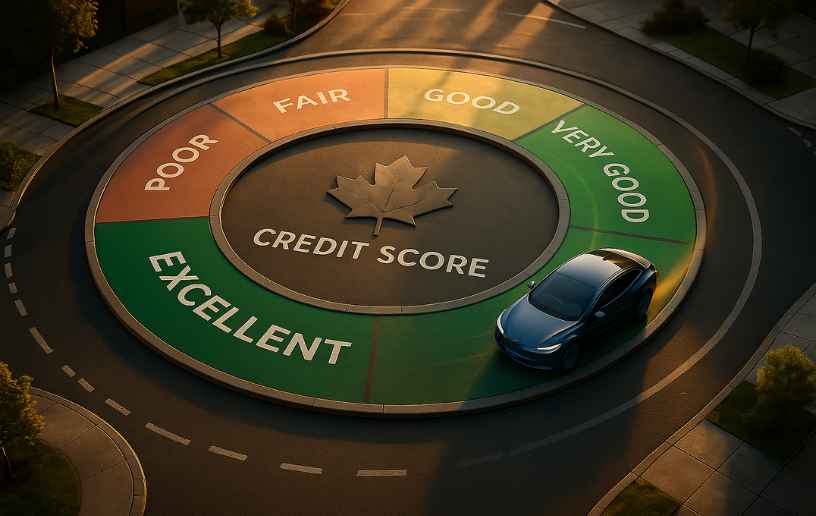
With recent late payments, you will usually see higher interest rates than a borrower with a clean history. Our guide to car loan rates by credit score in Canada shows how rates tend to change across score ranges.
You may also see conditions like a required down payment, a cap on the loan amount, or limits on the age and mileage of the vehicle. If the lates are older and your recent history is clean, you may qualify for terms close to what a prime borrower would get.
Specialty lenders, sometimes called second-chance or subprime lenders, often approve files that a bank declines. Our page on second chance car loans in Canada explains how those lenders work.
Steps to take before you apply
- Get your credit reports. Request your free reports from Equifax and TransUnion. Check each late payment is accurate, with the right dates and amounts.
- Dispute errors. If a payment is marked late when it was not, or an account is not yours, file a dispute with the bureau. Corrections can raise your score.
- Bring any past-due account current. Lenders are much more comfortable when nothing is behind today.
- Ask for a goodwill adjustment. If you have a single late payment on an otherwise clean account, some creditors will agree to remove it if you ask politely. It does not always work, but it costs nothing to try.
- Stack up a few on-time months. Even three to six months of on-time payments after a rough patch improves how lenders see you.
- Lower your card balances. High utilization makes late payments look worse. Paying cards down helps your score and your debt ratio.
- Prepare your income documents. Recent pay stubs, a job letter, or bank statements. Strong, provable income can offset a weaker credit history.
Be ready to explain
If your lates came from a specific event, such as a layoff, medical leave, divorce, or a gap between contracts, be ready to explain it briefly. Many lenders that work with credit challenges will consider the reason, especially if your payments have been on time since. A short, honest explanation helps more than leaving the lender to guess.
Choosing a vehicle that gets approved
When your credit has marks on it, the vehicle you choose has a big effect on approval. Lenders are more comfortable with:
- Reliable used vehicles, often a few years old with reasonable kilometres.
- A price that keeps your total monthly debt at a manageable share of your income.
- A loan amount that lines up with what the vehicle is actually worth.
Shopping for the most expensive vehicle you can get approved for usually leads to a higher rate and a bigger risk of falling behind again. A modest vehicle with a payment you can easily handle is the better move.
Use the new loan to rebuild
A car loan you pay on time every month is one of the more effective ways to rebuild your credit after late payments. Instalment loans add positive history, and over a year or two the new on-time record starts to outweigh the old lates. Set up automatic payments timed with your payday so a busy month does not cause a new late.
Once your score has recovered, you may be able to refinance to a lower rate and reduce what you pay over the rest of the loan.
Things to avoid
- Applying with many lenders yourself. Several hard inquiries in a short window can lower your score further.
- Stretching the term too far. A very long loan lowers the payment but raises total interest and can leave you owing more than the vehicle is worth.
- Promises of guaranteed approval. No legitimate lender can promise approval before reviewing your file.
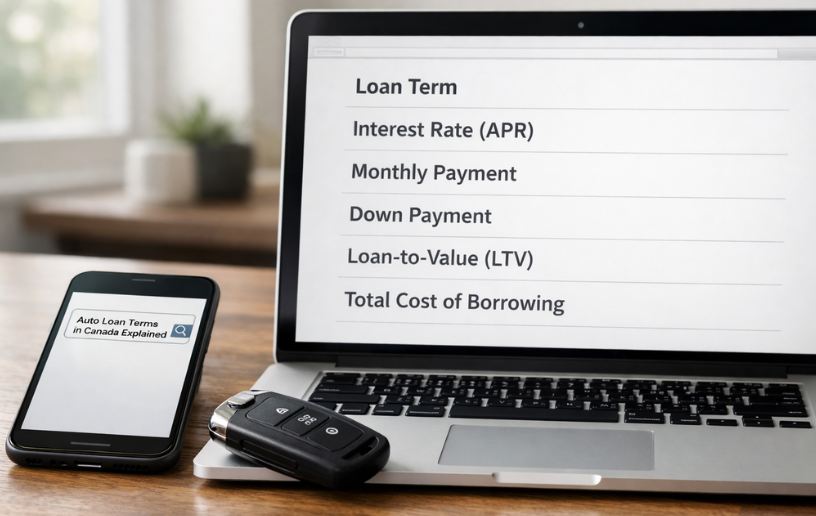
- Skipping the contract details. Check the rate, term, total cost of borrowing, and any add-ons before signing.
Get approved after late payments
Late payments are a setback, not a dead end. With your current accounts up to date, proof of steady income, and a sensible vehicle choice, many Canadians with late payments on file get approved. Auto Lending Canada works with lenders who look at your whole situation, not just the worst line on your report.
ALC serves BC, Alberta and Saskatchewan. Start your application here.