
Can You Get a Car Loan With Collections in Canada?
26 September 2026A collections account on your Equifax or TransUnion file does not automatically end your chances of financing a car in Canada. It does change how lenders read your application. Some banks will decline on sight. Specialty auto lenders may still work with you if income is solid, the collection is older or small, and the vehicle advance is conservative.
Here is what collections mean for a car loan in Canada, what underwriters usually ask, and how to present a file that has a realistic path forward — without pretending the mark is invisible.
What a collections account signals to lenders
Collections mean a debt was unpaid long enough that the original creditor sold it or assigned it to a collection agency. On a car loan application, that history suggests past cash-flow stress. Lenders care about:
- How recent the collection is
- Whether it is paid, settled, or still open
- The original amount and the type of debt (medical, telecom, credit card, etc.)
- Whether other accounts are current now
- Your income stability and existing debt-to-income ratio
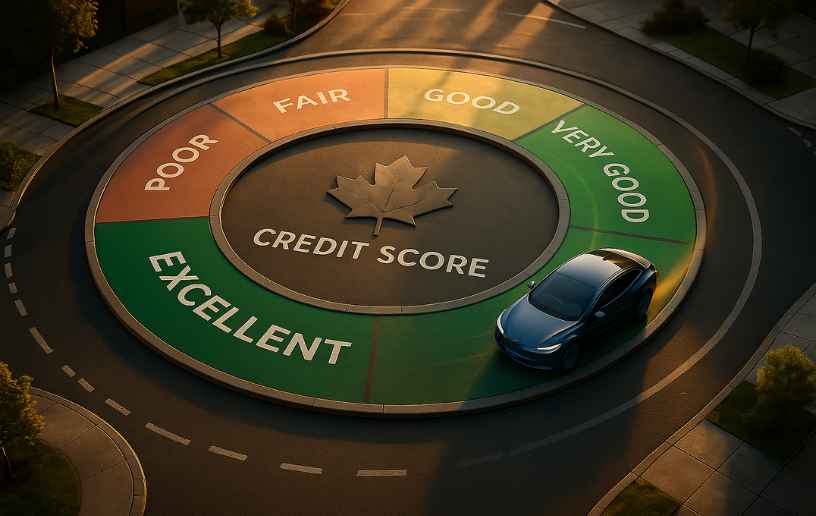
One old, paid collection with clean recent payments is a different conversation than multiple open collections and ongoing late pays. For how score bands affect pricing once a lender is willing to look, see car loan rates by credit score in Canada.
Start your application here if you already know the vehicle type — lenders price collections files more carefully when the advance and vehicle age are clear.
Can you get a car loan with collections in Canada?
Sometimes yes. Prime banks and captive finance arms often say no until collections are resolved and the score recovers. Non-prime and specialty auto lenders may approve with conditions: higher rate, larger down payment, shorter term, or limits on vehicle age and kilometres.
That is the same world described in our guide to bad credit car loans in Canada. Collections are one reason a file lands in that category — not a separate universe.
Paid vs unpaid collections
Paying or settling a collection can help the story you tell a lender, even when the mark remains on the bureau for years. An unpaid, growing balance is harder. Do not empty your down-payment savings to clear a tiny collection if that cash would do more good reducing the car loan advance — ask a lender or broker which move helps your specific file.
If repossession or a charged-off auto loan is part of your history, also read car loans after repossession in Canada, because those files face extra scrutiny beyond a general collection.
How to strengthen an application with collections
- Pull both credit reports and make sure the collection details are accurate.
- Document steady income with recent pay stubs and bank statements.
- Keep other revolving accounts current for several months before you apply.
- Choose a realistic vehicle — stretching into a expensive unit with collections on file invites declines.
- Offer a down payment you can actually spare after rent and essentials.
- Explain briefly what happened and what changed, if a lender asks. Stick to facts.
Rebuilding habits matter as much as the old mark. Practical steps are covered in how to rebuild credit with a car loan in Canada — once you have a loan you can afford, on-time auto payments become part of the repair.
What to expect on rate and structure
Collections files that do get approved often carry higher interest and tighter vehicle rules. That cost is the trade for access when a bank will not participate. Focus on the total payment you can sustain, not the lowest monthly number achieved by an extreme term.
Nobody can guarantee approval with collections on your report. Shopping lenders who already fund non-prime Canadian auto loans beats repeating declines at institutions that never will.
How long collections stay visible
In Canada, most negative credit information remains on your report for a set period that varies by province and bureau practice — often several years from the date of last activity. Paying the debt does not always erase the history overnight; it updates the status. Lenders who work with non-prime files read that timeline when they decide how much risk to take.
If a collection looks wrong — not yours, duplicate, or already settled — dispute it with the bureau and keep copies of your proof. Do not delay a needed vehicle forever chasing a perfect report if a specialty lender can work with the accurate version of your file today.
Collections plus other credit issues
Collections rarely appear alone. Late revolving payments, high credit utilization, or a thin file often sit beside them. Each extra issue narrows the lender pool. Focus on what you can fix in 30 to 90 days: utilization, current status on open accounts, and a stable income trail.
Then apply once with a complete package instead of spraying applications everywhere. Repeated declines add inquiries and frustration without changing the underlying story.
Down payment strategy when collections are on file
Cash down is one of the few levers you control immediately. A larger down payment lowers the lender’s risk and can offset an open or recent collection. The trade-off is depleting emergency savings. Aim for enough down payment to make the advance sensible, while keeping a small buffer for insurance deductibles and first-month surprises.
Borrowing the down payment from another high-interest source usually backfires. If family help is available, document it cleanly so the lender understands the funds are not another debt.
Apply across BC, Alberta, and Saskatchewan
Auto Lending Canada works with drivers in British Columbia, Alberta, and Saskatchewan whose credit includes collections, late payments, or thin files. If you need a vehicle for work or family and your bureau is imperfect, submit a complete application and review the options that fit your real numbers.