
Car Loans for Students in Canada: How to Get Approved with a Thin Credit File
31 August 2026Most students who come to us looking for their first car loan think their credit is bad. It usually isn't. It's just empty. There's a real difference, and understanding it changes how you should approach the whole process.
A thin or non-existent credit file means you haven't had enough time, or enough accounts, to build a track record yet. Bad credit means you had accounts and something went wrong — missed payments, a collection, a consumer proposal. Lenders read these two situations very differently, even though the credit score that comes with each can look similarly low on paper. Our guide on the difference between no credit and low credit car loans in Canada goes deeper into how lenders separate the two, but the short version is this: a 19-year-old with no credit card and no rental history isn't a risk in the same way someone with three missed payments last year is. Lenders know that. Some of them build entire programs around it.
Why students end up with thin credit files
If you're in your late teens or early twenties and still in school, there's a decent chance you've never had a credit card, a phone contract in your own name, or a lease. Maybe you're still on your parents' phone plan. Maybe rent gets paid by e-transfer to a landlord who doesn't report anything to the credit bureaus. None of that is a problem you caused. It's just what being a student usually looks like financially.
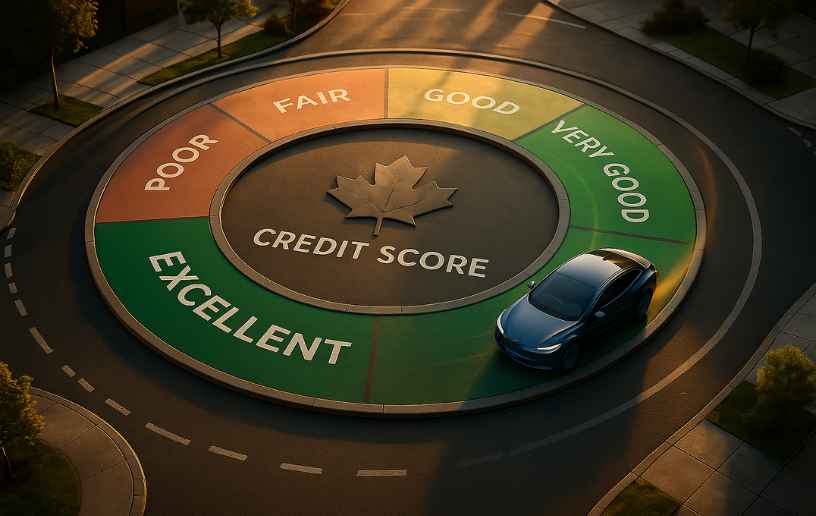
The trouble is that Canada's two credit bureaus, Equifax and TransUnion, can't score what they can't see. No accounts reporting means no score, or a score based on so little data that lenders can't trust it much. That's different from a poor score built on real repayment history. If you're applying for your first loan, it helps to know roughly where you stand — our piece on the minimum credit score needed to apply for a car loan walks through what lenders typically want to see and where a thin file fits into that.
Co-signers: what they actually do
For a lot of students, the fastest way to get approved — and to get a better rate — is a co-signer. Usually a parent or guardian with an established credit history and steady income.
A co-signer isn't just a name on a form. They're legally on the hook for the loan if you stop paying. The lender can, and will, come after them for missed payments, and the loan shows up on their credit report too, good or bad. That's a big ask, so before you approach a parent about it, understand what you're actually asking them to sign up for. We wrote a full breakdown of this in what to know before co-signing a car loan, and it's worth reading together with whoever might be co-signing for you, not just by yourself.
The upside is real, though. A co-signer with good credit can turn a maybe into a yes, and often knocks a meaningful chunk off your interest rate. Some students use a co-signed loan as a stepping stone: make every payment on time for a year or two, then refinance or qualify on their own for the next vehicle without help.
Proving income when you're not working full-time
Part-time work, co-op placements, and seasonal jobs are normal for students, but they don't look like a standard nine-to-five paycheque on a loan application, and lenders will ask more questions to fill in that gap. Expect to provide a few recent pay stubs, an employment letter confirming your hours and rate, or bank statements showing consistent deposits. If your income is seasonal or shifts semester to semester, be upfront about that rather than letting the lender find out later — it's easier to explain a $400/week co-op income now than to have an underwriter guess wrong about it.
Some lenders will also look at scholarship or bursary income, though it's usually not treated the same as employment earnings since it can end when the program does. If most of your income is from student loans or family support rather than a job, say so plainly. Lenders would rather have an accurate picture than a rosy one that falls apart at verification.
Budgeting for a car loan on top of tuition
This is where a lot of first-time buyers, students especially, get into trouble — not at the application stage, but a few months in, once the tuition bill, rent, groceries, and a car payment are all hitting the same bank account in the same week.
Before you sign anything, run the actual numbers. A rough rule some lenders use is keeping your total vehicle costs — loan payment, insurance, gas, and basic maintenance — under roughly 15-20% of your take-home income. For a student working part-time, that number might be tighter than it sounds once you factor in insurance, which for a young driver in BC, Alberta, or Saskatchewan can easily run $150-300 a month depending on the vehicle, your driving record, and where you live. Insurance is often the part students underestimate the most; it's worth getting a real quote before you fall in love with a specific car, not after.
Also budget for the months where income drops — reading week, exam periods, summer between co-op terms — and make sure the payment still works even then. A loan that's comfortable in September and painful in April isn't actually affordable. If this is your first time financing anything, our first-time vehicle buyer guide covers the full cost picture, not just the loan payment, which is worth reading before you start shopping.
Using your first car loan to build credit
Handled well, a first auto loan is one of the more effective ways to build a credit file from scratch. It's an installment loan reporting monthly to both bureaus, and on-time payments over a couple of years do more for your score than almost anything else available to a 19- or 20-year-old.
A few things matter more than people expect. Set up automatic payments so you're never late by accident — even one missed payment stays on your file for years and undoes a lot of the good you've built. Don't take on other new credit at the same time if you can avoid it; adding a credit card and a car loan in the same month makes lenders nervous and can actually work against you. And don't assume paying it off early is always the smart move — a couple of years of consistent, on-time payments usually helps your score more than closing the account fast does.
Picking a starter vehicle that won't wreck your budget
The loan is only half the cost story. What you buy matters just as much, maybe more, especially on a student budget.
Look for something with a strong reliability track record — certain compact cars and small SUVs from Honda, Toyota, and Mazda hold their value and cost less to maintain, which matters when you don't have much room for a surprise $800 repair bill. Before you commit to a specific make and model, get an actual insurance quote for it. Insurance premiums vary a lot by vehicle, even within the same price range, and a car that looks like a deal on the lot can turn out to be the expensive option once insurance is added in. Older, higher-trim, or sportier-looking vehicles often cost more to insure than a plain base-model version of the same car, which matters more to a new driver's premium than most people expect.
Fuel efficiency is worth weighing too if you're commuting to campus or a co-op placement regularly. And resist the pull toward something bigger or newer than you need. A reliable, modest used vehicle that fits your actual budget will serve you better over four years of school than a nicer car that stretches you thin every month.
Getting started
A thin credit file isn't a wall, it's a starting point, and lenders who work with students know that. Whether you're applying solo, bringing a co-signer, or trying to figure out what you can realistically afford around a tuition schedule, it helps to see real numbers before you start shopping seriously. You can check your rate and get pre-approved without it affecting your plans — it just gives you a clearer picture of what's actually available to you as a student, so you're shopping with real numbers instead of guesses.