
Car Loans in Red Deer, Alberta: Rates, Requirements & How to Get Approved (2026)
26 August 2026Red Deer sits almost exactly halfway between Calgary and Edmonton, which means car shoppers here have more dealership options within an hour's drive than almost anywhere else in Alberta. That's a good position to be in, but it also means a Red Deer car loan search can get overwhelming fast if you don't know what to compare. This guide walks through how car financing actually works in central Alberta, what lenders look at when you apply, and how a brokerage approach can save you time compared to walking into one dealership and taking whatever rate they offer.
Financing Options for Buying a Car in Red Deer
Most people financing a vehicle in Red Deer end up choosing between three routes: dealership financing arranged on the spot, a loan from their own bank or credit union, or working with an auto loan broker who shops multiple lenders on their behalf. Each has trade-offs. Dealership financing is convenient because it happens right at the point of sale, but the dealer is typically working with one or two lending partners and has an incentive to mark up the rate. Going directly to your bank can work well if you already have strong credit and an established relationship, though approval can take longer and the bank may not compete hard on rate since they know you're only asking one place.
Auto financing in Red Deer also includes a growing number of online and remote lenders who never require an in-person visit, which matters in a city where a fair number of buyers commute in from smaller communities around Sylvan Lake, Blackfalds, Innisfail, and Lacombe. If you're comparing car dealerships Red Deer has to offer against buying private or financing through an independent lender, it's worth running the numbers on total cost, not just the monthly payment, since a lower payment stretched over a longer term can end up costing more in interest.
Typical Rates and What Affects Them
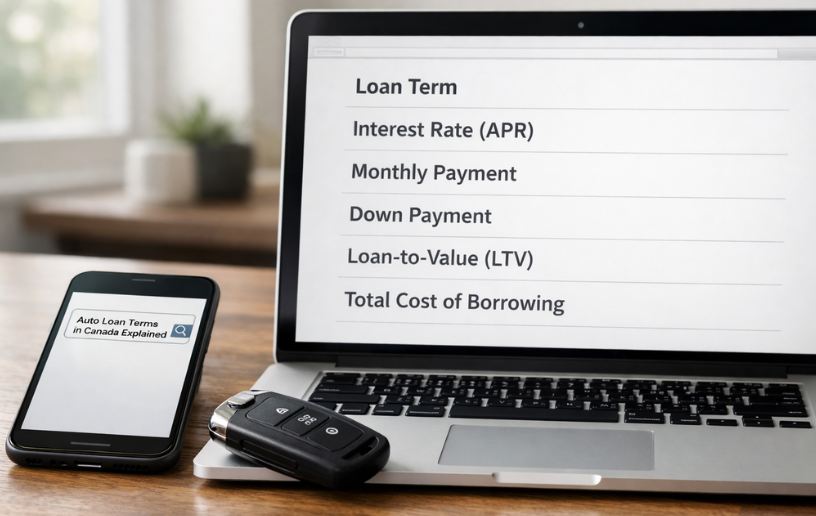
Car loan rates in Alberta move with the Bank of Canada's overnight rate, but your personal rate is set by a mix of factors specific to you: credit score, income stability, the loan-to-value ratio on the vehicle, the term length, and whether the car is new or used. Newer vehicles with lower mileage generally qualify for better rates because they represent less risk to a lender if the loan needs to be recovered. Longer terms usually come with a slightly higher rate and, more importantly, more total interest paid over the life of the loan even if the payment looks smaller.
There's no single rate that applies to every central Alberta car buyer, and any site that quotes one flat number without asking about your credit and the vehicle is oversimplifying. A more accurate picture comes from a personalized quote after a lender has actually reviewed your application. For a general sense of how term length and rate changes affect your payment before you apply, the Alberta car loan calculator lets you plug in different numbers and see the monthly payment shift in real time.
Credit Score Considerations
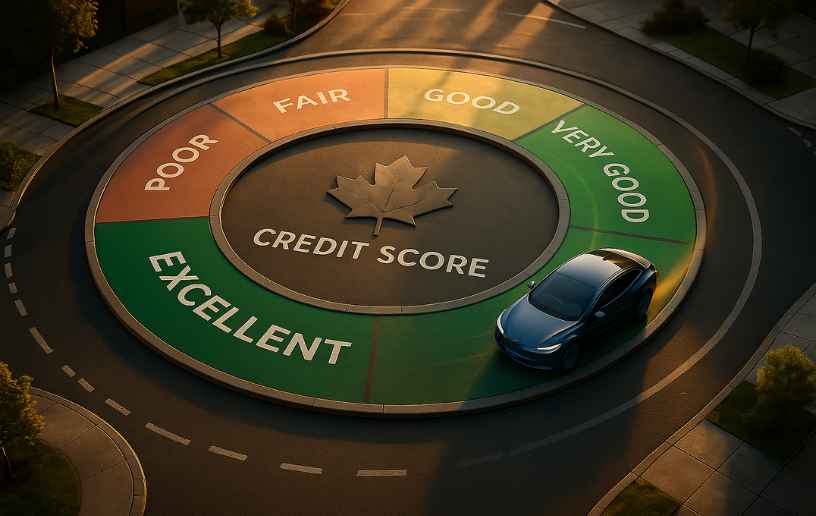
Credit score is the single biggest lever in most approvals, but it isn't the only one. Lenders look at your debt-to-income ratio, how long you've held your current job, whether you have a co-signer available, and your history of on-time payments on other credit products. Buyers with scores in the high 600s and up typically see the most competitive rate offers. Scores in the mid-to-low 600s can still get approved, often at a higher rate, and buyers below that range still have paths forward through lenders who specialize in near-prime and subprime auto lending.
If your credit history has some dents in it, whether that's a missed payment, a consumer proposal, or simply a thin file because you're new to credit, it's worth reading through our breakdown of bad credit car loans in Canada, which covers what lenders actually require and how a rebuilding period can be used to your advantage rather than something to hide from an application.
Required Documents
Having your paperwork ready before you apply speeds up approval considerably. Most lenders financing a car loan in Red Deer will ask for:
Proof of income, usually recent pay stubs or a notice of assessment if you're self-employed. Proof of identity, typically a driver's licence. Proof of residence, such as a utility bill or lease agreement. Banking information for setting up pre-authorized payments. And, if you're trading in a vehicle or have an existing auto loan, details on that loan's payout balance. Having these on hand before you start applying means the difference between a same-day decision and a back-and-forth that drags into a second or third day.
How a Brokerage Model Works
Auto Lending Canada works differently than walking into a single dealership finance office. Instead of representing one bank or one dealer's in-house lending arm, we submit your application to a network of lenders and compare what comes back on rate, term, and approval conditions before presenting you with options. Two lenders can look at the exact same application and offer meaningfully different terms, depending on what kind of borrower profile each one happens to be chasing that month.
This is especially useful for central Alberta car buyers who might otherwise only get quotes from the two or three dealerships in town. A broker isn't limited by geography the way a single dealership's financing desk is, and the process is built to work whether you're buying from a dealer, buying private, or refinancing an existing auto loan that's carrying a higher rate than it should.
Alberta-Specific Notes
One advantage central Alberta buyers have over people shopping in provinces like BC or Saskatchewan is that Alberta has no provincial sales tax on vehicle purchases. You'll still pay GST, but skipping a provincial sales tax layer on top of a car purchase is a real, measurable savings that shows up directly in what you finance. It's worth factoring into your budget when you're deciding how much car you can afford, since that's money that doesn't need to be borrowed or paid out of pocket at the time of sale.
If you're comparing options beyond Red Deer itself, it's worth understanding how financing works province-wide. Our Alberta car loan guide covers requirements and rate factors that apply no matter which city you're buying in. And for buyers who split time between Red Deer and the nearest major market, our Calgary car loan guide is a useful comparison point, since Calgary dealerships are often the next stop once someone starts cross-shopping inventory.
Refinancing an Existing Auto Loan
Not everyone reading this is shopping for a new vehicle. A fair number of central Alberta drivers already own their car and are stuck with a rate that was set when their credit looked different, or a rate they never had time to shop around for because they signed at the dealership just to get the deal closed. Refinancing works by paying off the existing loan with a new one, ideally at a lower rate or with a term that better fits your budget. It's worth checking on periodically, especially if your credit score has improved since your original purchase or if rates have shifted since you signed.
The process looks similar to financing a new purchase: a lender reviews your income, credit, and the current loan balance against the vehicle's value, then decides what they can offer. If the numbers work out in your favour, refinancing can lower your monthly payment or shorten the time it takes to pay the vehicle off outright, without you having to change what you're driving.
New vs. Used: How the Choice Affects Financing
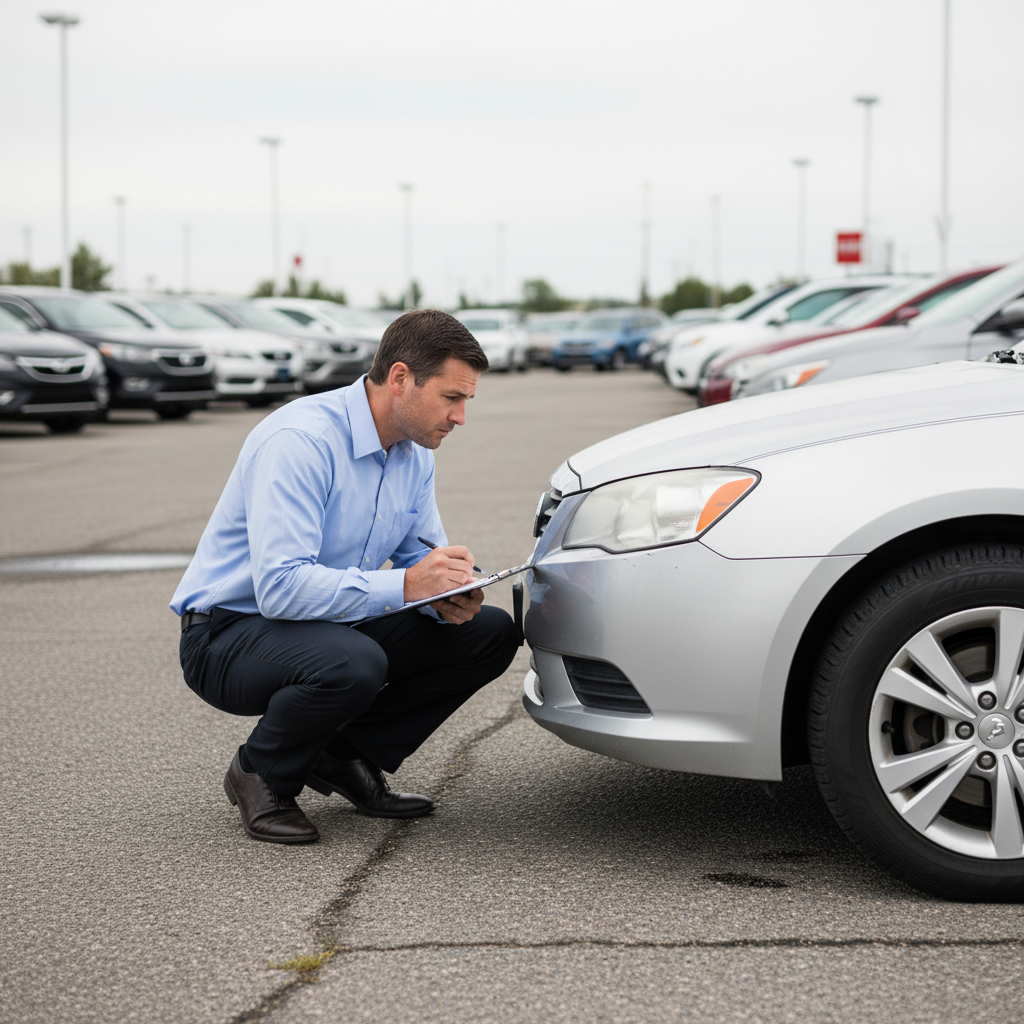
Red Deer's dealership row has a mix of new inventory and a large used market, and the choice between the two changes your financing math more than most buyers expect. New vehicles often come with manufacturer incentive rates that can undercut what a bank would otherwise offer, though those promotional rates are usually reserved for buyers with strong credit. Used vehicles, particularly ones older than five to seven years or with higher mileage, can come with a rate premium because lenders view them as carrying more risk and less resale value to fall back on if something goes wrong with the loan.
That doesn't mean a used car is automatically the cheaper route once you factor in financing. Get a quote on both before you commit. The gap between a new-vehicle rate and a used-vehicle rate can sometimes offset most of the price difference between the two vehicles.
Next Steps
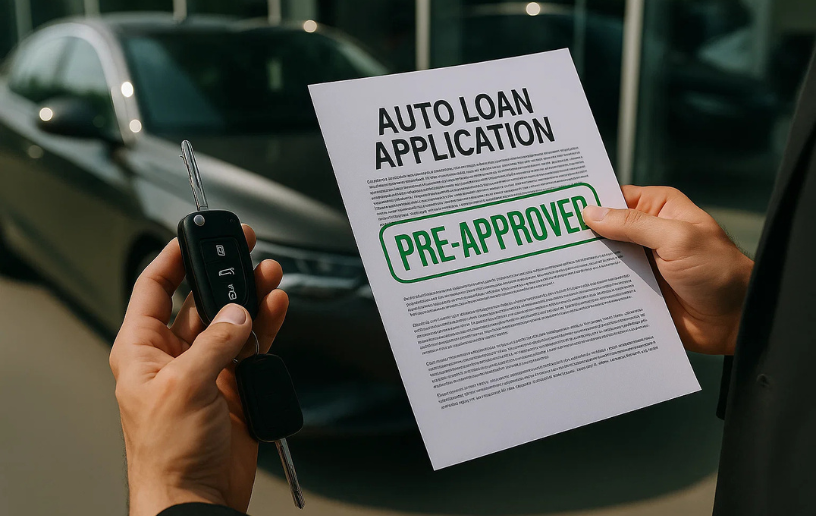
If you're ready to see what you'd actually qualify for, the fastest path is getting pre-approved before you set foot on a dealership lot. Walking in with financing already lined up puts you in a stronger negotiating position and takes the pressure off making a rushed decision in a finance office. Approval and final rate always depend on your individual credit profile, income, and the vehicle involved, so there's no way to guarantee a specific outcome before an application is reviewed, but getting a real quote costs you nothing and takes a few minutes.
Get pre-approved for a car loan in Red Deer and see what rates and terms lenders are offering for your situation.