
Electric Vehicle Financing in Canada: Loans, Incentives, and What Lenders Look For
27 September 2026Electric vehicles are no longer a niche purchase in Canada, but financing one still feels different from financing a gas sedan. Purchase prices often sit higher, residual values and insurance quotes vary by province, and some buyers factor federal or provincial incentives into the cash they bring to the deal. If you are shopping an EV in British Columbia, Alberta, or Saskatchewan, it helps to know how lenders treat these vehicles before you visit a dealer.
This guide explains how EV financing typically works, what underwriters look for, how incentives interact with your loan, and how to apply without overstretching your budget.
Start your application here when you know the vehicle type you want — you can refine the model after a lender reviews your file.
How EV loans differ from conventional auto loans
Structurally, an EV loan looks like any other secured auto loan: fixed payments, a term, and a security interest on the vehicle. The differences show up in pricing and eligibility:
- Higher purchase prices: Many new EVs cost more than comparable gas models, so the amount financed is larger unless you put more down or stack incentives.
- Insurance: Quotes can run higher for some EV models. Lenders care that the full payment — loan plus insurance — still fits your income.
- Vehicle age and battery: On used EVs, lenders may look at model year, kilometres, and whether the battery health is documented.
- Program availability: Not every specialty lender funds every EV the same way. Some prefer mainstream brands with strong resale data.
For a refresher on who funds Canadian auto loans in general, see types of auto lenders in Canada.
Incentives and how they affect financing
Federal and provincial EV incentives change over time and often depend on the vehicle’s MSRP, battery size, and where you live. Some programs reduce the price at the dealer; others reimburse you after purchase. From a lender’s perspective, what matters is the net amount you need to borrow and whether any rebate is applied before or after funding.
Do not assume an incentive you saw in a headline still applies to the exact trim you want. Confirm eligibility with the dealer and the program rules for your province before you lock a payment that only works if the rebate lands.
What lenders look for on an EV application
Underwriting still centres on the same pillars as any car loan:
- Credit score and bureau history (Equifax and/or TransUnion)
- Income stability and debt-to-income
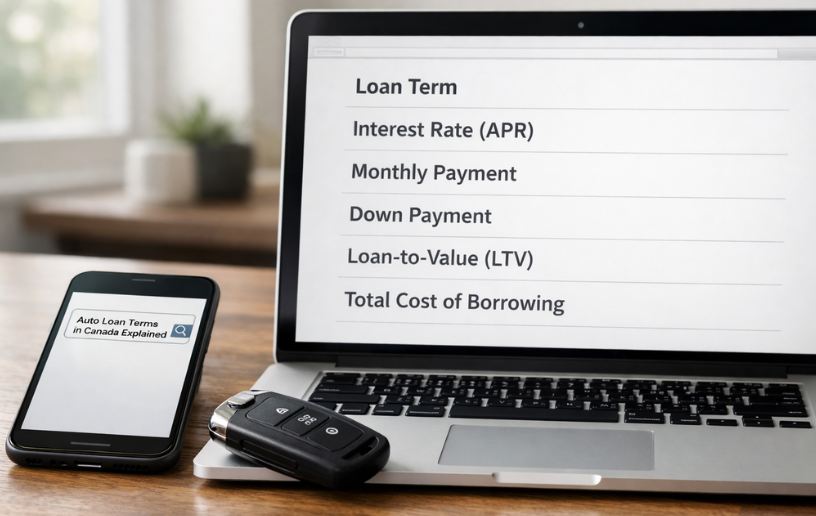
- Down payment and loan-to-value
- Vehicle year, make, model, and kilometres
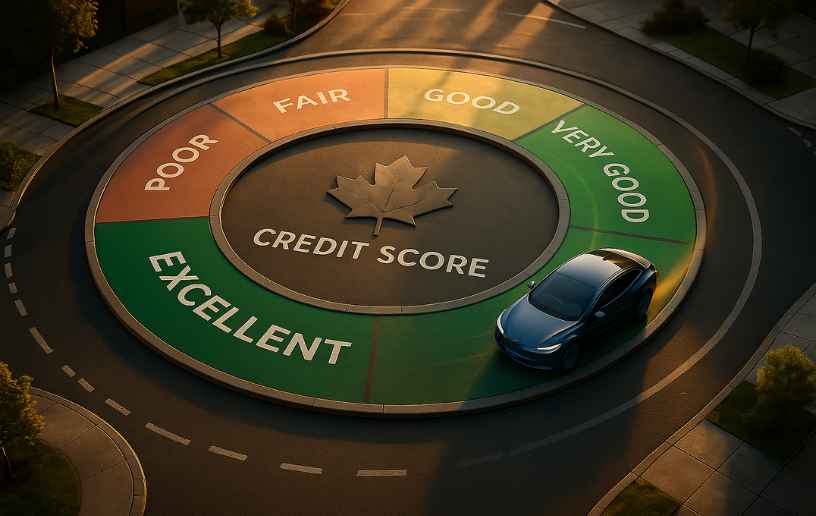
Rates still track credit strength. Our guide to car loan rates by credit score in Canada shows how pricing typically moves. A higher EV sticker does not automatically mean a worse rate — but it does mean a larger payment if you finance most of the price.
Budgeting for the full cost of ownership
Monthly loan payment is only one line. Factor in:
- Home charger install or reliance on public charging
- Insurance for your province and driving record
- Winter range in prairie or mountain climates if you drive longer distances
- Maintenance differences versus a gas vehicle (often lower for brakes and oil, but tires and potential battery issues still matter)
If you are unsure how much vehicle you can carry, start with how much car you can afford and plug in EV-specific insurance and charging estimates for your city.
New EV, used EV, or lease
New EVs may come with manufacturer finance or lease programs if your credit qualifies. Used EVs can lower the cash outlay but may face tighter lender caps on age and kilometres. Leases keep payments predictable for a set term but usually limit kilometres and require you to return the vehicle — less useful if you plan to keep the car long-term or drive prairie highway distances.
Hybrid shoppers sometimes land in between on price and range anxiety. If you are comparing electrified options more broadly, our look at hybrid SUV models in Canada can help frame the vehicle side while you sort financing.
Practical steps before you apply
- Get pre-qualified or submit one clean application rather than shopping five dealer desks in a day.
- Confirm which incentives apply to your exact VIN or trim in your province.
- Get an insurance quote before you sign — EV premiums can surprise people.
- Decide whether a home charger is part of the plan and budget for install if needed.
- Keep the financed amount aligned with a payment you can sustain after charging and insurance.
When you are ready to submit, follow the steps in how to apply for a car loan in Canada so details are accurate the first time.
Who EV financing suits — and who should pause
EV financing works well when you have a charging plan, a payment that fits after insurance, and a vehicle the lender will fund on your credit tier. It is a weaker fit if the only way the payment works is assuming a rebate you have not confirmed, or if you need a long highway vehicle with unreliable charging on your regular routes.
Nobody can guarantee approval. Present a complete file, pick a vehicle within the advance the lender supports, and treat incentives as a bonus — not the foundation of the deal.
Ready to finance an EV?
Auto Lending Canada helps drivers across British Columbia, Alberta, and Saskatchewan compare auto loan options — including electric and hybrid vehicles. When you are ready, submit a clear application and let lenders respond to your real numbers.