Can You Finance a Car After Bankruptcy in Canada?
06 March 2026Filing for bankruptcy is one of the hardest financial decisions a person can make. But once you are through it, life does not stop and neither does your need for reliable transportation. The good news is that financing a car after bankruptcy in Canada is genuinely possible. It requires some preparation, and the terms will not be as favorable as they once were, but the door is open wider than most people expect.
If you are weeks past your discharge or several months into rebuilding, this guide will walk you through exactly what lenders look for, what your options are, and how to move forward with confidence.
The Impact of Bankruptcy on Your Credit Profile
When you file for bankruptcy in Canada under the Bankruptcy and Insolvency Act, a note is placed on your credit file with both Equifax and TransUnion. For a first time bankruptcy, that record stays on your file for 6 to 7 years after your discharge date. A second bankruptcy remains for 14 years.
Your credit score will take a significant hit, there is no way around that. But the discharge date is the starting line, not the finish line. From the moment you are legally discharged, you can begin rebuilding, and lenders know this. Many lenders who specialize in post bankruptcy financing actually look at how you have behaved since your discharge more than they dwell on the bankruptcy itself.
There is also an important distinction worth knowing:
- Undischarged bankrupt : You are still going through the bankruptcy process. Financing options are extremely limited, and you may need approval from your Licensed Insolvency Trustee to take on new debt.
- Discharged bankrupt : The process is complete. You are legally free to apply for credit, and a much wider range of lenders becomes available to you.
If you filed a Consumer Proposal instead of full bankruptcy, the credit impact is slightly less severe. It stays on your file for three years after the proposal is completed. Many lenders view a proposal somewhat more favorably than a bankruptcy, so your options may open up a little faster.
Why Car Loans Are More Accessible Than You Might Think
One of the more encouraging aspects of rebuilding after bankruptcy is that auto financing tends to become available sooner than most other forms of credit. The reason comes down to how the loan is structured.
Unlike a personal loan or credit card, an auto loan is secured debt. The vehicle you purchase serves as collateral, which means the lender has a tangible asset to fall back on if payments are not maintained. This reduces their exposure considerably, and as a result, many lenders are willing to extend credit to post bankruptcy borrowers far earlier than they would for other loan types.
Qualifying for a mortgage after bankruptcy will typically require a minimum of two years of rebuilt credit history, a substantial down payment, and a strong overall financial profile. A car loan through a lender that specializes in credit recovery, on the other hand, can often be arranged within months of your discharge date.
It is important to go in with realistic expectations. Interest rates will be higher than what someone with an established credit history would receive, lenders will have preferences around the age and mileage of the vehicle, and a down payment will likely be required. These are not obstacles so much as they are the standard conditions of this stage of the process. With the right preparation, they are all manageable.
The Types of Lenders Available After Bankruptcy
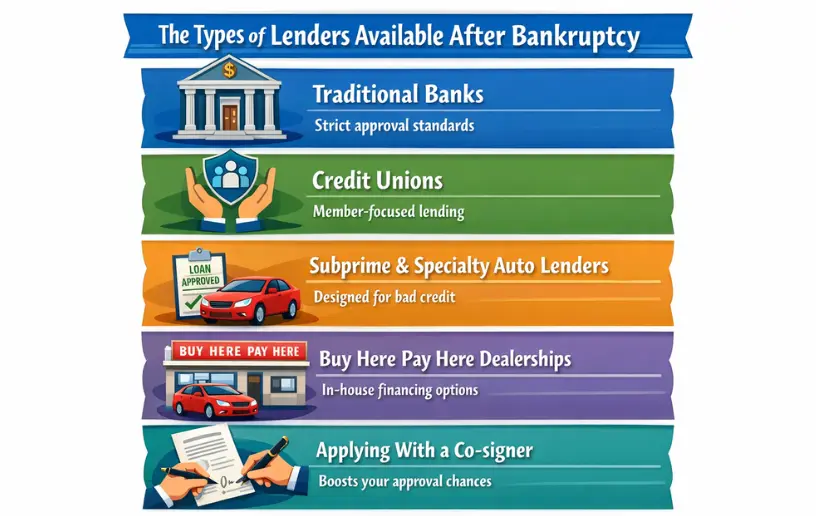
When it comes to auto financing after bankruptcy, not every lender will approach your application the same way. Some have rigid systems that make approval unlikely in the early stages of your recovery, while others have built their entire business around helping borrowers in exactly your situation. Knowing the difference before you start applying will save you time, protect your credit score from unnecessary inquiries, and help you focus your energy where it is most likely to produce results.
Traditional Banks
The major chartered banks in Canada, including RBC, TD, Scotiabank, BMO, CIBC, and National Bank, rely heavily on automated underwriting systems that are designed to flag negative credit history. For most people within the first two years of discharge, these institutions are unlikely to approve an auto loan application.
Credit Unions
Credit unions operate differently. As member owned institutions, they tend to evaluate applications with more human judgment and less rigid automation. If you have an existing relationship with a credit union, or are willing to open one, it is genuinely worth having a direct conversation with them about your circumstances. They may not always be able to help, but they are more likely to consider your full financial picture rather than stopping at your credit file.
Subprime and Specialty Auto Lenders
For most Canadians in the earlier stages of credit recovery, subprime and specialty auto lenders represent the most practical path forward. These lenders work exclusively with borrowers who have damaged or limited credit histories, and post bankruptcy applicants are well within their scope. Interest rates will be higher than the market average, which reflects the risk involved, but approval is a realistic outcome with the right preparation. Access to these lenders typically comes through dealerships that maintain established relationships with multiple financing partners and can submit your application to several of them at once.
Buy Here Pay Here Dealerships
Some dealerships act as the lender themselves, bypassing the traditional financing process entirely. While the low barriers to entry can seem appealing, this option comes with meaningful trade offs. Vehicles available through these arrangements tend to be older with higher mileage, interest rates are often among the highest in the market, and contract terms can lack the transparency you would find elsewhere. This avenue is worth knowing about, but it is best approached as a last resort after other options have been genuinely explored.
Applying With a Co-signer
If someone in your life, whether a family member or a trusted friend, has a solid credit history and is willing to co-sign your loan, it can make a material difference to both your approval odds and the rate you are offered. It is important, however, that both parties go in with a clear understanding of what co-signing means legally. Should payments be missed, the co-signer becomes fully responsible for the outstanding balance. That is a significant ask, and it deserves an equally honest conversation before any agreement is made.
Wondering whether to go through a bank or a dealership? Read: Banks vs Dealership Financing: Canada Interest Rate 2025 Comparison
What Lenders Actually Look At
Your credit score matters, but after a bankruptcy, lenders who work in this space look at a broader picture. Here is what carries the most weight:
- Proof of income: Stable, verifiable income is essential. Pay stubs, a letter of employment, or tax returns for the self employed. Most subprime lenders want to see a minimum monthly net income of around $1,500 to $2,000.
- Time since discharge: The further you are from your discharge date, the better. Even six to twelve months of post discharge history helps considerably.
- Rebuilt credit activity: A secured credit card used responsibly for a few months shows lenders you are managing credit again. This is one of the most impactful things you can do before applying.
- Down payment: A down payment of 10% to 20% of the vehicle's value signals financial commitment and reduces the lender's exposure. The more you can put down, the better your chances and the better your rate.
- Vehicle age and mileage: Lenders are more comfortable financing newer vehicles, generally under 10 years old and under 150,000 km, because their collateral holds value better.
- Stability: Consistent address history, length of time with your current employer, and a Canadian bank account all factor in.
Want to know exactly where your score needs to be? Read: Minimum Credit Score to Apply for a Car Loan in Canada
What Interest Rates Should You Realistically Expect?
| Credit Profile | Typical Rate Range | Likely Lender Type |
| Excellent Credit (750+) | 6% to 9% | Banks and credit unions |
| Fair Credit (620 to 749) | 10% to 14% | Banks, credit unions |
| Poor Credit (below 620) | 15% to 19% | Select credit unions, subprime |
| Post Bankruptcy | 20% to 29.99% | Subprime and specialty lenders |
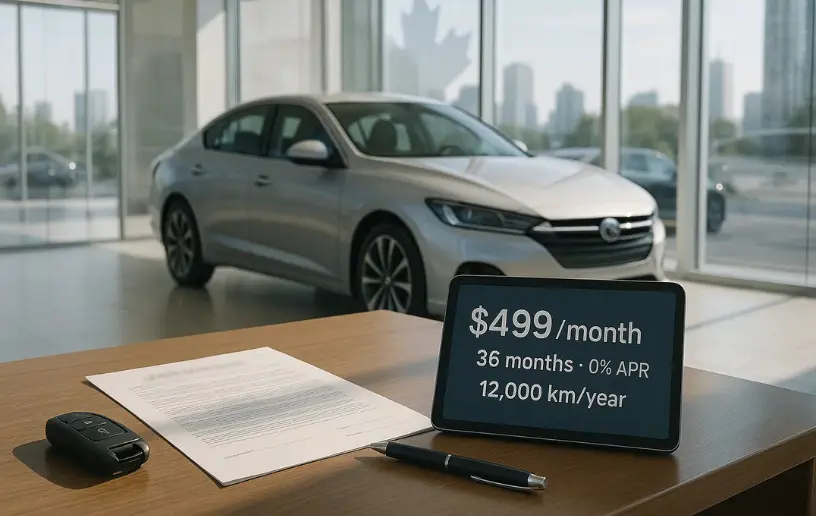
The critical number to focus on is not your monthly payment, it is the total cost of borrowing. A $15,000 loan at 24.99% over 60 months costs you nearly $11,000 in interest alone. That is not a reason to avoid the loan if you need a vehicle, but it is a reason to put down as much as possible, choose the shortest term you can manage, and refinance as soon as your credit improves.
Want a deeper breakdown of how rates work? Read: Understanding Car Loan Interest Rates in Canada
A Step by Step Approach to Applying
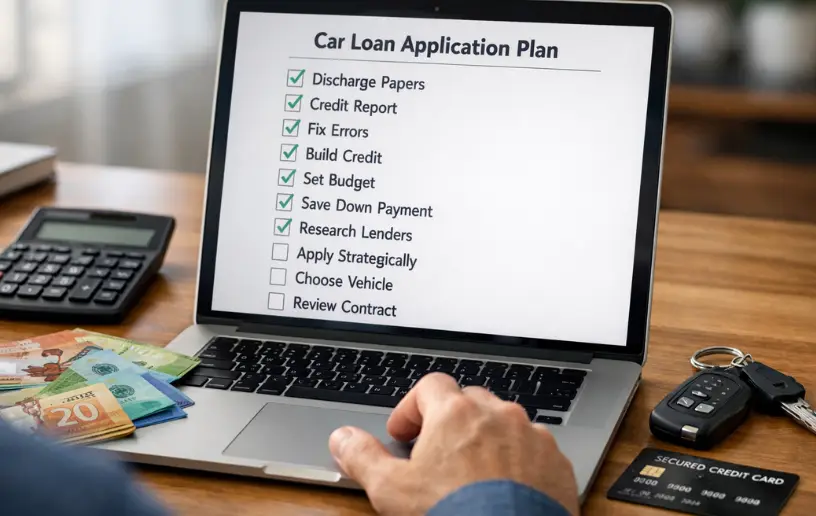
Going into this process without a plan often leads to poor outcomes, multiple hard inquiries, rushed purchases, and unfavorable terms. Here is a smarter way to approach it:
- Get your discharge paperwork in order. Your proof of discharge is a required document. Make sure you have it accessible.
- Pull your credit reports. You are entitled to a free annual credit report from both Equifax and TransUnion in Canada. Do this before you apply anywhere.
- Dispute any errors. Errors on your report after a bankruptcy are more common than most people realize. Filing a dispute is worth doing even if it takes a few weeks.
- Start rebuilding credit before you apply, if possible. Even 60 to 90 days of responsible secured credit card use can demonstrate positive behavior to a lender.
- Set a realistic vehicle budget. Factor in insurance, fuel, and maintenance, not just the loan payment.
- Save a down payment. Even $1,500 to $2,000 helps. More is better.
- Research lenders before visiting dealerships. Knowing your options means you can compare offers rather than accepting the first one presented.
- Apply strategically, not everywhere at once. Multiple hard inquiries in a short period further damage your score. Aim to complete all applications within a 14 day window, as credit bureaus often treat clustered inquiries as a single event for rate shopping purposes.
- Choose a practical vehicle. Pick something reliable, reasonably priced, and within the lender's preferred age and mileage range.
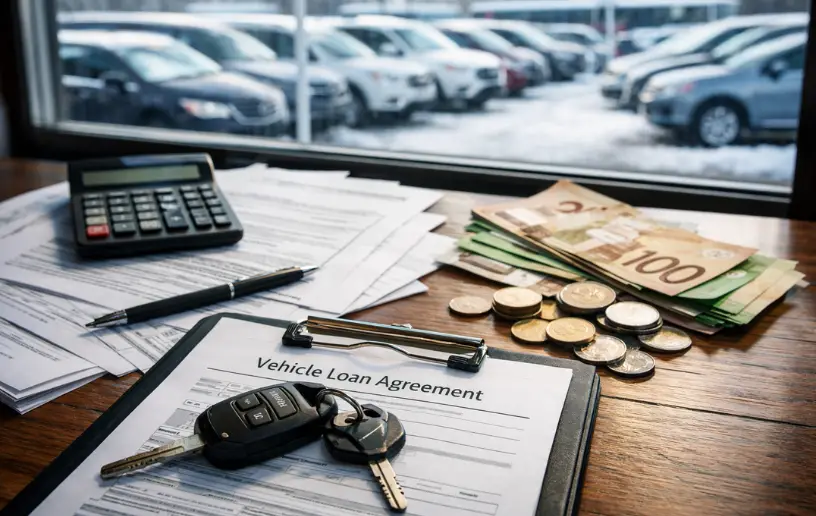
- Read the loan contract fully. Understand the interest rate, the total cost of borrowing, the term, any prepayment penalties, and what happens if you miss a payment.
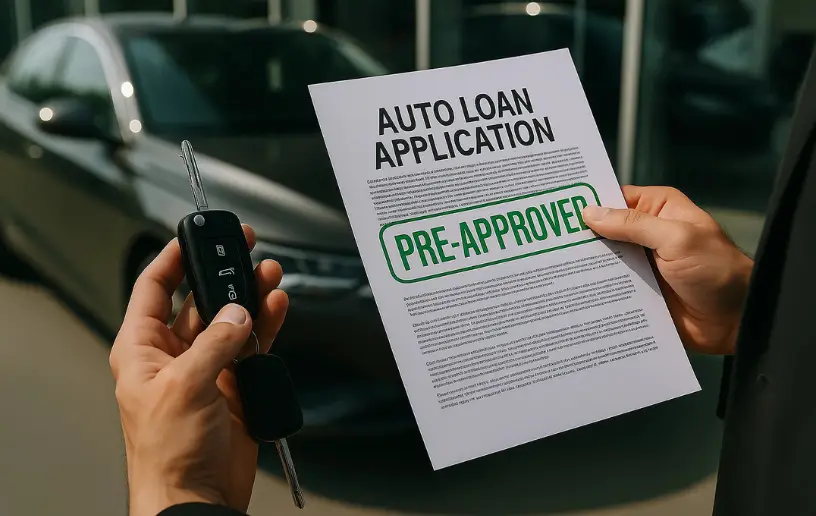
Ready to take the first step? Get Pre-Approved today with Auto Lending Canada
Common Mistakes to Avoid
- Focusing only on the monthly payment: Dealers and lenders know that most people fixate on the monthly number. A longer term lowers the monthly payment but dramatically increases total cost.
- Choosing a vehicle that lenders will not finance: Older vehicles with very high mileage are harder to get approved and often the worst value anyway.
- Skipping the credit report check: Cleaning up errors before applying can make a meaningful difference to your rate.
- Not shopping around: Even in the subprime space, different lenders offer different rates. A single percentage point difference over five years is a significant amount of money.
- Rushing out of desperation: An extra month or two of preparation, saving a larger down payment, building some credit history, can result in noticeably better terms.
Already have a loan and want to lower your rate? Read: Refinancing Your Auto Loan in Canada
The Bottom Line
Bankruptcy is a legal process designed to give people a fresh start, not a permanent mark of financial failure. The fact that you are researching how to move forward sensibly says a great deal about your intentions.
Yes, you can finance a car after bankruptcy in Canada. It will cost more than it would under normal circumstances, and it requires more preparation and documentation. But it is genuinely achievable, and when approached strategically, it becomes part of a broader credit recovery story rather than a setback.
Take the time to understand your discharge status, pull your credit reports, save a reasonable down payment, and choose a lender and vehicle that make practical sense for your situation. The goal right now is not to get the best deal of your life, it is to get a reliable vehicle, make every payment on time, and let your credit history begin to tell a new story.
Ready to find out what you qualify for? At Auto Lending Canada, we work with all credit types, including post bankruptcy. Apply in minutes and get your options today.